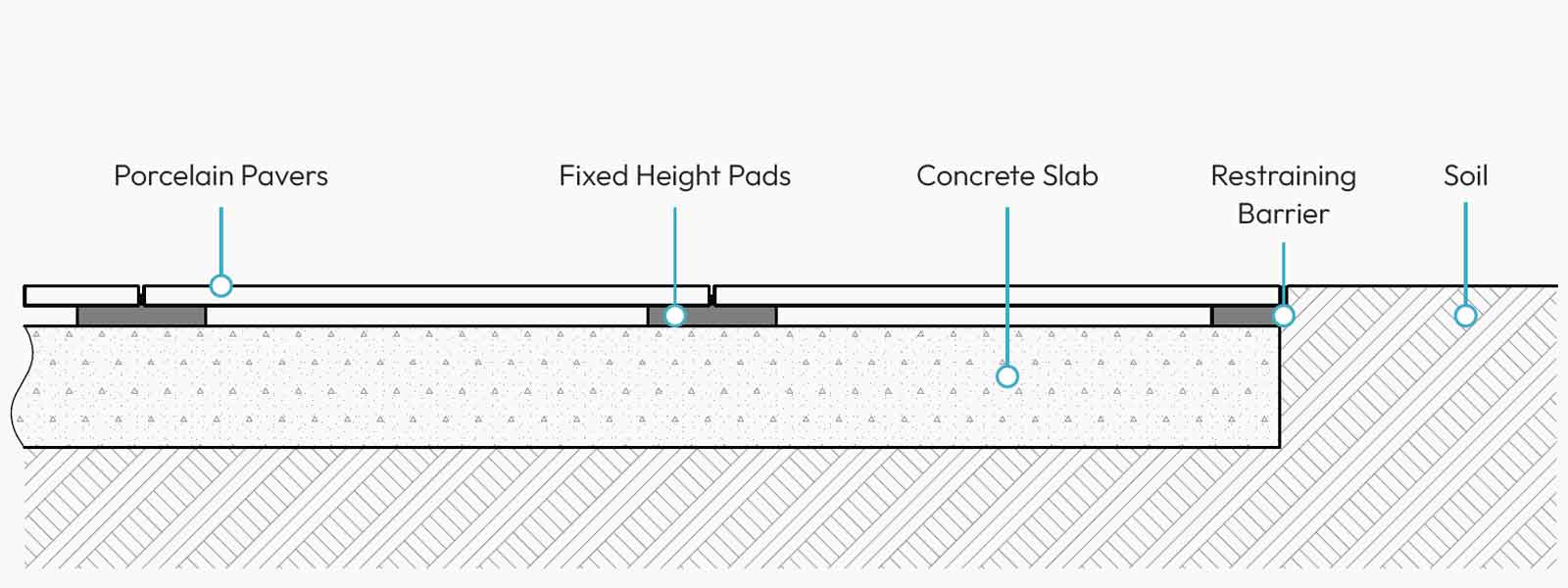
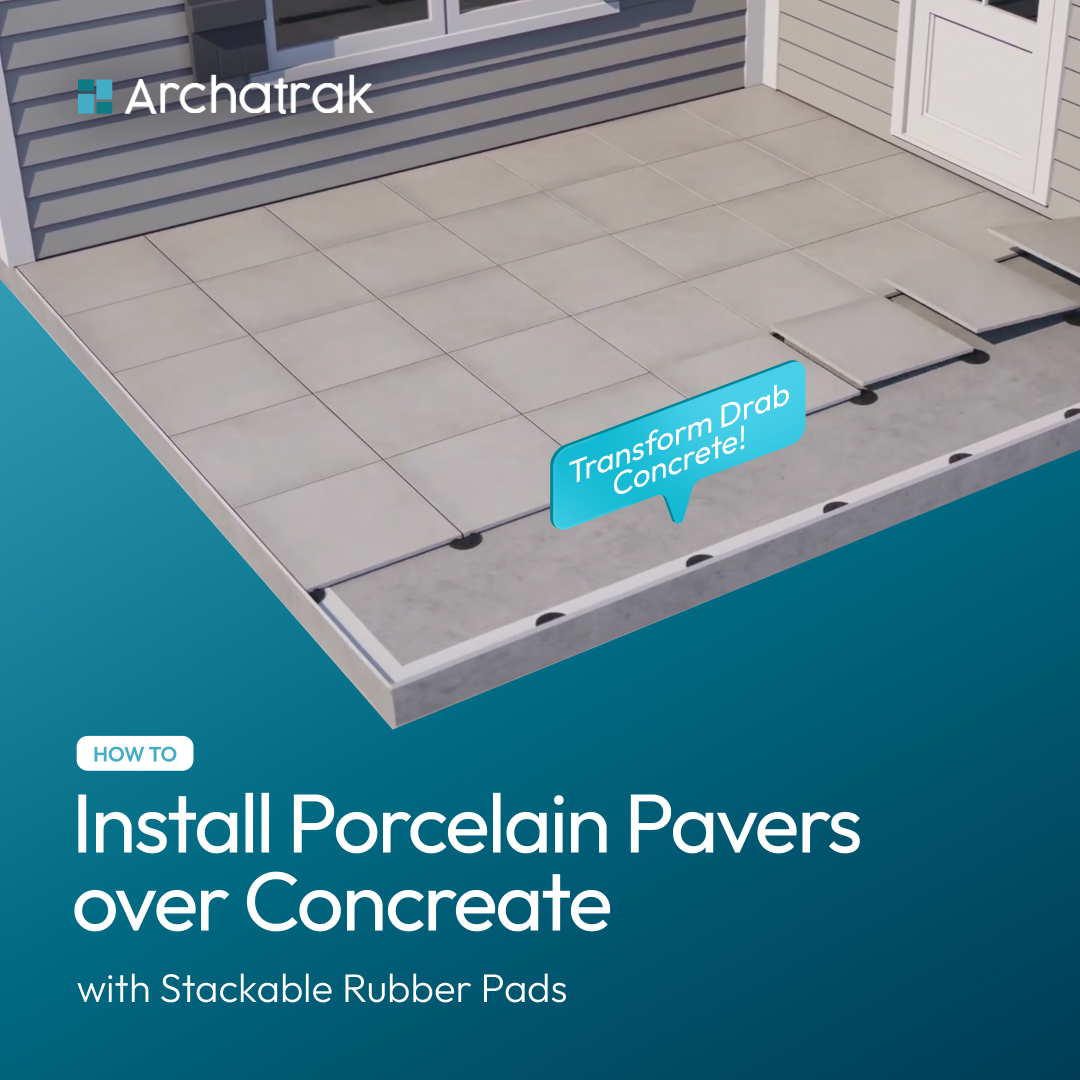
This video demonstrates how to install porcelain pavers over a concrete substrate using stackable rubber support pads, providing a fast and efficient method for resurfacing patios and other outdoor areas. The system allows for precise height adjustment, consistent spacing, and improved drainage, making it a practical solution for achieving a clean, level finish without the need for complex substructures.
Pads on Concrete Substrate
1
Step One
The substrate should be as even as possible, although pads can be laid over cracked concrete provided they are not placed directly over any cracks. There should be approx. 2% slope pitched away from any building for drainage.
2
Step Two
The paved area should be bounded fully by a containment barrier or other restraining device to ensure the pavers do not move. However, with rubber fixed height support pads, the extra friction of these pads compared with plastic pads may be sufficient in some circumstances to avoid the need for a restraining barrier.
3
Step Three
Draw the proposed layout of the pads on the concrete using chalk and optimize the placement of the pads and pavers to avoid having cut sections of pavers at any point around the perimeter less than 8” wide.
4
Step 4
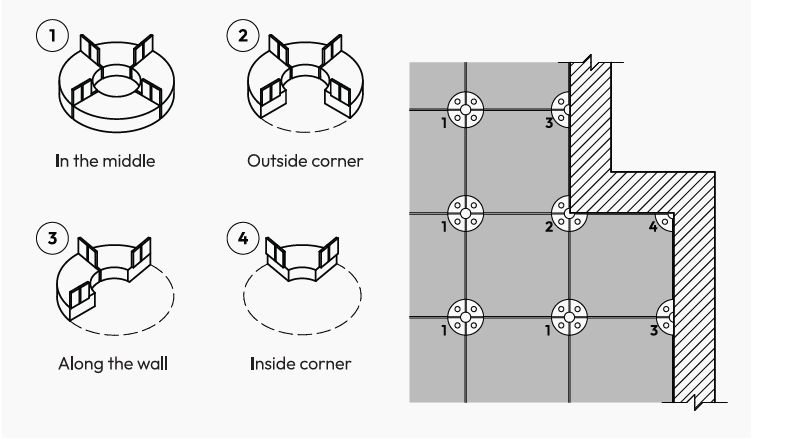
Along straight lengths of the perimeter, cut pads in semicircles and place them with the cut sides flush with the perimeter edge pads which have been cut in semicircles along the perimeter at the paver intersections, ensuring the only remaining spacer tabs are aligned with the gap between pavers. At right angle corners, cut pads into quadrants with all spacer tabs removed and placed in corners.
5
Step Five
Place pavers carefully over the rubber pads ensuring each paver butts tightly against the spacer tabs.
6
Step Six
Use 1/16” or 1/8” thick shims between the paver and pads as required to adjust for any slight unevenness of the substrate.
7
Step Seven
Fixed height pads may be stacked on top of each other up to heights of approx. 1 ½” providing the opportunity to create a paved area that is perfectly level and horizontal irrespective of any slight slope of the substrate
Last Update