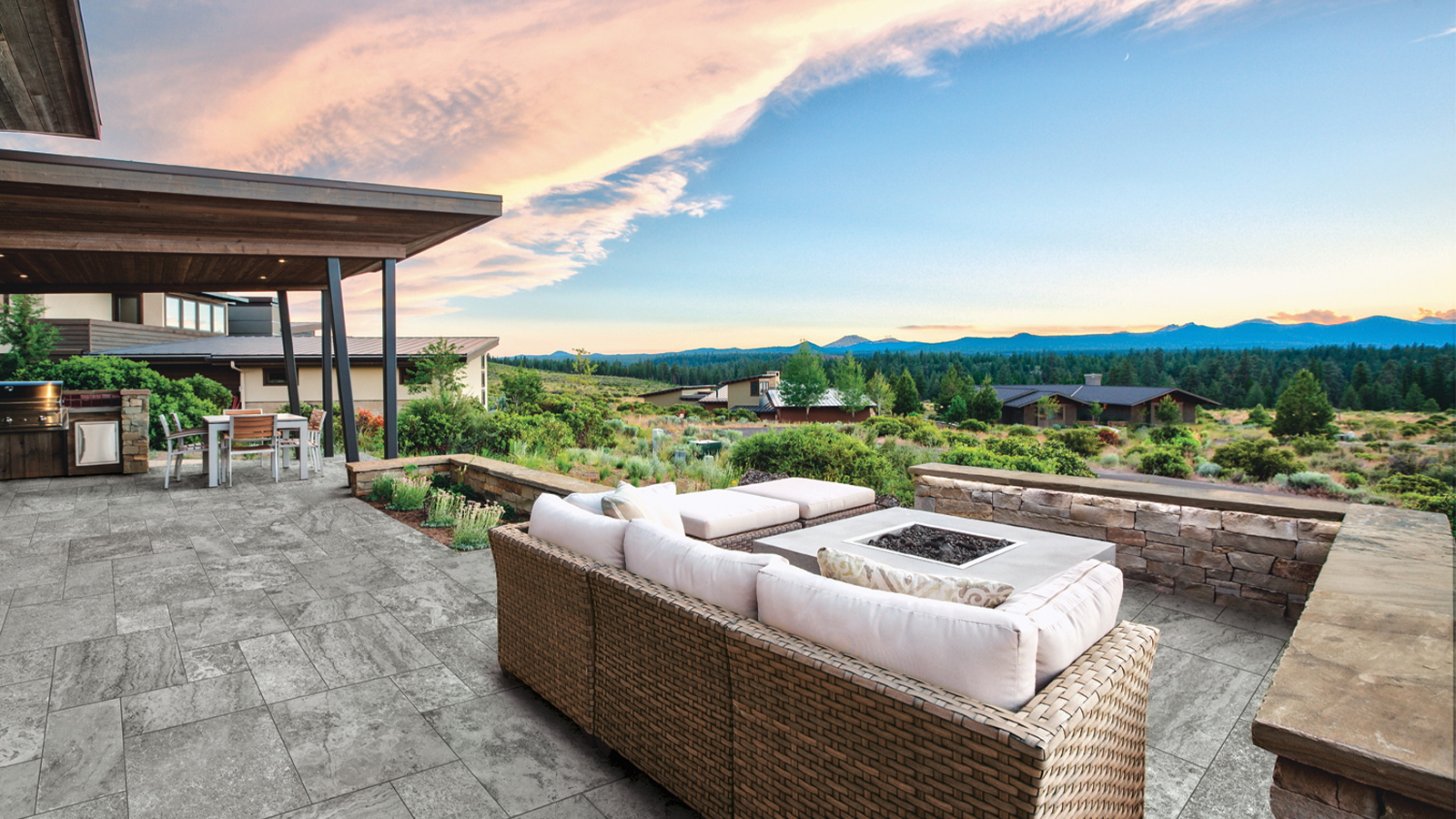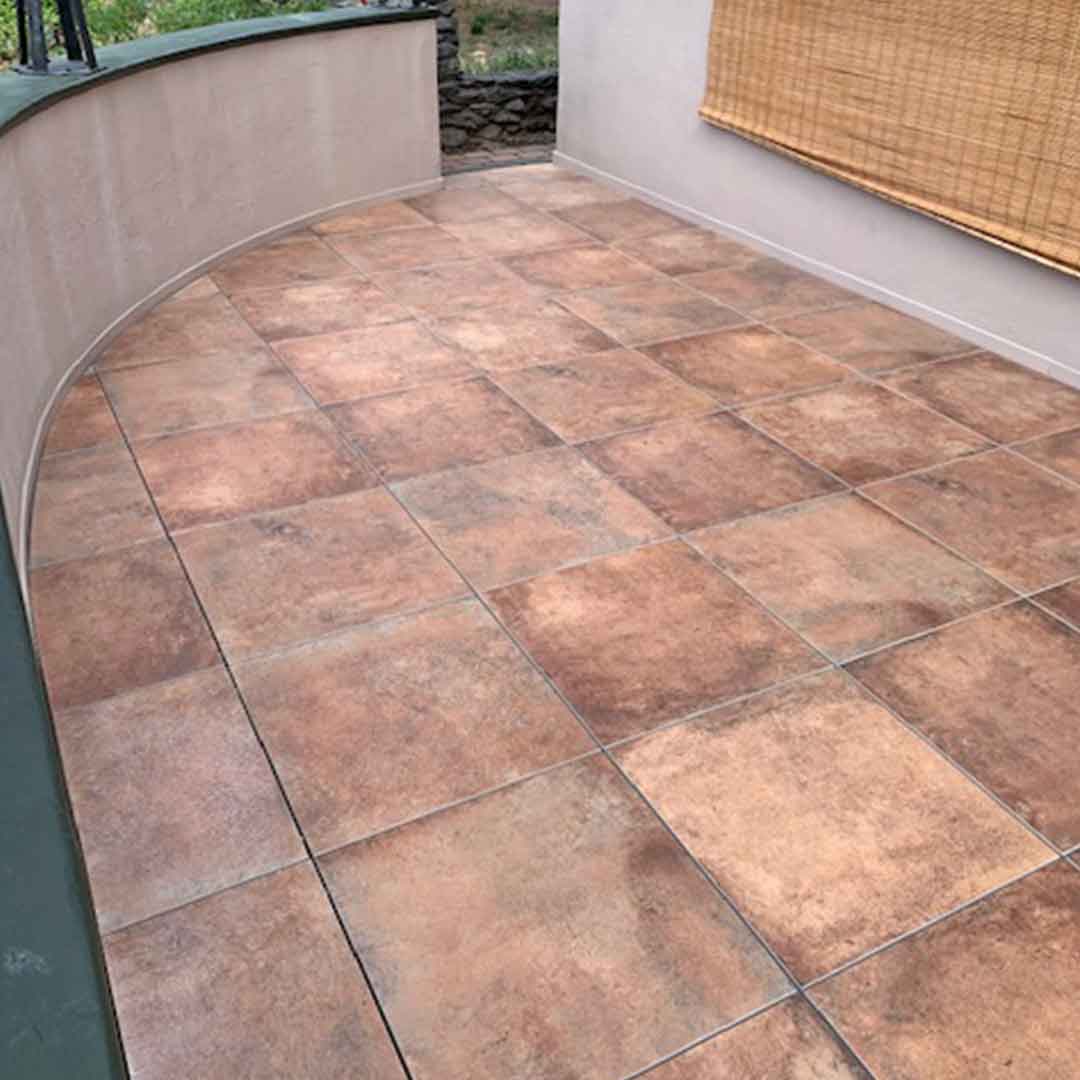
Looking for a simple way to resurface a drab, tired looking, or cracked patio without tearing everything out? Floating patio paver systems offer a practical solution for renewing on-grade aging concrete patios without full demolition.
Porcelain pavers, Ipe structural pavers, or interlocking Ipe wood tiles install over existing concrete slabs using low-profile support pads or adjustable-height pedestals.The elevated installation creates a clean, level surface while allowing water to drain beneath the pavers rather than pooling on the concrete. Minor surface irregularities can be accommodated without grinding or extensive substrate preparation. This streamlines installation, reduces disruption to the property, and delivers a durable, refreshed surface.
Key considerations for resurfacing patios:
- Resurface without removing existing concrete: Pavers install directly over sound slabs, eliminating demolition, material hauling, and extended project timelines.
- Low-profile systems adapt to existing conditions: Support pads and adjustable-height pedestals provide minimal height build-up while accommodating minor surface irregularities without extensive substrate preparation.
- Serviceable, replaceable surface: Individual pavers can be lifted and replaced if needed, simplifying future maintenance and long-term upkeep.
Porcelain Pavers
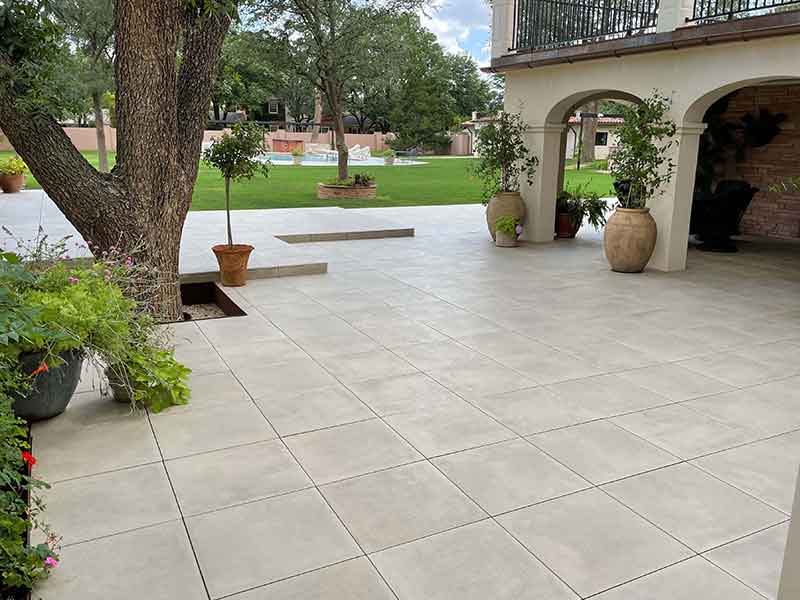
Archatrak ¾” (2cm) thick porcelain pavers are an excellent option for resurfacing aged concrete patios by installing over existing slabs using rubber support pads placed under each corner. The pads feature built-in spacer tabs that automatically maintain alignment and spacing, creating a stable floating patio surface that allows drainage beneath the pavers. Small height adjustments can be made using 1/16″ leveling shims, and pads can be stacked to level sloped patios. When working over cracked concrete, position pads to avoid placement directly across cracks.
Manufactured from dense, kiln-fired materials, porcelain pavers maintain their color and surface integrity in exposed patio environments. Their hard-wearing surface resists everyday wear and weathering without sealing or refinishing. Available in over 80 colors, including large-format slabs, wood-look planks, and stone or cement-look styles, they offer flexibility for both modern and traditional patio designs.
Why porcelain pavers work well for resurfacing patios:
- Textured, slip-resistant surfaces: Available with R11-rated anti-slip finishes suitable for wet patio conditions and residential outdoor use.
- Low-maintenance performance: Resistant to staining, fading, and surface wear without the upkeep associated with wood or concrete.
- Wide design flexibility: An extensive range of colors, sizes, and surface styles supports a variety of layouts and aesthetic preferences.
Interlocking Ipe Wood Patio Tiles
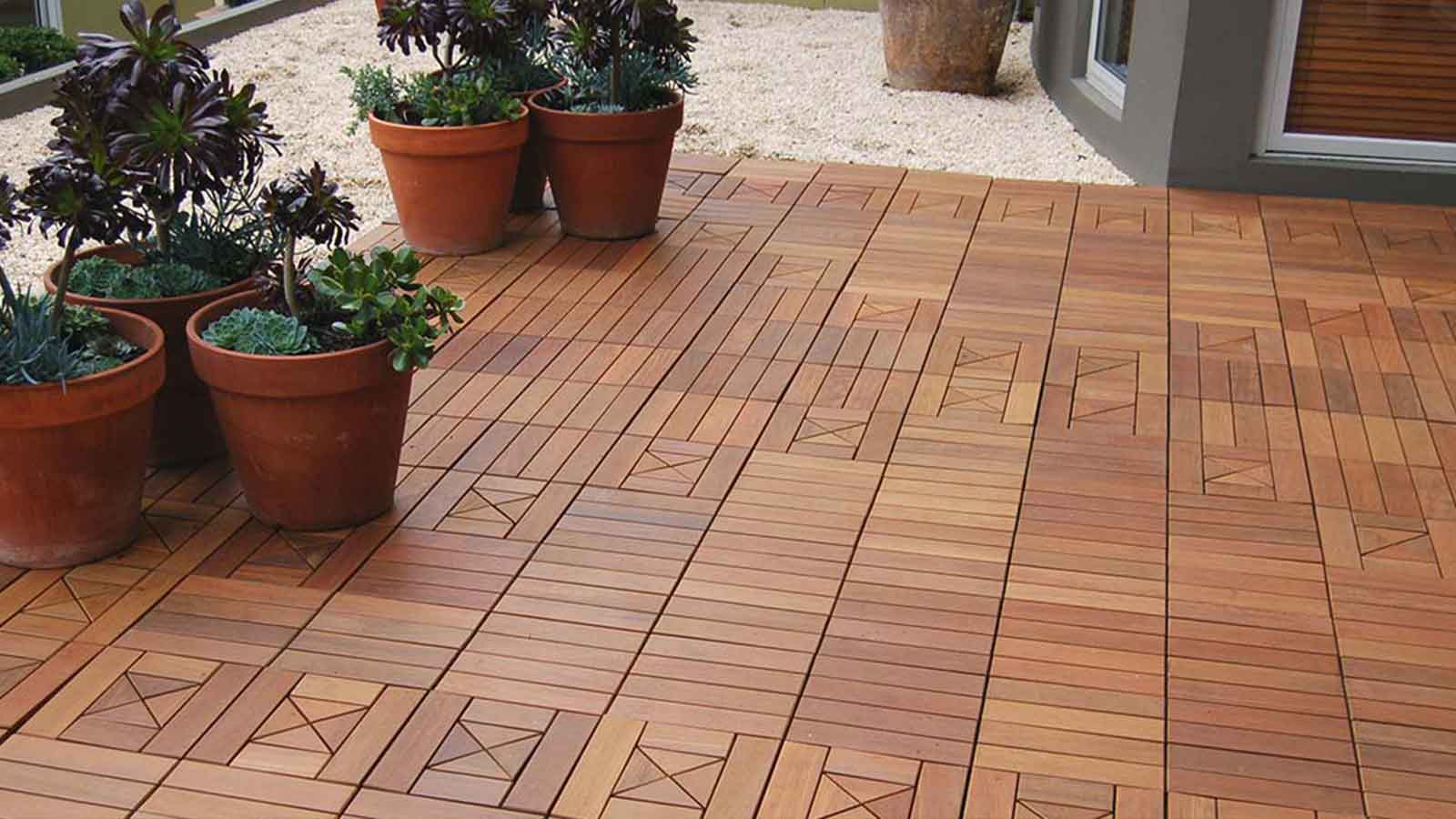
Archatrak Interlocking Ipe wood patio tiles provide the simplest do-it-yourself solution for covering an existing concrete patio. Designed for installation directly over relatively smooth, stable surfaces, the tiles snap together without adhesives, nails, screws, or other mechanical fasteners, making them well suited for quick residential patio upgrades.
Each 12″ x 12″ or 12″ x 24″ tile is constructed from ¾” thick Ipe hardwood mounted on an integral plastic mesh base with built-in connecting tabs. The underlying patio surface should be relatively smooth with no large cracks or significant height variations that would cause tiles to rock. Clip-on transition pieces are available to create a clean perimeter edge and provide a gradual transition to the concrete base.
Why interlocking Ipe tiles work well for resurfacing patios:
- Simple snap-together installation: Connects quickly over existing concrete without adhesives or specialized tools, helping reduce labor time and installation complexity.
- Durable ¾” thick Ipe hardwood: One of the hardest and most durable wood species for exterior use, unlike lower-cost tiles made from less durable woods that may require replacement within 12–24 months.
- Clean edge detailing options: Compatible clip-on transition pieces provide a finished perimeter and smooth transition to surrounding surfaces.
Structural Ipe Wood Deck Tiles
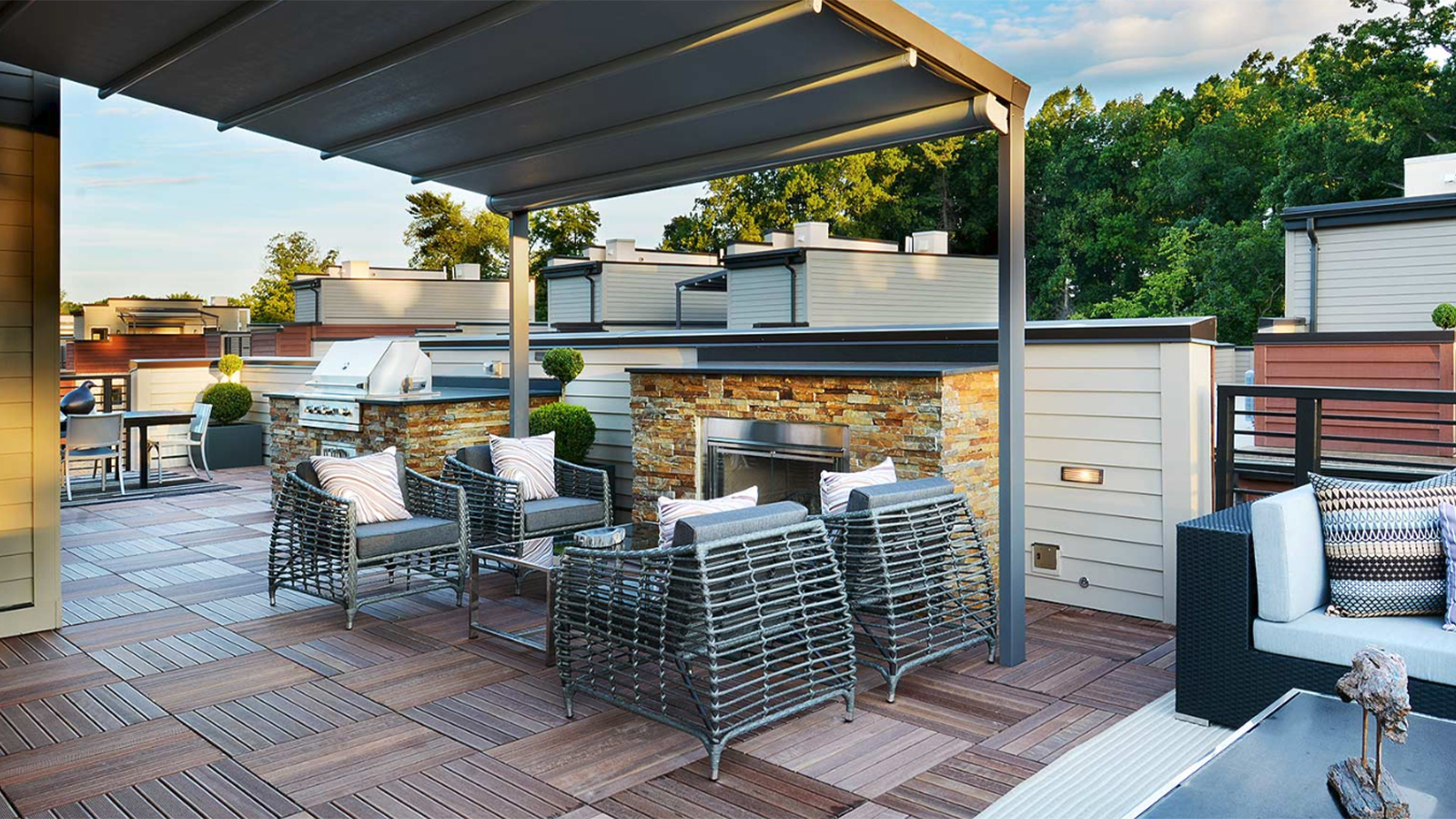
Archatrak 24″ x 24″ solid Ipe structural wood tiles offer a natural hardwood patio surface for homeowners who want to create a level floating deck over existing concrete. Unlike interlocking tiles, these solid wood pavers are installed over rubber support pads, lifting the wood off the slab to promote drainage and air circulation beneath the deck. Rubber pads can be stacked up to approximately 1½” to help level sloped patios, and for larger areas requiring greater height adjustment, adjustable-height pedestals can be used to accommodate height variations over uneven concrete.
Ipe is exceptionally dense, strong, durable, and scratch resistant, and is widely used for exterior decks and boardwalks in high-traffic environments. As a natural hardwood, Ipe requires ongoing maintenance. Tiles are supplied unfinished and should be coated with a quality decking oil or sealant soon after installation. Reapplication every 12 months is recommended to maintain appearance and slow natural fading.
Why structural Ipe tiles work well for floating patios:
- Level wood deck surface over concrete: Compatible with rubber pads and adjustable pedestals accommodating slope and height variations.
- Solid ¾” thick hardwood construction: Dense Ipe provides strength, rigidity, and long-term durability for exterior patio applications.
- Promotes drainage and air circulation: Elevated installation lifts the wood off the slab, helping reduce trapped moisture beneath the patio deck surface.
Stackable Rubber Pads
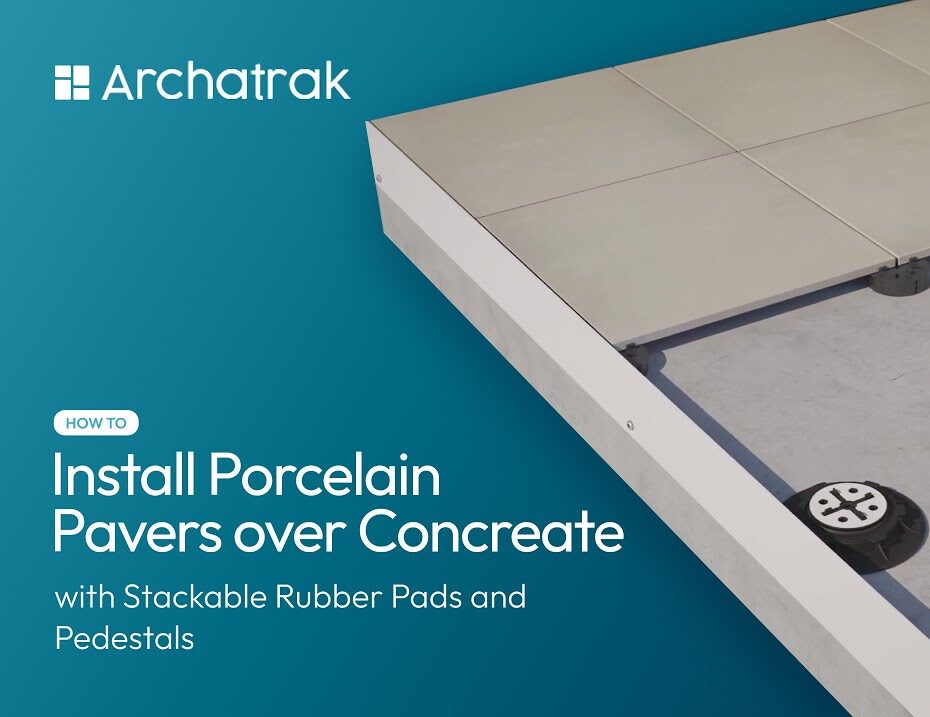
Fixed-height rubber support pads provide a straightforward method for installing porcelain pavers or Ipe structural tile over existing concrete patios where only minimal height build-up is required. The pads are placed at the corners of each paver, creating a floating installation that separates the pavers from the concrete slab while establishing a stable walking surface.
Because the pads are low profile, they work well in situations where door thresholds, step heights, or surrounding hardscape limit the available build-up. Minor slope in the underlying concrete can typically be accommodated by stacking pads or using thin shims for fine height adjustment.
Why rubber support pads work well for floating patio installations:
- Low-profile resurfacing solution: Rubber pads allow porcelain pavers to be installed over existing concrete with minimal height increase, making them suitable for patios where clearance is limited.
- Simple floating installation: Pavers are supported at each corner without adhesives, mortar, or mechanical attachment, simplifying installation and allowing individual units to be lifted if needed.
- Improved drainage beneath pavers: The gap created by the rubber pads between the pavers allows water to drain down to the sloped concrete surface below, preventing pooling on the paver surface.
FAQs
Frequently asked questions about fixed height support pads and pedestal paver installations.
Customer SupportYes. Porcelain pavers, structural wood deck tiles, and interlocking wood tiles can often be installed directly over existing concrete patios, provided the slab is structurally sound and reasonably level.
Floating patio systems use support pads or adjustable pedestals beneath the pavers, allowing the new surface to be installed without removing the existing concrete slab.
Floating patio pavers are pavers or deck tiles installed over support pads or pedestals rather than being permanently fixed with mortar or adhesives.
This installation method creates a raised surface above the existing concrete slab, allowing water to drain beneath the pavers and making individual units easy to remove or replace if needed.
Water drains through the open joints between the pavers and flows across the sloped concrete slab below.
Because the pavers are supported on pads or pedestals, the surface remains slightly elevated above the concrete, allowing water to move freely beneath the patio surface instead of pooling.
In many cases, floating porcelain patio pavers can be installed over concrete slabs that have minor cracking.
Support pads are placed beneath the corners of the pavers, and they can be positioned to avoid placing pads directly across cracks. However, the slab must still be structurally stable and properly sloped for drainage.
Yes. Minor surface irregularities can often be accommodated using rubber support pads, leveling shims, or adjustable-height pedestals.
These components allow the pavers to be installed on a stable, level surface without extensive grinding or resurfacing of the existing concrete slab.
Related Systems
-
Resurfacing Patios
Patio paver resurfacing offers a practical solution for renewing on-grade aging concrete patios without full demolition.