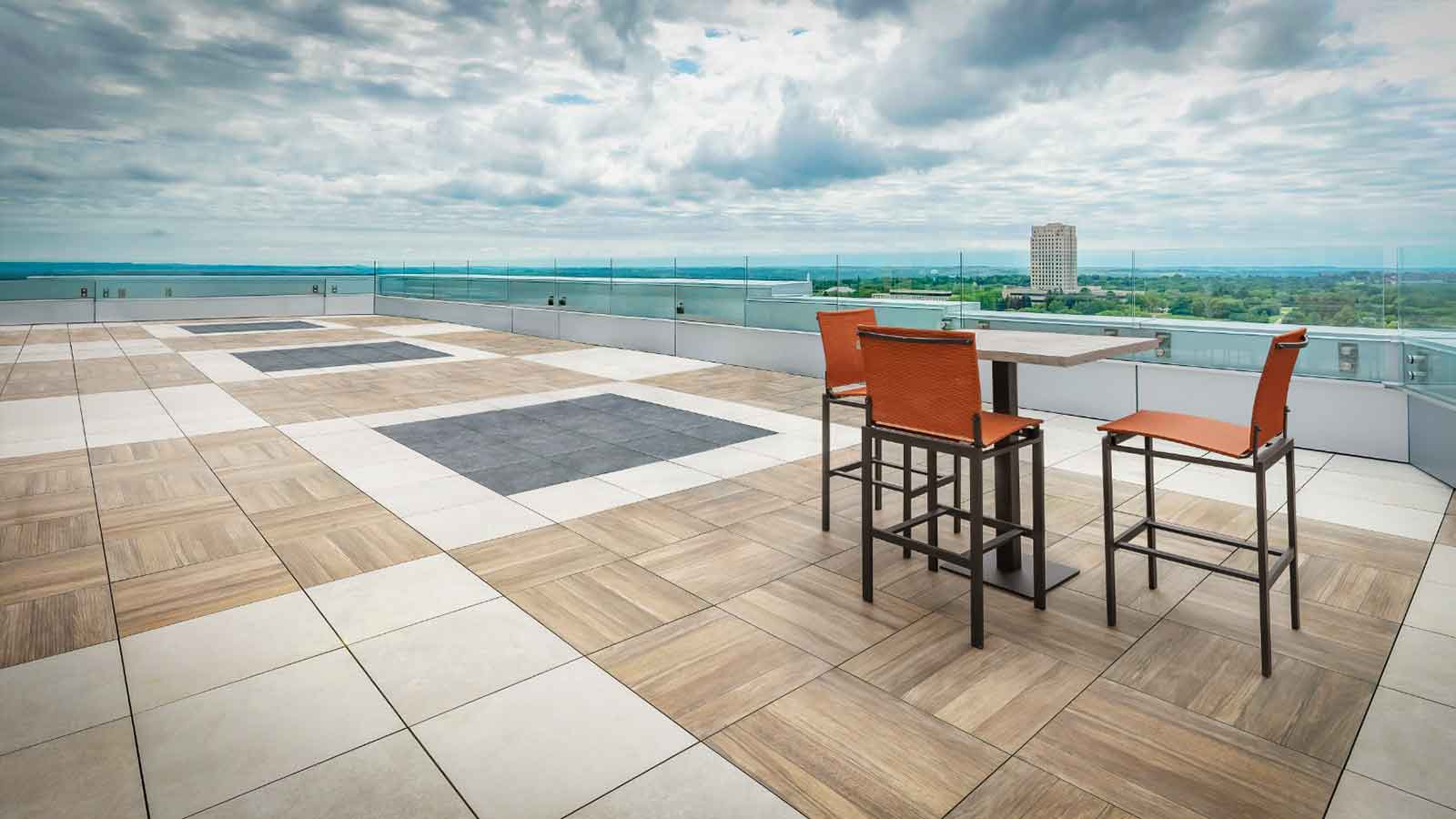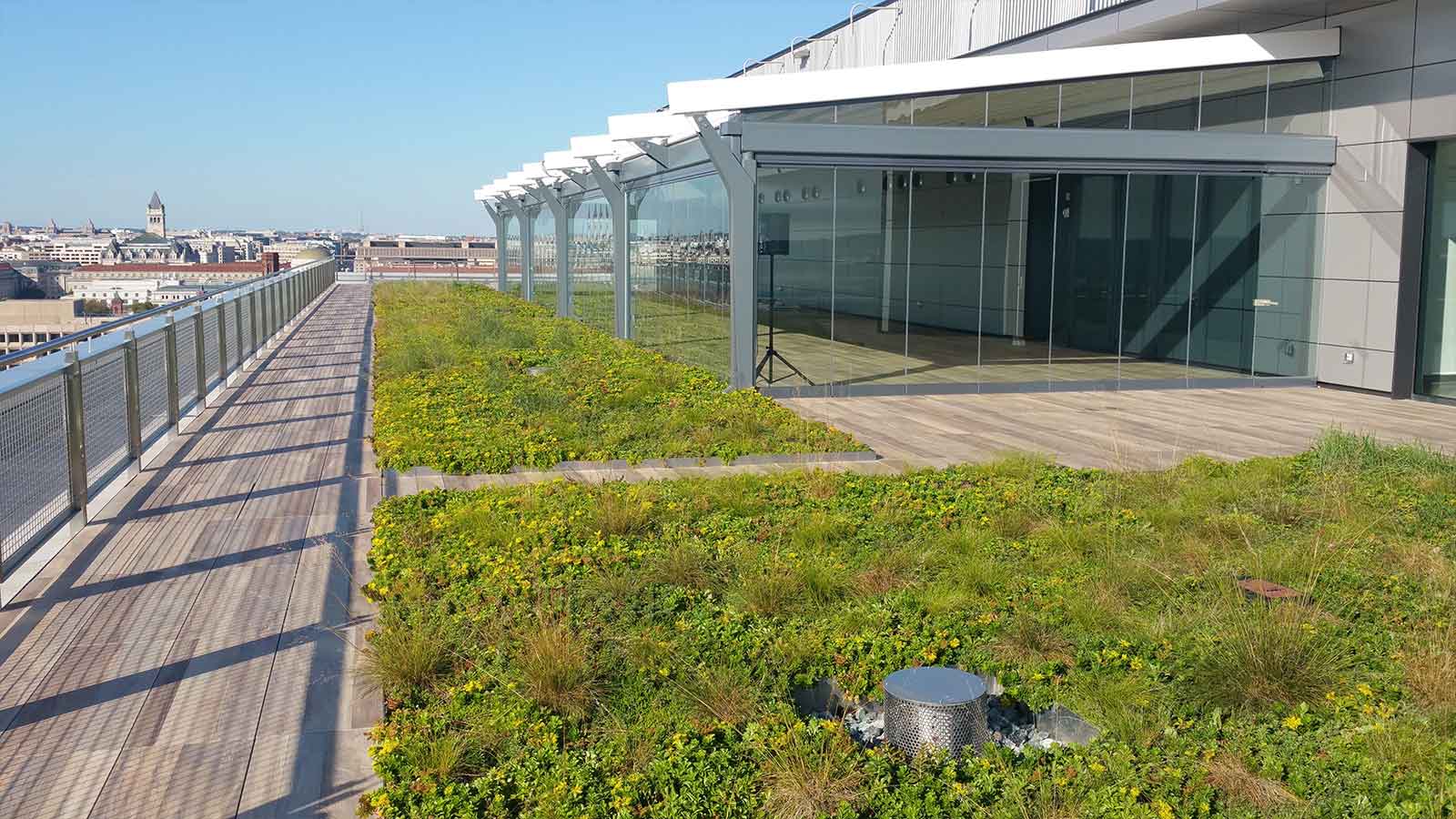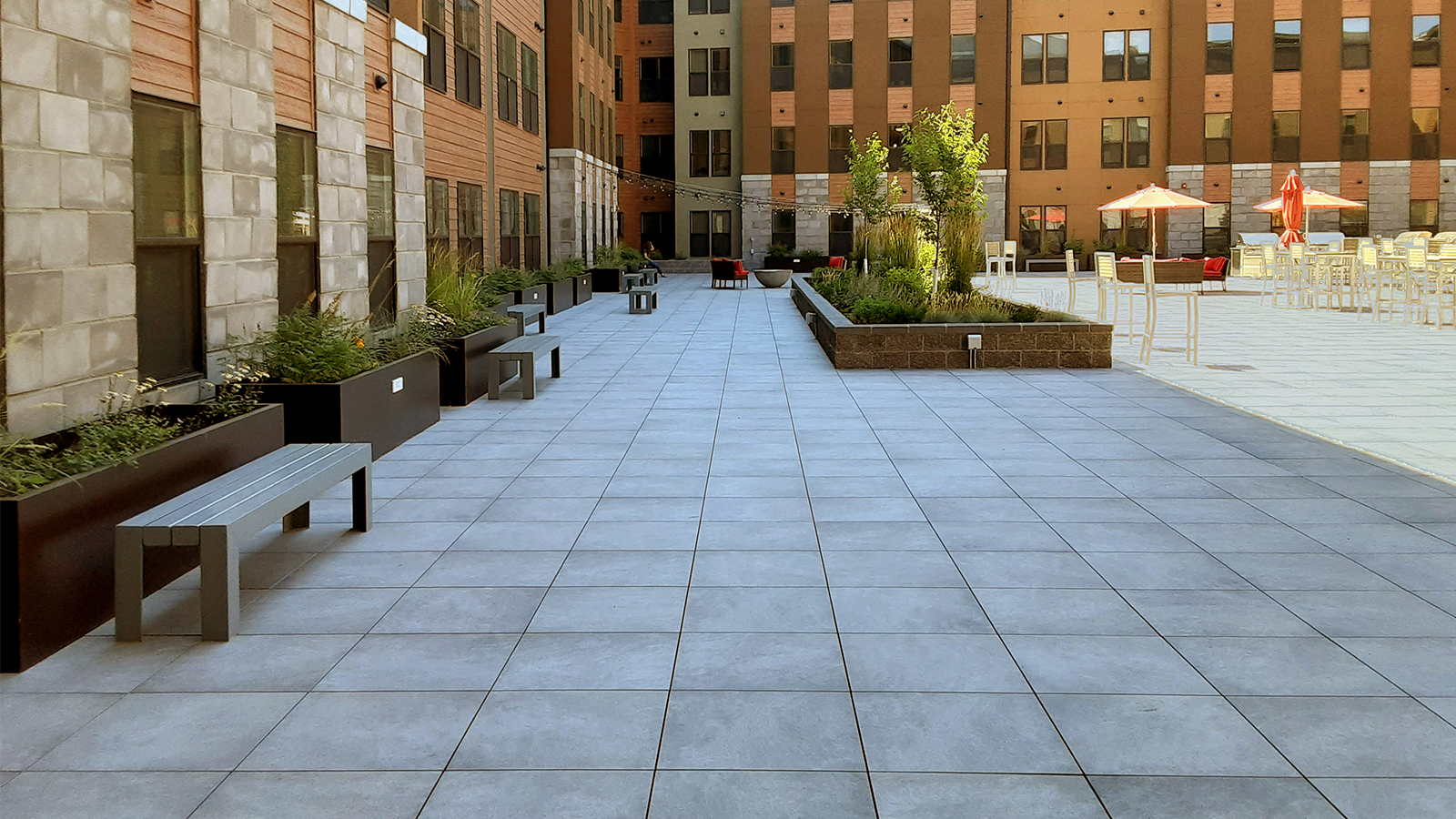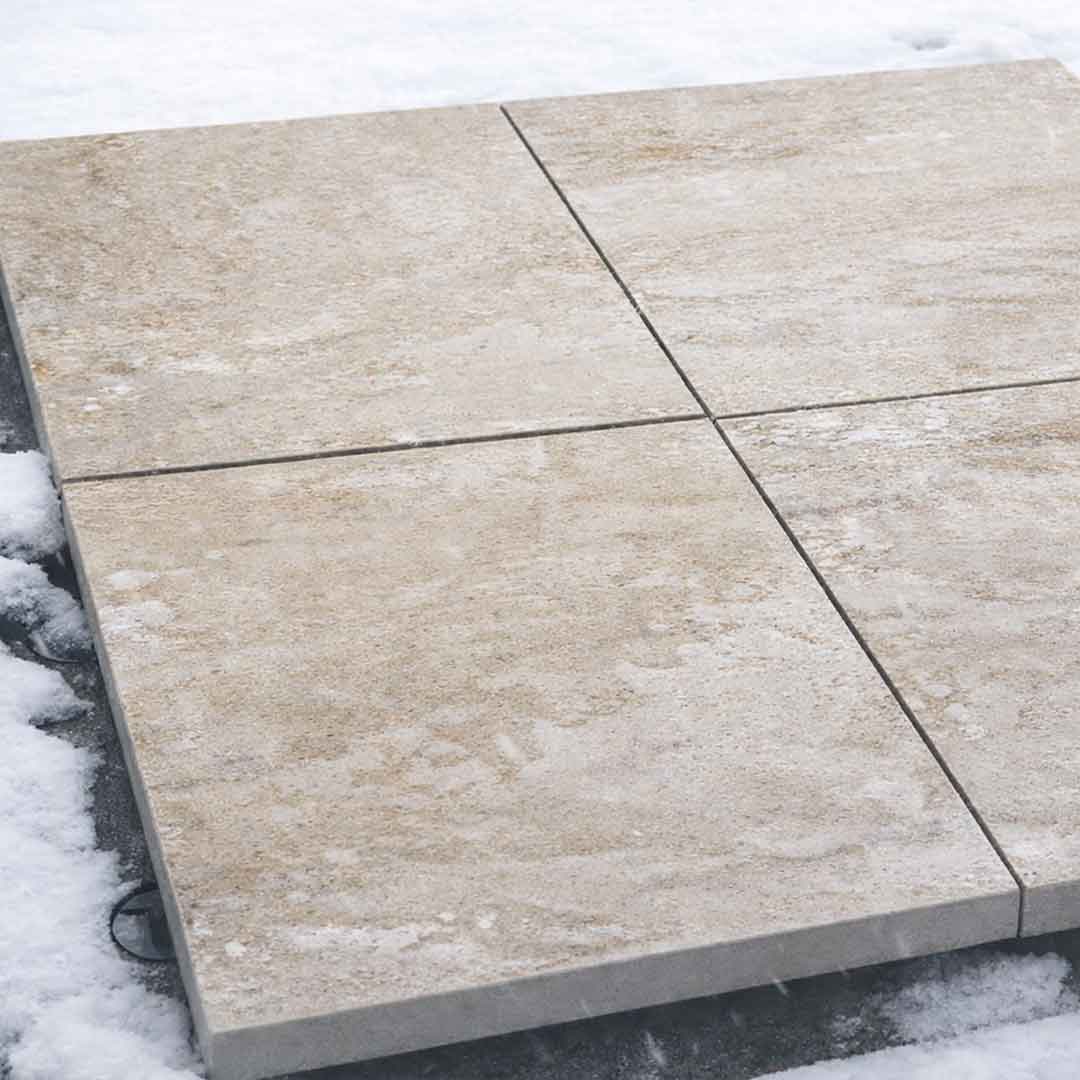
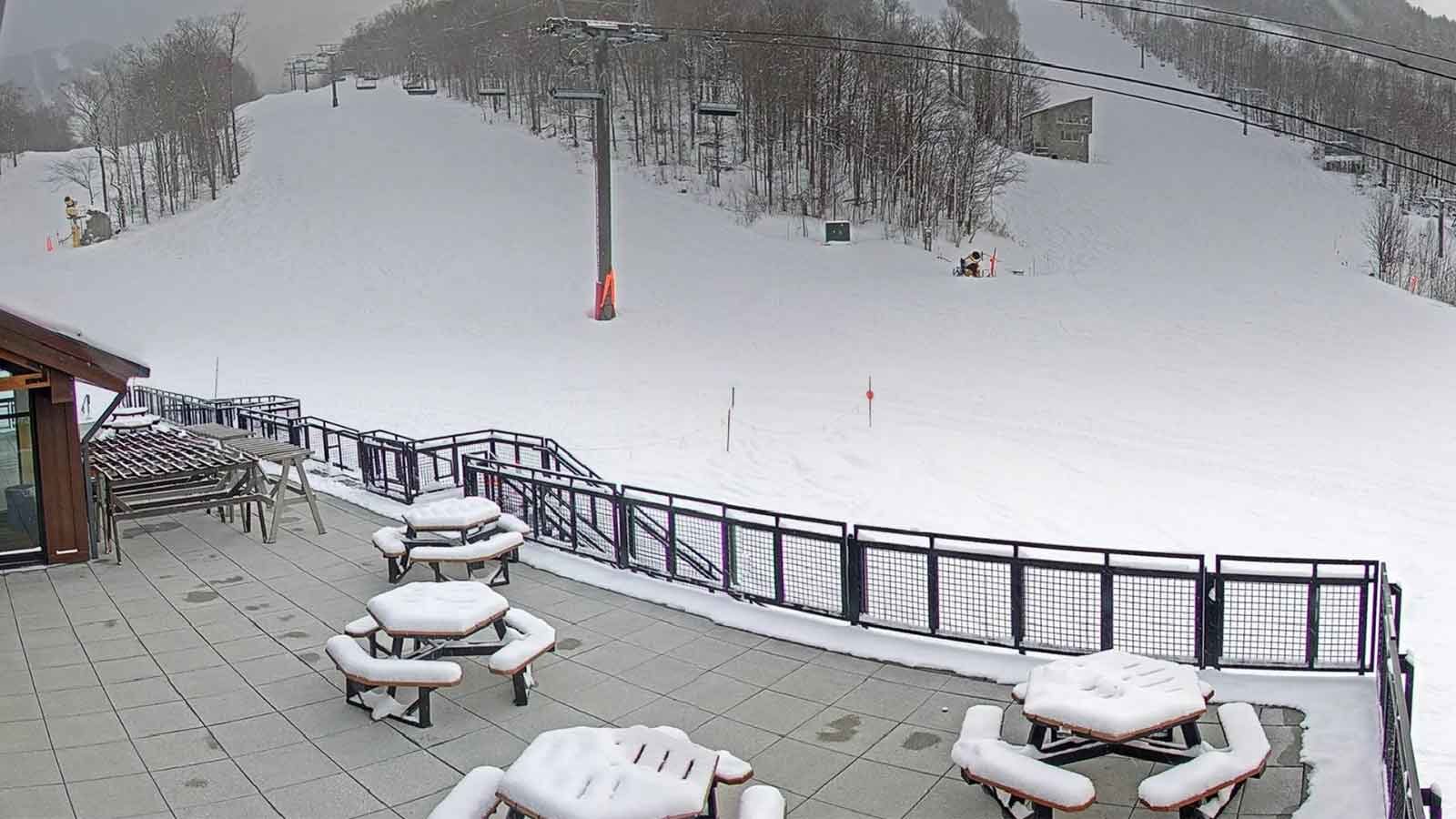
Electric snow melt systems provide an economical and easy-to-install solution for maintaining snow-free surfaces on pedestal-supported paver decks. The Heatizon system uses insulated heating cables installed in channels on aluminum panels beneath the pavers, eliminating the need for boilers, pumps, hydronic piping networks, and dedicated mechanical space.
Suitable for both commercial and residential rooftop decks, terraces, and walkways, the Heatizon electric snow melt system delivers reliable snow and ice control with simplified installation and coordinated integration within pedestal-supported assemblies.
Why choose electric snow melt for pedestal-supported paver decks:
- No hydronic infrastructure required: The Heatizon system operates from electrical supply with a mounted controller. No boilers, pumps, gas service, manifolds, or fluid circulation piping required.
- Simplified design & installation coordination: Heating panels are placed over the adjustable height pedestals, so there’s no need for hydronic loops, pipe routing, or fluid balancing. Only the final electrical connection requires a licensed electrician.
- Flexible coverage & zoning: Heated areas can be confined to specific walkways, entry zones, or narrow strips, or extended across entire deck surfaces based on project requirements and available electrical capacity.
Benefits of an Electri paver snow melt system

Ability to be Retrofitted
Snow Melt Systems can be retroactively installed to existing installations, not being limited to new installations.

Versatile Heating Zones
Can create different zones with greater or lesser heating capacity.

Less Components Required
No pipes, valves, manifolds, boilers, pumps or tanks required.

No High Clearance Required
Requires only 1.75” clearance under the pavers.
How the Paver Snow Melt System Works
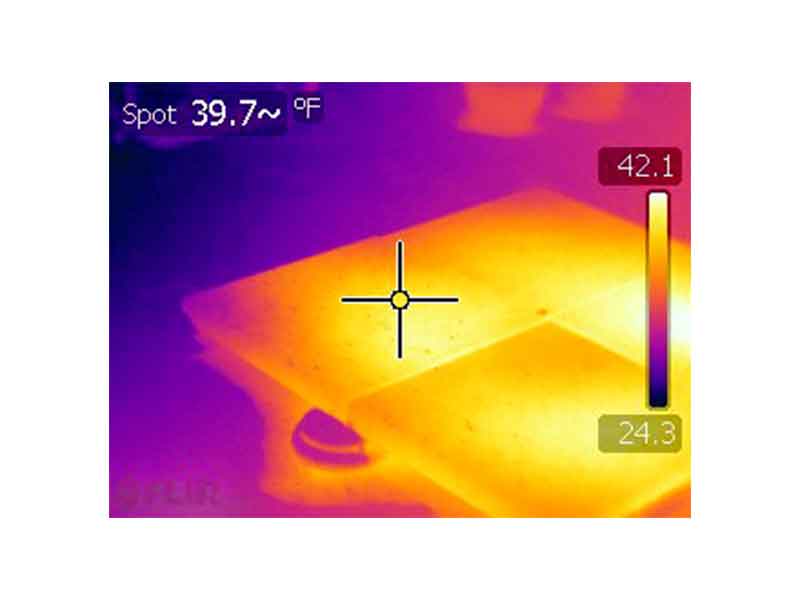
The Heatizon electric snow melt system uses insulated electrical heating cables laid in V-shaped channels within aluminum trays positioned beneath the pavers. Aluminum support brackets span between adjustable pedestals to support the trays and integrated insulation, directing heat upward through the paver surface.
Heating cables are pre-fabricated to the required length with factory-assembled electrical connections. The control system operates manually or activates automatically using a snow sensor that detects moisture and ambient temperature below a selectable set point (34°–44°F).
Installation and coverage options:
-
Flexible zoning and coverage
Heating can be configured for narrow walkways, entry zones, or entire deck surfaces based on project layout and available electrical capacity. -
Compatible with most paver types
System functions with porcelain, concrete, and stone pavers installed on pedestal-supported decks. - Minimum clearance requirement
- Requires 1 3/4″ clearance beneath the pavers to accommodate aluminum trays, insulation, and maintain adequate drainage.
Benefits of the Heatizon Snow Melt System
Accelerated installation schedules
No boiler setup, hydronic loop layout, or mechanical system coordination. Heating panels install directly within the pedestal cavity, reducing sequencing complexity.
Lower initial system costs
Eliminates boiler equipment, pumps, gas service, and fluid distribution components typically required for hydronic systems.
Modular and field-adaptable
Aluminum heating panels can be cut to suit project-specific paver layouts and added or reconfigured as needs change over time.
No impact on finished deck height
Integrates within the pedestal cavity and requires only 1 3/4″ clearance, making it suitable for retrofit applications without raising elevations.
Scalable for small or large installations
Configure heating for narrow walkway strips, defined zones, or full deck coverage based on project requirements and available electrical capacity.
Reduced long-term maintenance
No pumps, boilers, combustion systems, or fluid circulation equipment to service. Fully electric operation minimizes ongoing maintenance demands.
Simplified trade coordination
Layout does not require hydronic system engineering. Only the final electrical connection requires a licensed electrician.
Estimating and Ordering
Provide a sketch of the elevated deck with dimensions, indicating the pavers or areas to be heated.
Include the location and available capacity of the electrical connection(s).
Based on this information, Archatrak will prepare a system layout and provide a project-specific quotation.
Questions? Email us at [email protected] or give us a call – (866) 206-8316.
Specifications
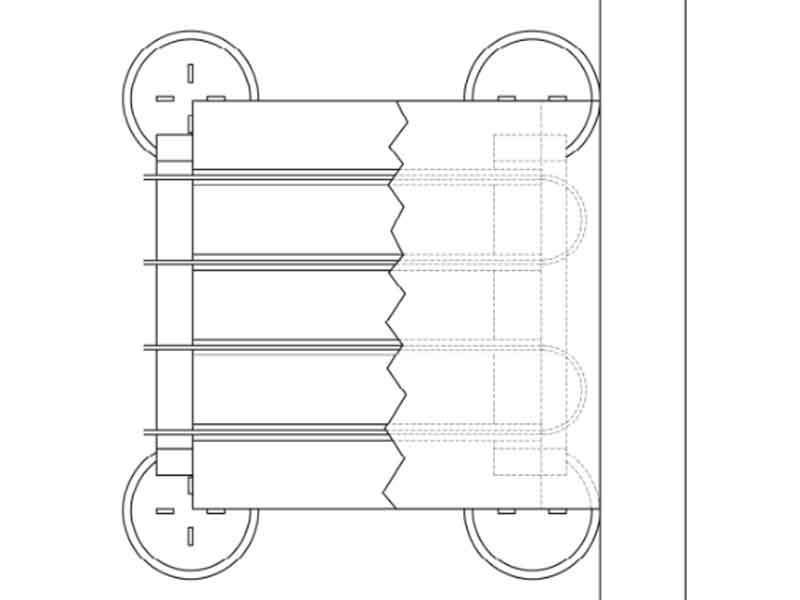
Panel size: 23.5” x 23.5” (other sizes on request)
Profile height: 1 5/16” including insulation
Material: Aluminum sheet with polyurethane insulation
Heating element: Mineral insulated resistance cable
Power consumption (typical): 40W per sq. ft.
All systems are custom designed for the specific application and requirements.
Installation
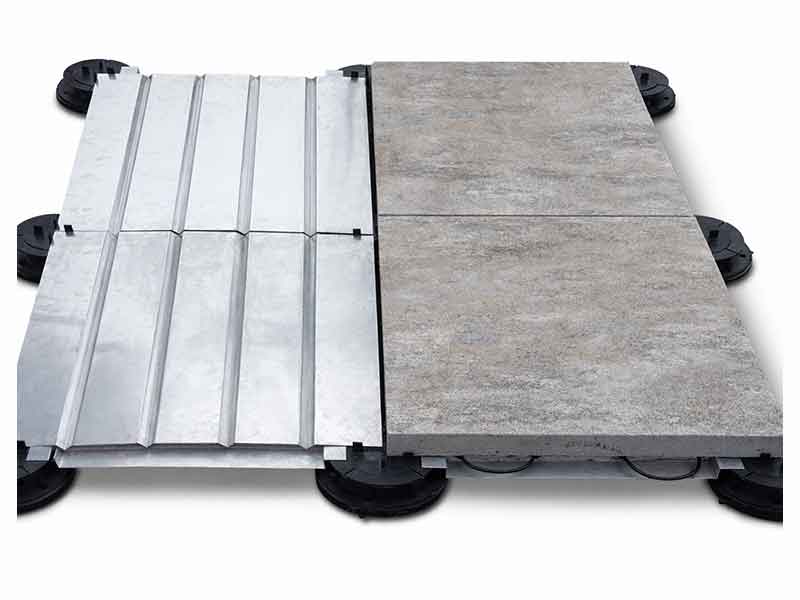
Installation of the Heatizon electric snow melt system is straightforward and does not require specialized mechanical contractors. System layout and panel placement can be completed as part of the pedestal deck assembly, with final electrical connection performed by a certified electrical contractor.
Aluminum support brackets are positioned between adjustable pedestals to support insulated aluminum heating trays. Pre-fabricated heating cables are laid within the tray channels across the designated heated area and routed back to a centralized connection point. The system is connected to a control box that allows manual operation or automatic activation through a snow sensor.
FAQs
Frequently asked questions about snowmelt systems for porcelain pavers.
Snow melt systems for outdoor surfaces generally fall into two categories: hydronic systems and electric systems.
Hydronic snow melt systems circulate heated fluid through a network of tubing installed beneath the surface. These systems typically require boilers, pumps, manifolds, and mechanical piping infrastructure, along with space for mechanical equipment.
Electric snow melt systems use insulated heating cables powered by electricity. Systems such as the Heatizon solution install beneath pedestal-supported pavers using aluminum trays that hold the heating cables and direct heat upward through the paver surface.
Because electric systems do not rely on fluid circulation, they eliminate the need for boilers, pumps, and hydronic piping networks, simplifying design coordination and installation.
Electric snow melt systems use insulated heating cables installed beneath the paver surface to generate heat and prevent snow and ice accumulation.
In the Heatizon snow melt system, heating cables are placed in channels within aluminum trays positioned beneath pedestal-supported pavers. Insulation beneath the trays directs heat upward through the pavers, warming the surface and helping melt snow and ice as it accumulates.
No. Electric snow melt systems operate entirely from electrical power and do not require boilers, pumps, gas service, or hydronic piping networks.
The Heatizon system uses electrically powered heating cables installed beneath the pavers. Because there is no circulating fluid, the system avoids hydronic loop design and mechanical equipment coordination.
Yes. Electric snow melt systems can be configured to heat specific zones rather than an entire deck surface.
Heating can be concentrated in walkways, entry paths, or frequently used areas, or extended across the entire deck depending on project requirements and available electrical capacity.
Snow melt systems installed beneath pedestal-supported pavers require sufficient space within the pedestal cavity to accommodate the heating components and maintain drainage beneath the deck.
For the Heatizon system, a minimum clearance of approximately 1 3⁄4 inches beneath the pavers is required. This space allows room for the aluminum heating trays, integrated insulation, and proper air and water drainage within the pedestal-supported assembly.
Because the system installs within the pedestal cavity, it can typically be integrated into pedestal deck assemblies without increasing the finished deck height, provided the required clearance is available.
Related Systems
-
Wind Uplift Solutions for Pedestal and Paver Decks
Wind uplift solutions for pedestal supported pavers decks with 2cm and 3cm pavers.
-
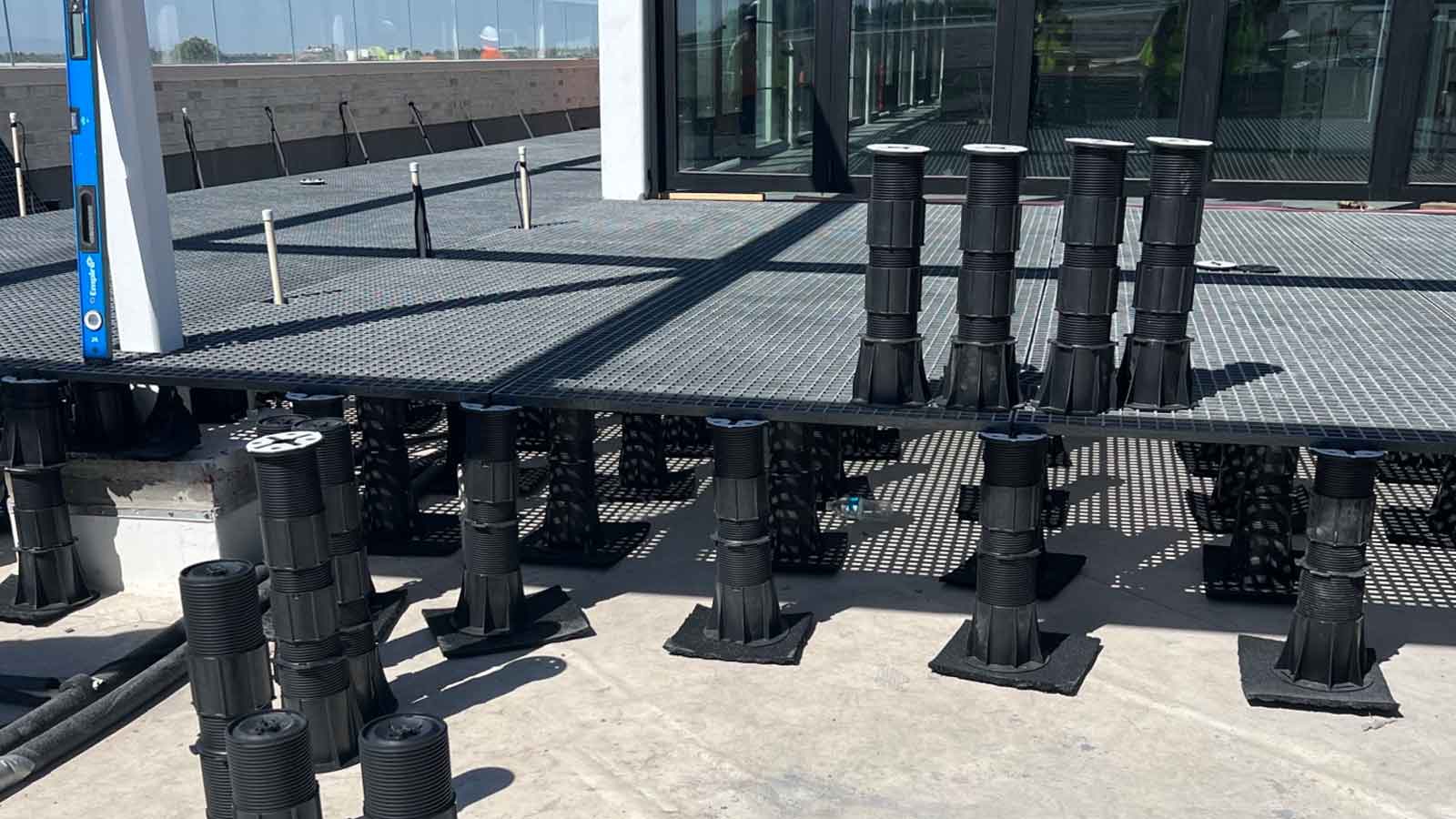
FRP Grating for Elevated Stone & Paver Roof Decks
Molded FRP panels make a highly stable elevated support platform for a variety of paving materials.
-
Support for Elevated Green Roof Systems
Components to create simple and beautiful vegetated green roofs.
-
Elevated Artificial Turf Decks
FRP and pedestals for creating elevated artificial turf decks.
-
Electric Paver Snow Melt System
Electric snowmelt system for elevated paver decks.
-
Plate and Sheet Paver Backing
Additional paver support options and breakthrough protection.
-
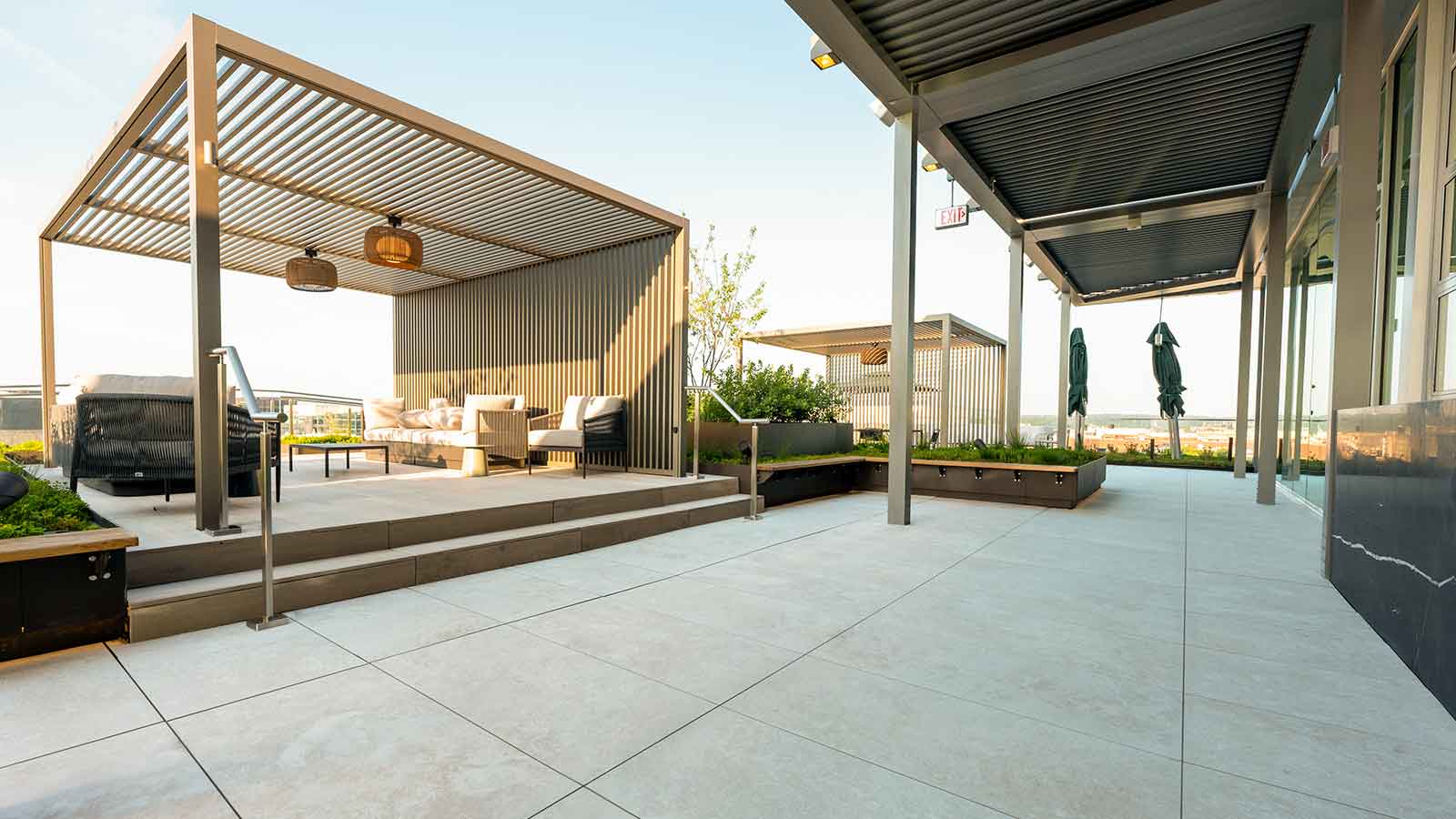
Roof Deck Pavers
Highly aesthetic and durable porcelain roof pavers in varying sizes and thicknesses.
-
Non-Combustible Rooftop Decks
Class-A rated, 100% fireproof deck construction.