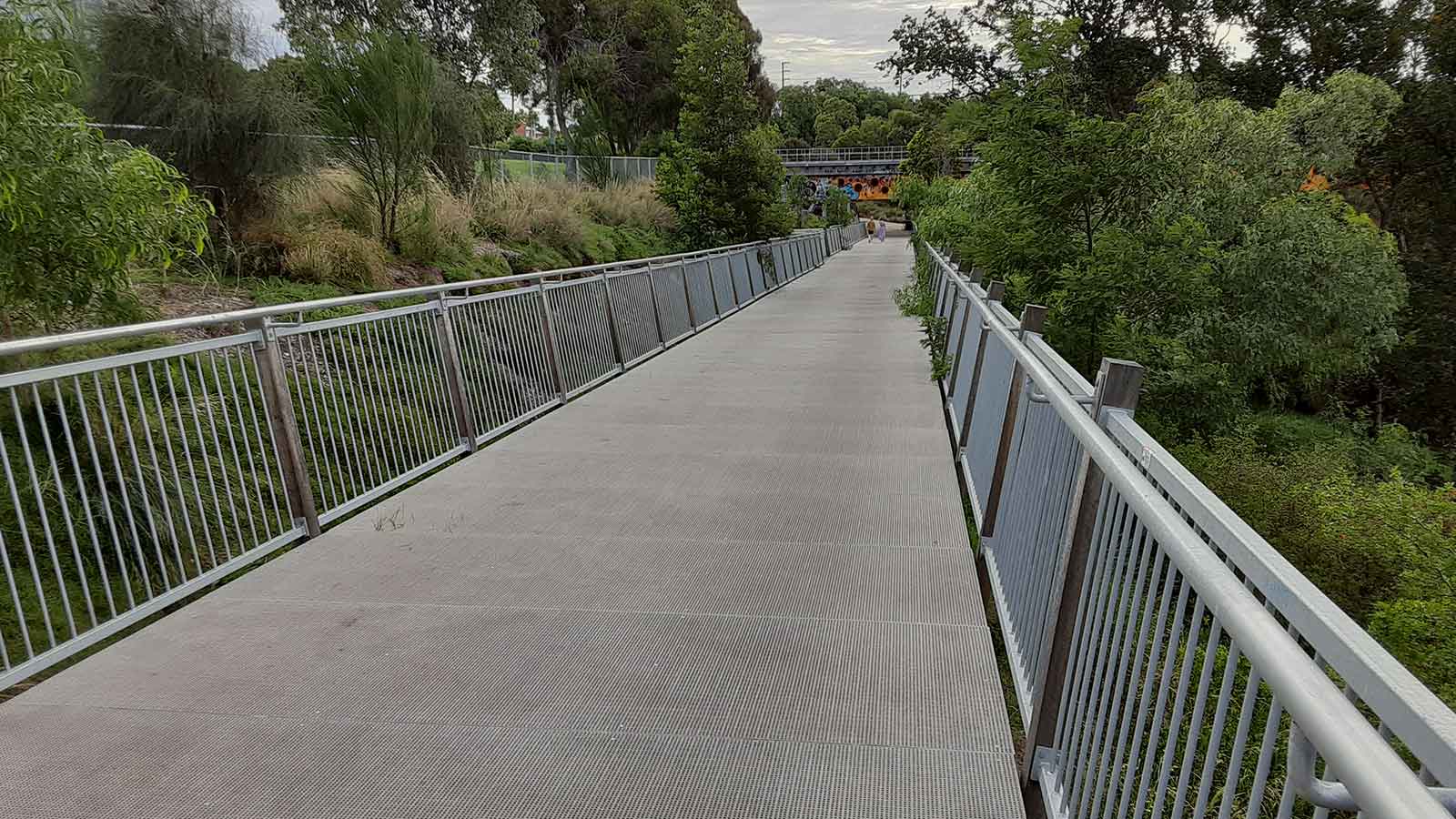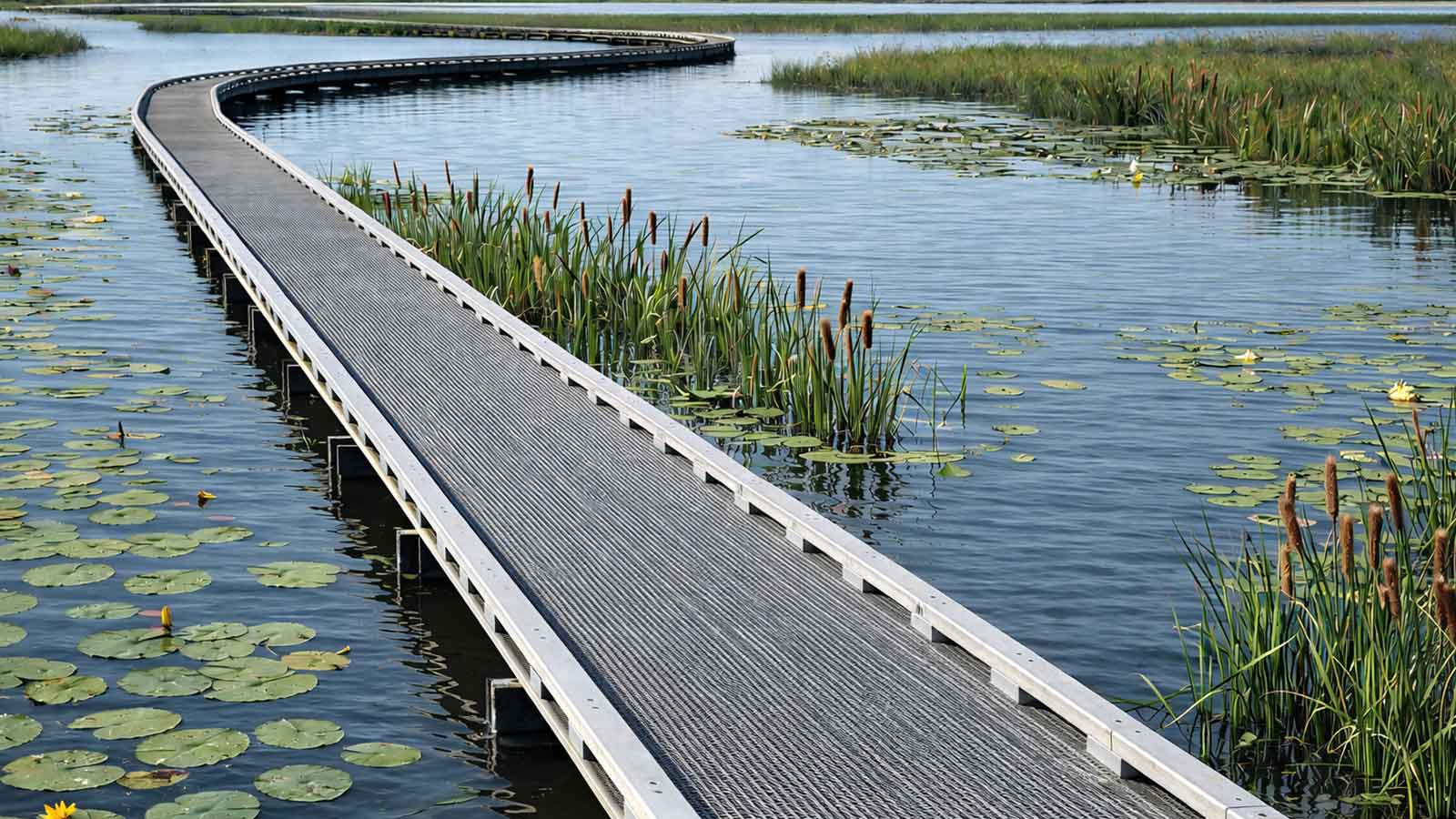
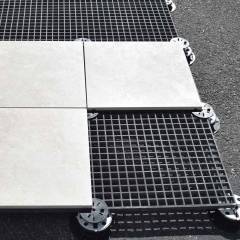
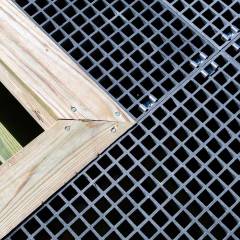


FRP features one of the highest strength-to-weight ratios of any comparable material, very high impact resistance, Class A fire resistance, excellent slip resistance, and the ability to withstand the most extreme weather and coastal conditions.
Archatrak SpanTrak FRP grating panels offer outstanding long-term performance for elevated pedestrian decks, exterior walkways, and stairways, unmatched by other decking materials.
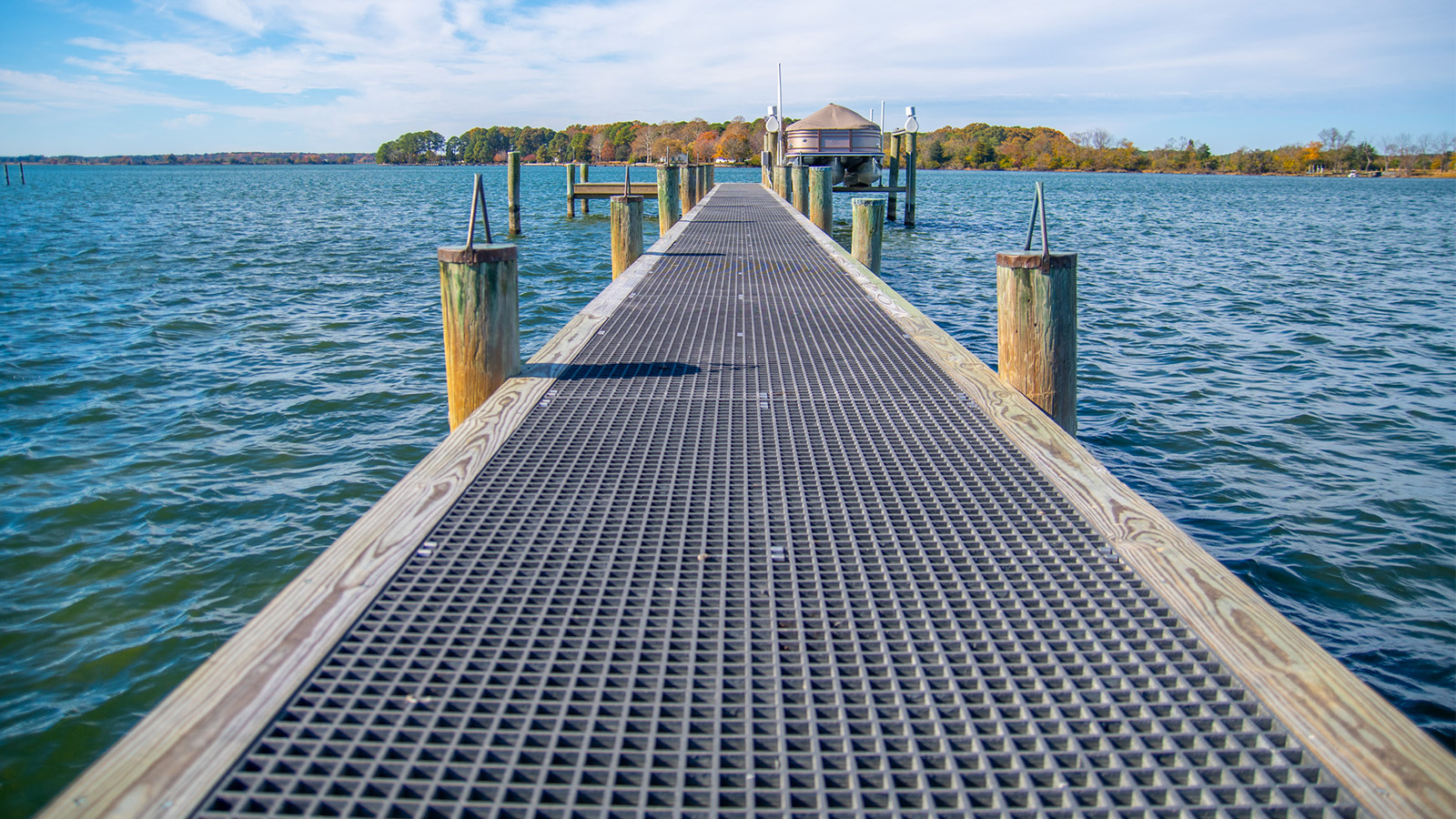
In coastal and lakeside environments, fiberglass decking delivers exceptional slip resistance and durability for jetties, pontoons, piers, platforms, stairs, and landings, remaining unaffected by salt exposure and constant spray.
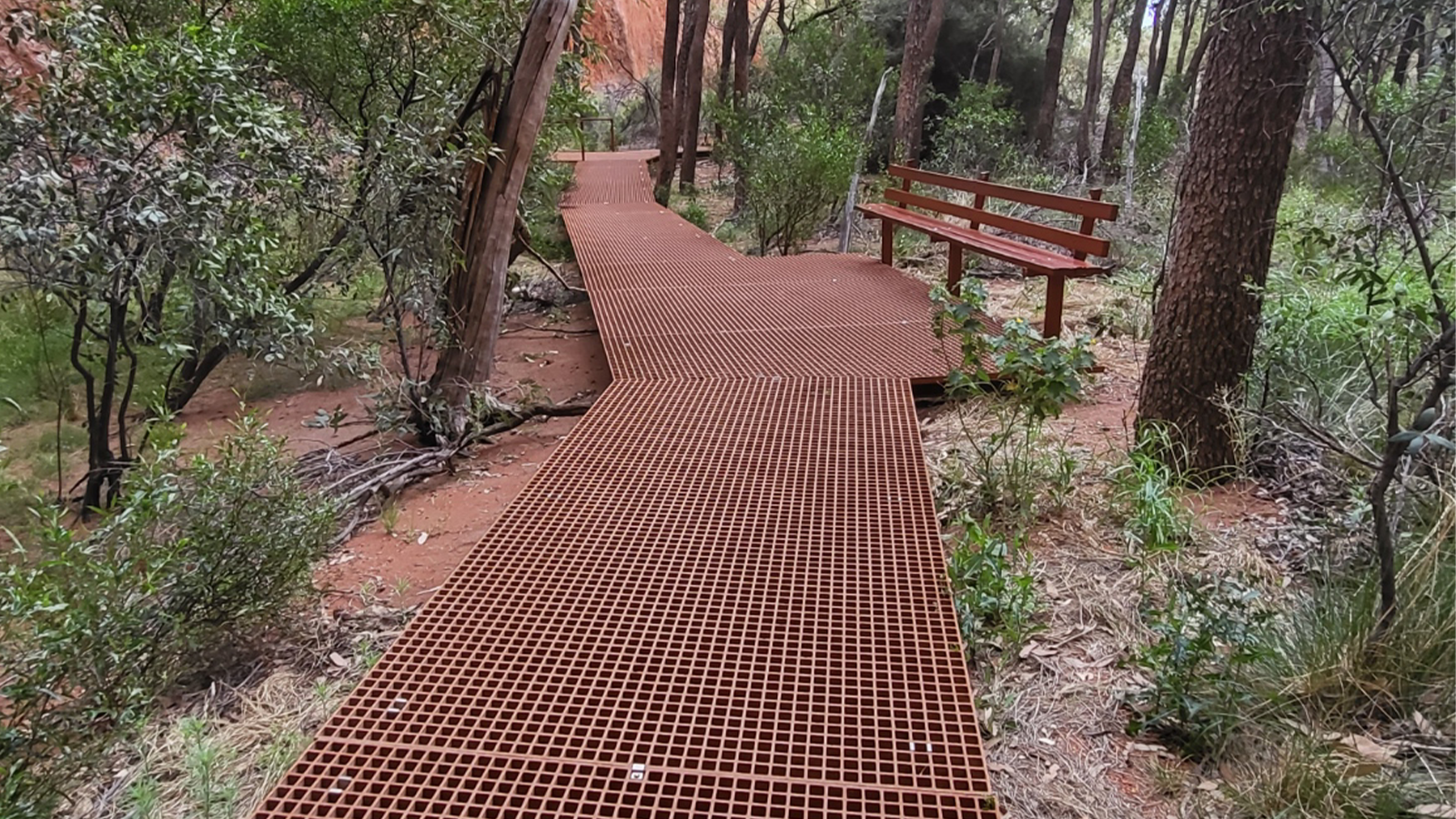
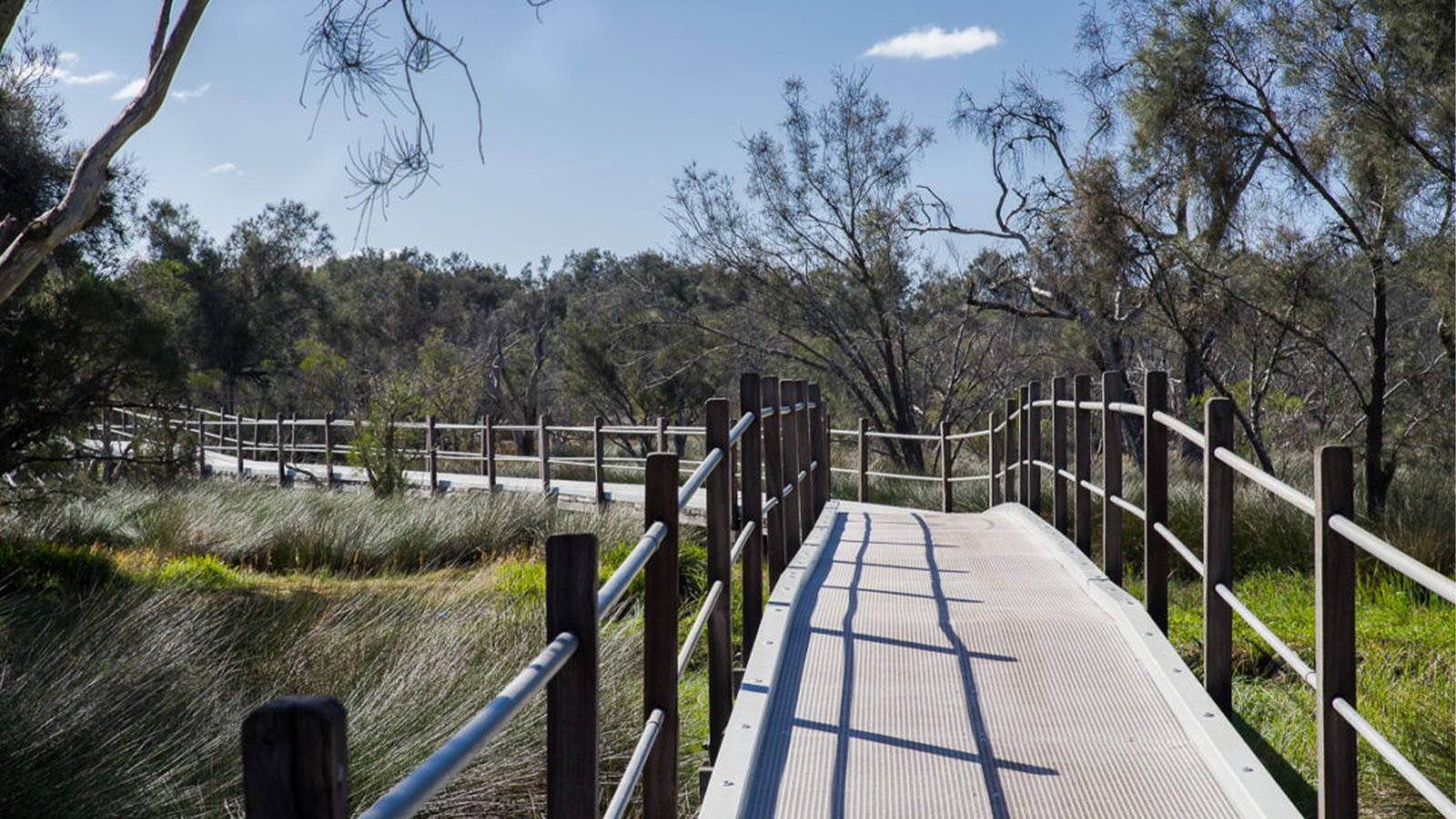
FRP grating is also ideal for boardwalks in remote or environmentally sensitive areas where timber and steel are vulnerable to rot and corrosion. Its lightweight construction, ease of installation, long service life, and low maintenance requirements make it a practical choice where safety and durability are paramount.
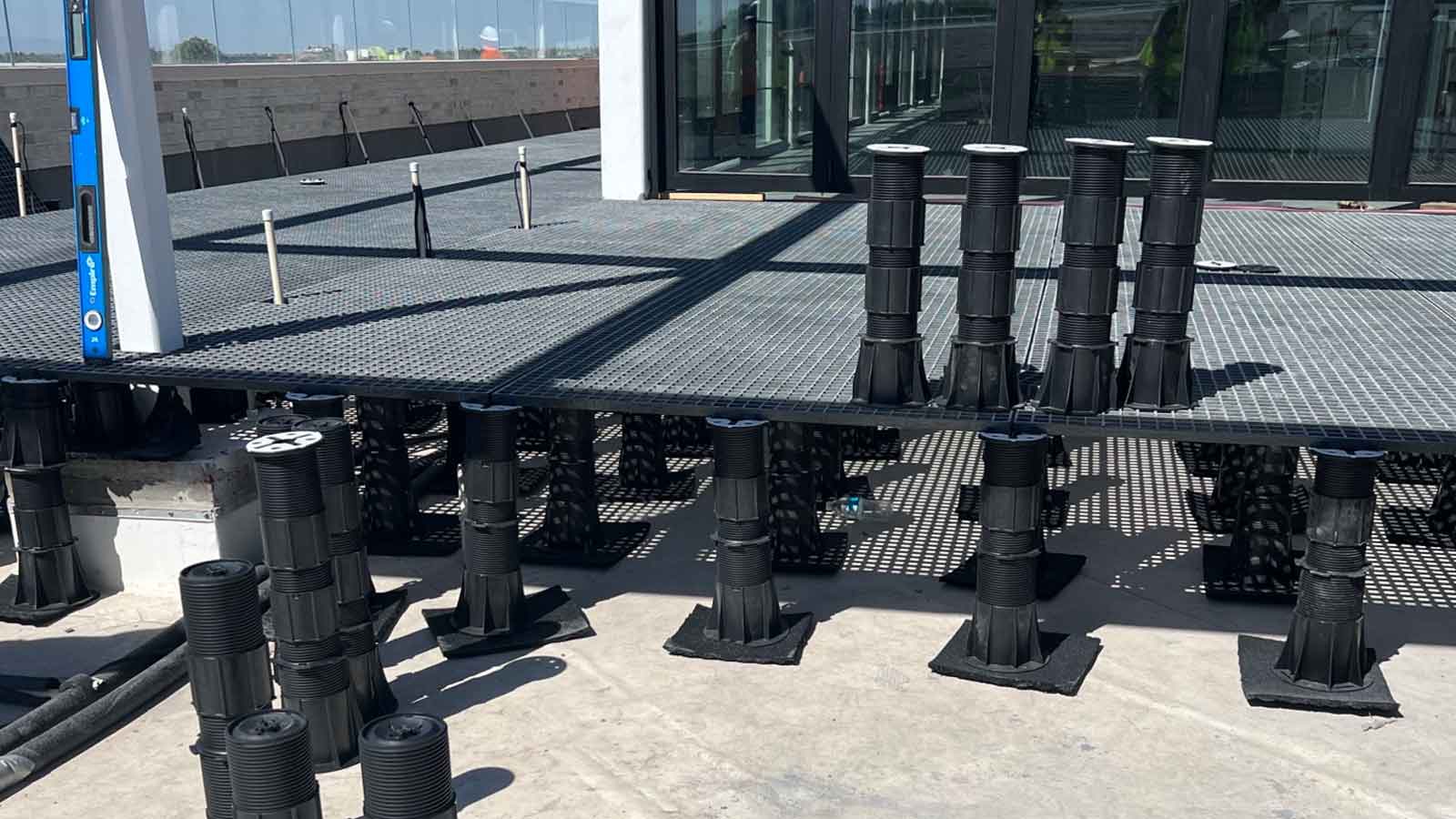
On rooftops, FRP grating panels supported by adjustable-height pedestals provide a stable, perfectly level, and rapid draining base for synthetic turf decks. They can also be used to support green roof trays, and stone or porcelain pavers where a strong, stable base is required.
Benefits

Unmatched Slip-resistance
Bonded grit surface gives wet PTV of 72 by ASTM E303-22 (almost 2 times recommended minimum for external surfaces).

Lightweight
Only 1/4 the weight of steel grating and 33% lighter than aluminum.

Class A Fire Resistance (ASTM E84)
FRP grating panels passed ASTM E84 Class A standards for spread of flame index and smoke developed index.

Corrosion and Weather Resistant
Unaffected in marine environments and prolonged exposure to wet conditions.
Electrically Non-Conductive
FRP does not carry a current, ideal for data centers and other applications with electrical equipment.
High Load Capacity
Delivers exceptional strength-to-weight performance for demanding structural applications.
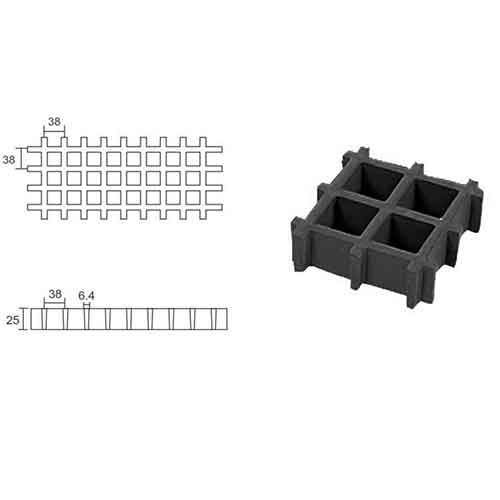
SpanTrak MacroMesh
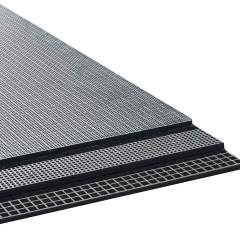
Our SpanTrak MacroMesh FRP grating panels have 1 ½” x 1 ½” primary load bars giving an aperture size of 1 ¼” x 1 ¼”.
MacroMesh grating is typically used where there are no concerns about small objects falling through the mesh and the panels will not be subject to small wheeled traffic. MacroMesh panels are supplied with a gritted finish as standard but can be inverted if a smooth finish is required.
Primary grid bars: 1 ½” x 1 ½” (on center)
Aperture: 1 ¼” x 1 ¼”
Load bar thickness: ¼”
Open space: 68%
Std. panel thickness: 1 3/16”
Panel size: 4′ x 8′
Weight: 2.5 lb/sq.ft.
Standard Color: dark grey (other colors on request)
Fire resistance: Class A (ASTM E84)
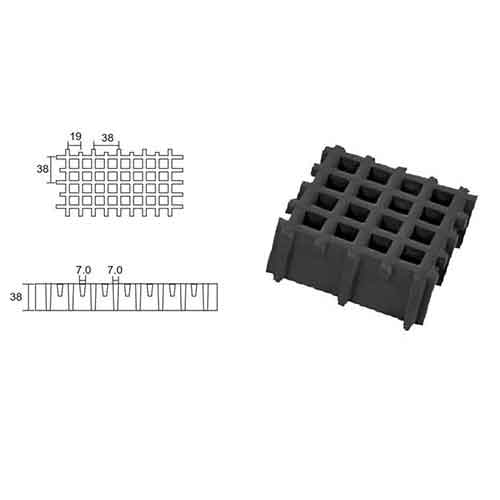
SpanTrak MidiMesh
Our SpanTrak MidiMesh FRP grating panels have 1 ½” x 1 ½” primary load bars with an extra intermediate cross bar at the top of the grating, ½” deep creating a ½” x ½” aperture. The smaller apertures provide good water drainage and airflow, prevent objects from falling through and provide a surface more suitable for small children, pets, prams, cyclists, wheelchairs, and other small wheeled traffic.
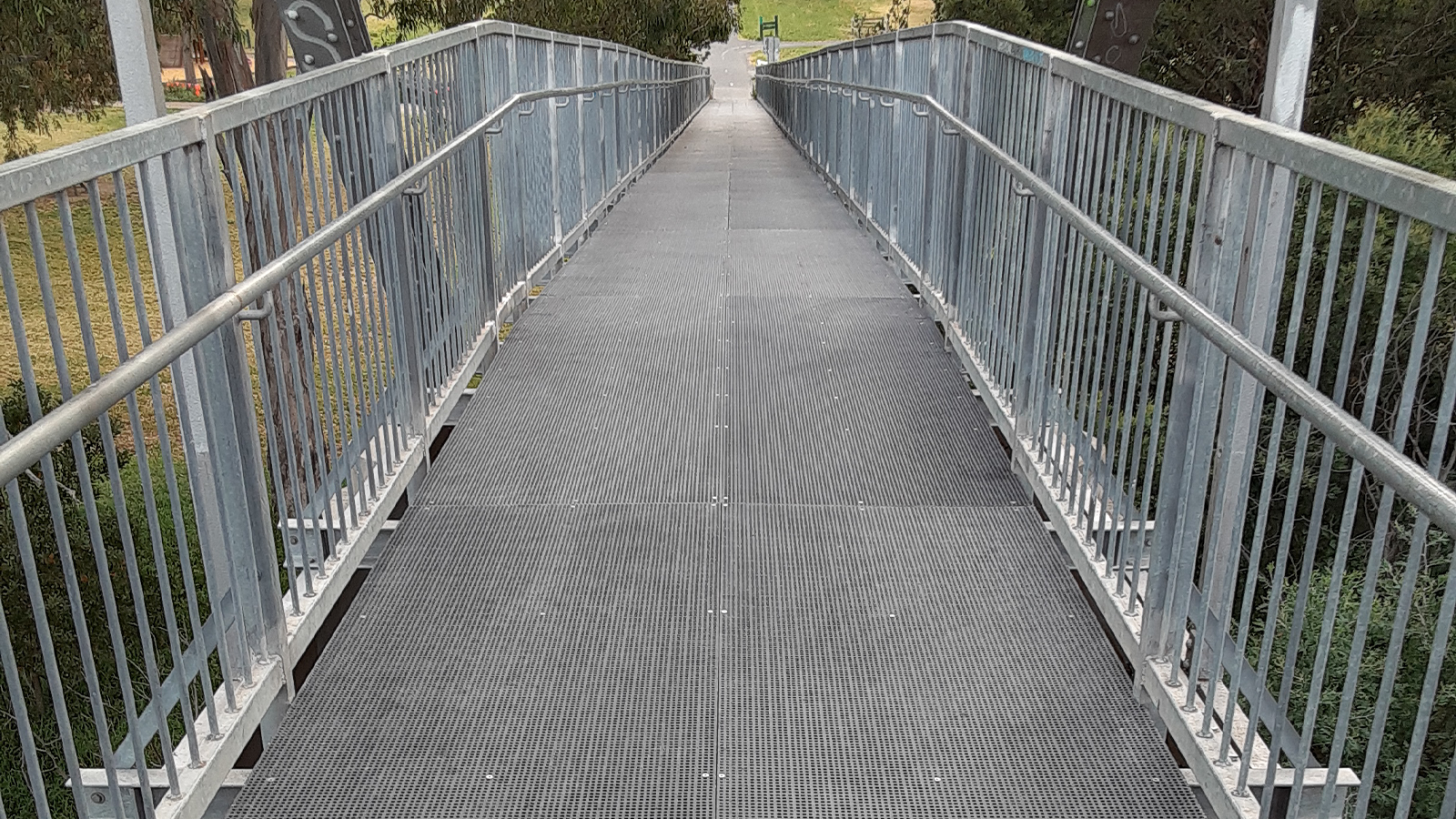
MidiMesh grating panels are typically preferred for elevated public walkways and boardwalks, especially in parks, wetlands and reserves, as well as for pedestrian access decking on docks, piers, boat lifts, pontoons and jetties.
For beach access applications, a gritted finish can be harsh on bare feet so MidiMesh with a concave (also called meniscus) surface may be preferred.
Primary grid bars: 1 ½” x 1 ½” (on center)
Secondary grid bars: ¾” x ¾” (on center)
Aperture: ½” x ½”
Load bar thickness: ¼” (primary), ¼” (secondary)
Open space: 42%
Std. panel thickness: 1 3/16”
Panel size: 4′ x 8′
Weight: 3.5 lb/sq.ft.
Standard Color: dark grey (other colors on request)
Fire resistance: Class A (ASTM E84)
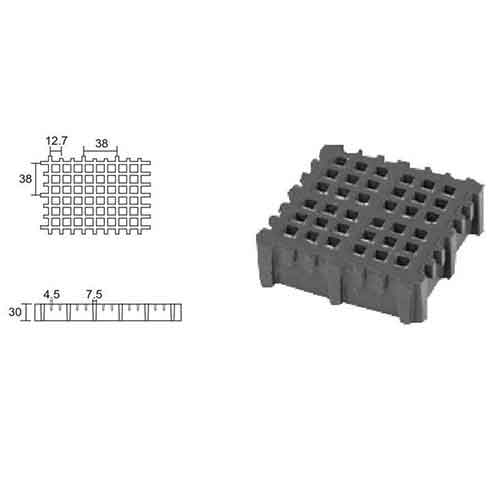
SpanTrak MiniMesh
Our SpanTrak MiniMesh FRP grating panels have 1 ½” x 1 ½” primary load bars with two extra intermediate crossbars at the top of the grating, ½” deep, creating apertures of just ¼” x ¼”. The small apertures prevent most objects from falling through while still providing good drainage.
MiniMesh is recommended for pedestrian-friendly walkways frequented by pet walkers, strollers, carts, other small wheeled vehicles and especially high heel shoe wearers. For elevated turf applications, the small aperture size creates a smooth, strong surface that still allows water to drain efficiently.
Primary grid bars: 1 ½” x 1 ½” (on center)
Secondary grid bars: ½” x ½” (on center)
Aperture: ¼” x ¼”
Load bar thickness: ¼” (primary), 3/16” (secondary)
Open space: 30%
Std. panel thickness: 1 3/16”
Panel size: 4′ x 8′
Weight: 4.5 lb/sq.ft.
Standard Color: dark grey (other colors on request)
Fire resistance: Class A (ASTM E84)
FRP Gallery
Technical Specs
Archatrak SpanTrak FRP molded grating panels are manufactured with interwoven high-strength glass rovings embedded in a thermosetting resin matrix.
Although four main types of resin systems are available in the USA, Archatrak SpanTrak FRP panels are exclusively manufactured with isophthalic Type-I resins combined with Aluminum Hydroxide filler (not Calcium Carbonate). Only such resins, fillers and additives can provide the fire resistance, smoke suppression and long-lasting performance needed for boardwalk and marine deck applications.
Gritted:
This is the standard or default surface. Quartz grit is bonded to the top surface of the panels providing a surface with excellent slip resistance in wet, oily and icy conditions.
Concave:
The concave production finish is created when the top surface of the panels shrinks back when curing. Typically used where some slip resistance is required, but a gritted surface may be too harsh.
Smooth:
The concave post-production finish is sanded to a flat surface and then coated with resin.
** Concave or smooth surface panels can be supplied on request, subject to minimum order quantity and production schedules.
Installation
Typically, FRP panels only require stainless steel clips to tie the panels together and to secure the panels to wood bearers or steel I beams. Clips are typically positioned at intervals of 24” to 48”. Bugle batten screws can also be used to secure panels to wood substructures.
Archatrak FRP grating installation guidelines can be accessed from the link below.
FRP Installation Resource PageWarranty
Archatrak warrants to the original purchaser that its Fiber Reinforced Plastic (FRP) Grating Panels shall be free from material defects in workmanship and materials for a period of three (3) years from the date of original purchase, under normal use and service condition.

Warranty
Limited FRP Panel Warranty
Downloads
Load Deflection Tables
FRP Datasheet
3-part Guidespec – FRP
CAD MiniMesh FRP
CAD MidiMesh FRP
CAD MacroMesh FRP
FRP – Paver to Syn Turf Level 1 pedestal
FRP – Paver to Syn Turf Level 2 pedestal
Fire Resitance Test ASTM E84
Slip Resistance ASTM E303-22
While both products offer a strong, lightweight and corrosion resistant alternative to steel and wood in outdoor decking, boardwalks, walkways, stairs, ramps, platforms and access walkway applications, there are key differences in how the two products are manufactured and thus how they perform.
Molded grating as the name implies, is produced as a single piece in a mold, typically in a mesh pattern, where the application requirements determine the aperture size of the mesh and height of the grating to be used. Its excellent bi-directional strength makes it particularly useful for covering broad areas with minimum joints.
On the other hand, pultruded grating is produced with continuous fiberglass rovings laid to form parallel load bearing bars and cross rods. It typically offers higher strength and stiffness in the direction parallel to the bars and can be produced in longer spans, making it more suitable for demanding structural applications.
The right aperture (mesh opening) depends on safety requirements, foot traffic, and the need for drainage or debris control.
In general, smaller apertures prioritize safety and comfort underfoot, while larger apertures prioritize drainage, airflow, and efficiency. Selecting the right size ensures the grating performs properly for both the environment and the end user.
-
Small apertures
Best for pedestrian areas where safety is critical, such as walkways, ramps, and public-facing spaces. The tighter grid provides better slip resistance and prevents small objects or heels from falling through. -
Standard apertures
The most common and versatile option for general industrial use, including platforms, catwalks, and trench covers. This size balances strength, drainage, and cost, making it suitable for most commercial and industrial environments. -
Large apertures
Used in applications where maximum drainage, ventilation, or debris pass-through is needed, such as equipment areas or heavy-duty industrial zones. These are typically paired with thicker panels for higher load capacity.
While the basic resins used to produce FRP grating have limited fire resistance, fire retardant additives can be included during the manufacturing process
Archatrak SpanTrak FRP grating for example has been tested in accordance with ASTM E84 and achieved a Class A fire rating for both spread of flame and smoke developed index.
Much lighter: FRP is ¼ the weight of steel
Corrosion resistant: FRP does not suffer from corrosion or rust
Softer underfoot: FRP panels deflect slightly under load giving a slightly springy feel which is generally preferred by pedestrians
Lower maintenance: Since steel can rust or corrode, it requires regular inspections to check that structural integrity is maintained or if protective coatings must be re-applied.
Longer lifespan: Lifetime of steel depends to a large extent on the quality of corrosion protection which means that working life can be as short as 5 years or in excess of 30 years. Lifetime of FRP grating however is generally quoted as more than 30 years.
Easier Installation: Steel grating generally needs to be fabricated off site to comply with size and shape requirements at the installation site. FRP grating panels can be cut to shape and size as needed on site with standard power tools.
With the right combination of resins, fillers, and additives, FRP grating panels can achieve a service life exceeding 30 years, including in aggressive or high-exposure conditions.