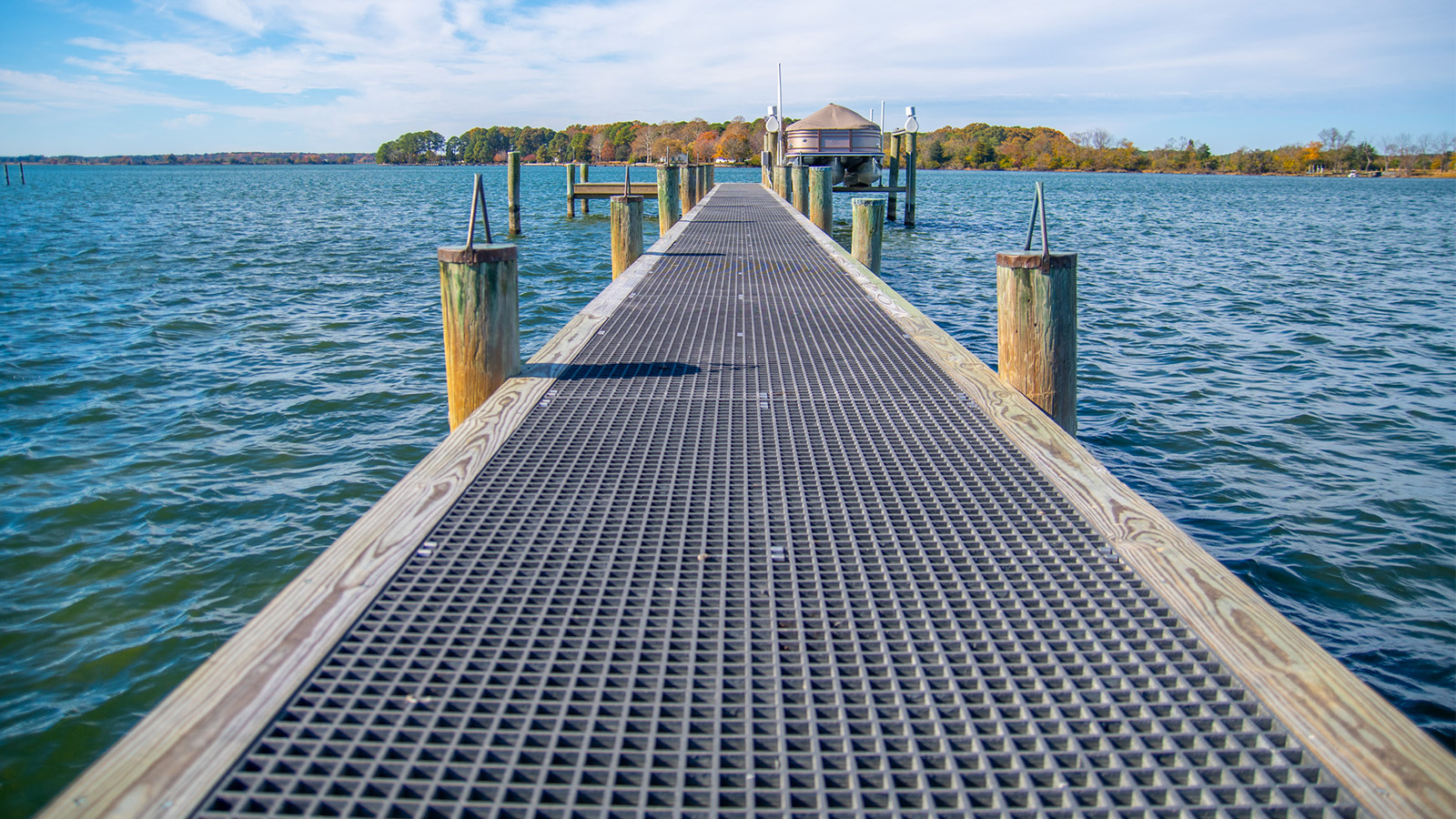
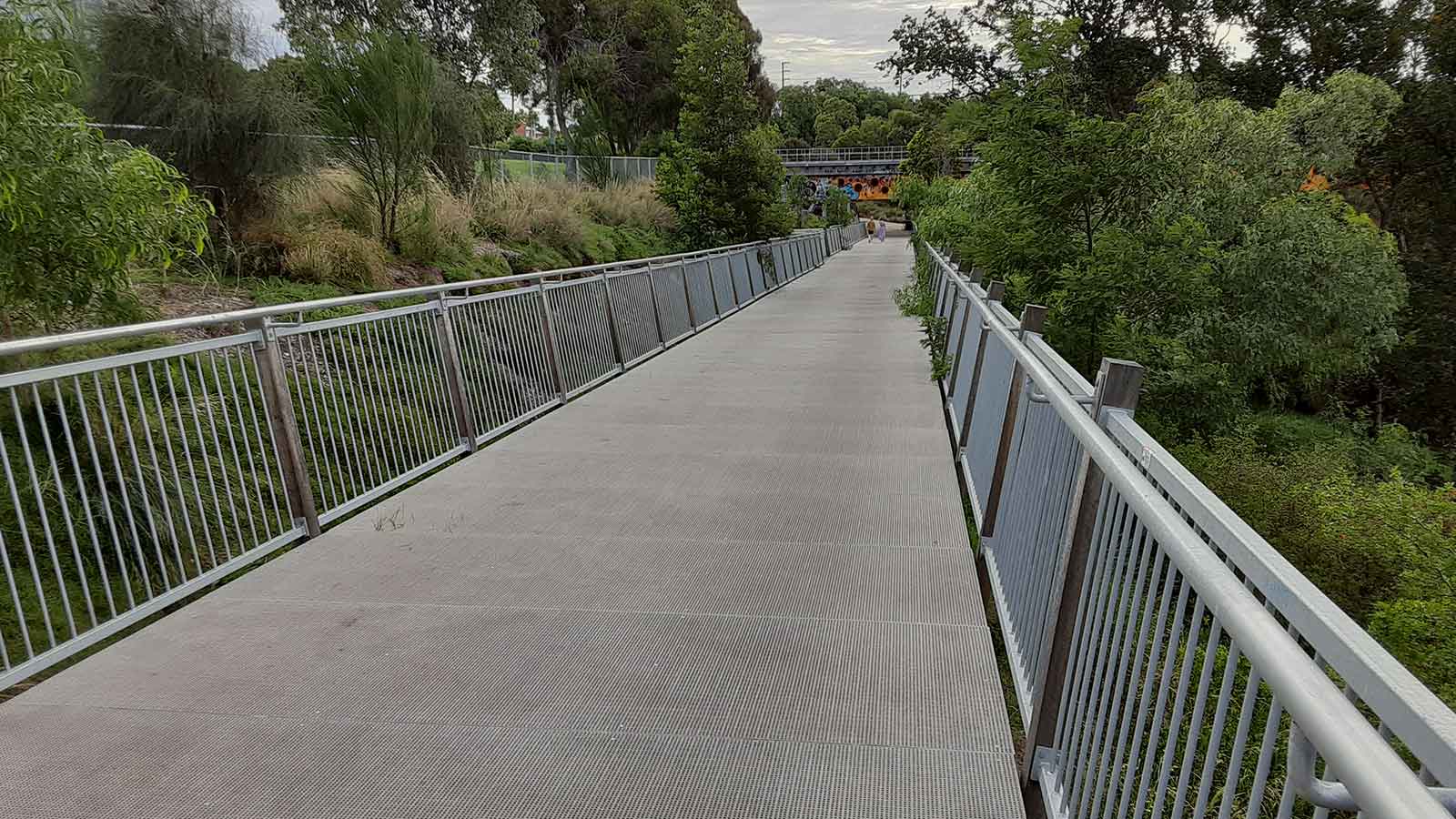
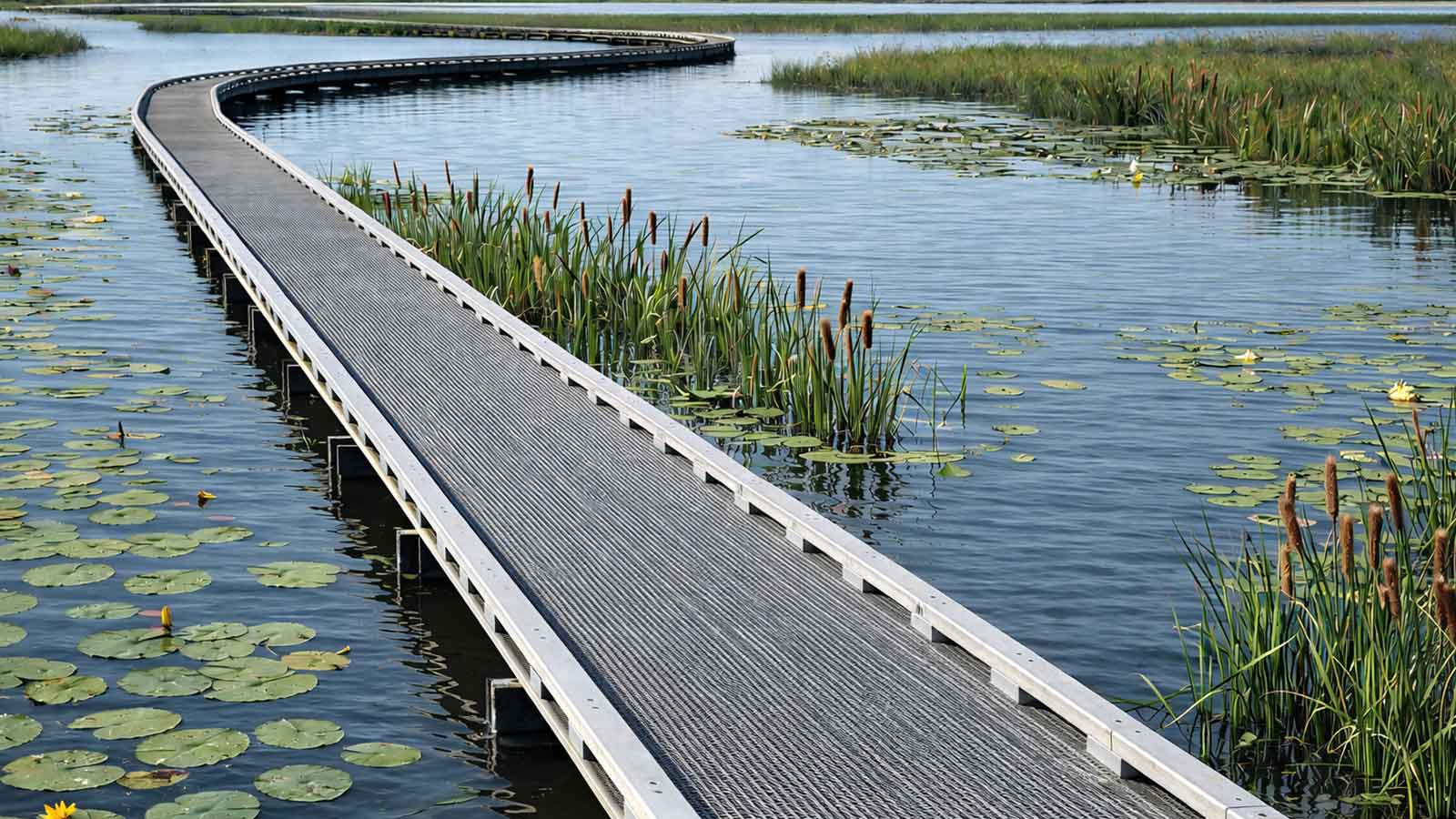
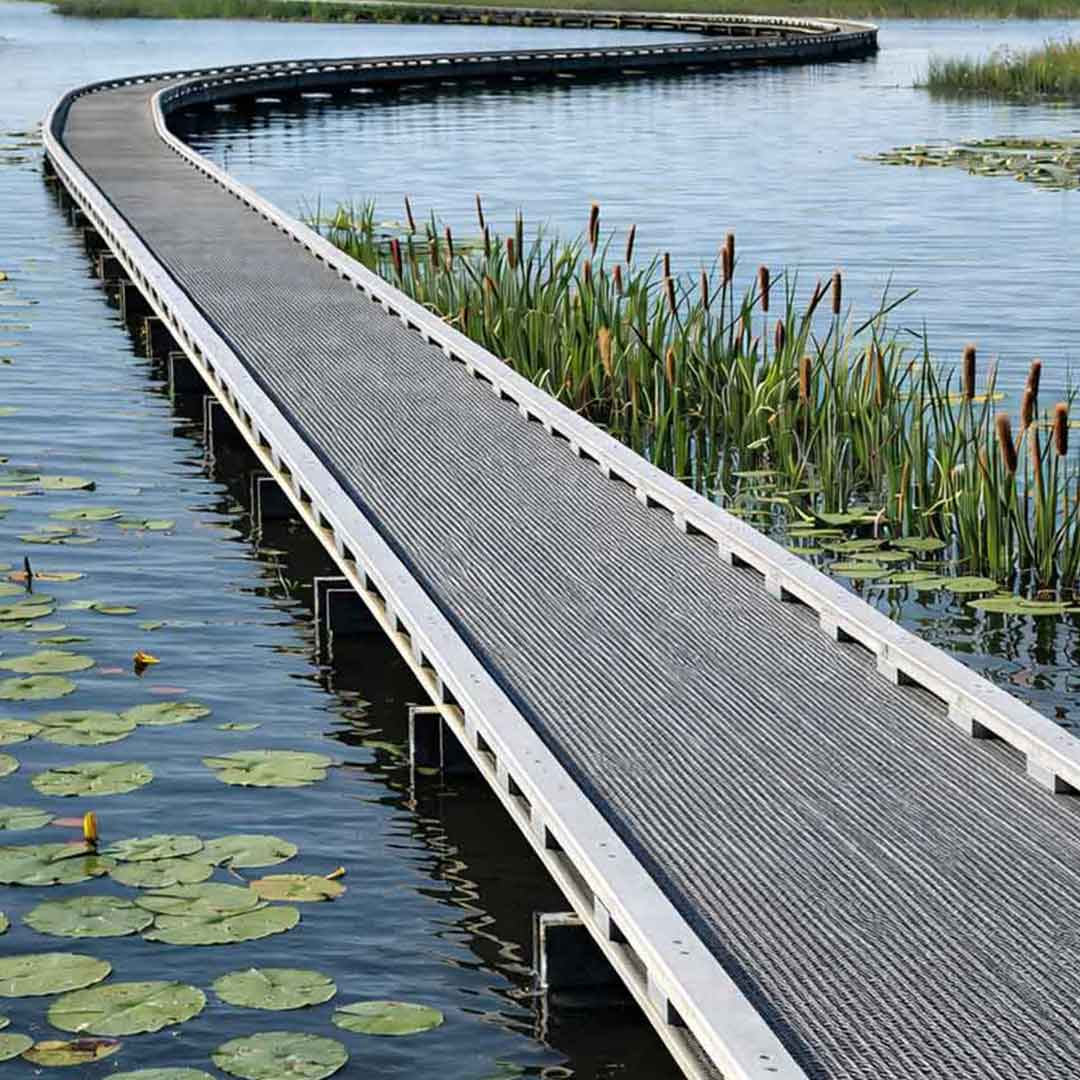
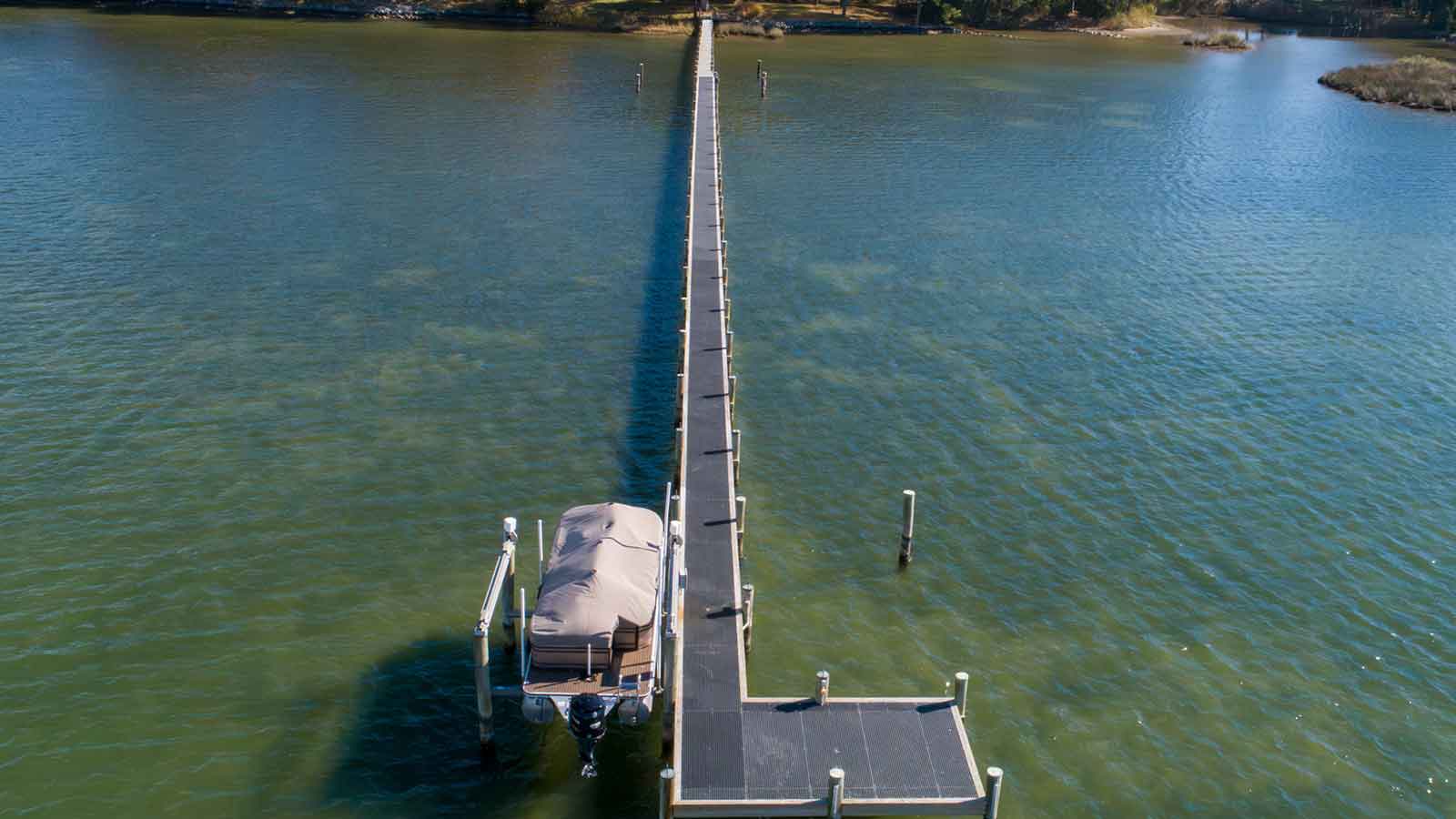
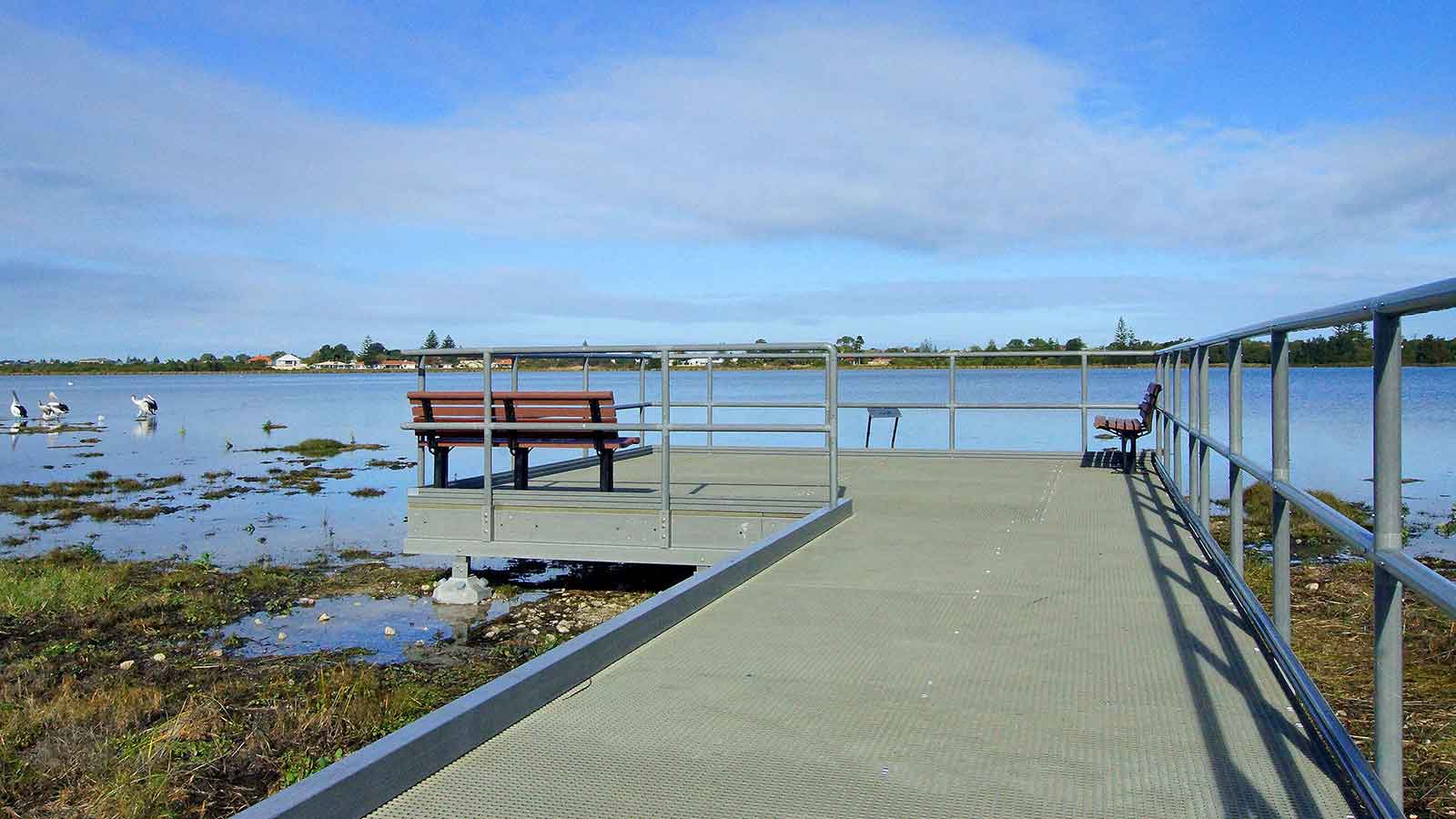
In coastal and lake environments, fiberglass decking consistently outperforms traditional materials as a highly slip resistant and corrosion resistant surface for jetties, pontoons, piers, walkways, platforms, staircases, and landings
Archatrak SpanTrak FRP grating has earned an enviable reputation in marina and dock construction for its strength-to-weight ratio, long-term durability, and exceptional slip resistance. Unlike steel, FRP will not corrode. Unlike wood, it will not decay, crack, warp, or splinter in wet environments.
Manufactured with Type I Isophthalic resins and supplied in 4′ x 8′ structural panels, SpanTrak installs faster than wood planking and requires no sealing, painting, or corrosion treatment, making it one of the lowest maintenance decking options available for marine environments.
Benefits of SpanTrak FRP Grating for Marine Environment Decking

No Corrosion or Decay
Salt and algae resistant, FRP will not rust, rot, warp, or splinter in wet marine environments.
High Structural Strength
Excellent impact resistance and resistance to sagging, with a robust strength-to-weight ratio that outperforms wood and composite decking.

Class A Fire Resistant
Aluminum Hydroxide filler achieves Class A rating when tested to ASTM E84.

Unsurpassed Slip Resistance
Gritted, anti-slip surface maintains exceptional traction in salt spray, ice, and oily conditions.
Easy Installation
4′ x 8′ panels secure to joists with stainless steel clips at 48″ intervals and cut on site with a power saw.

Low Maintenance
No sealing, painting, or corrosion treatment required, year after year.
Additional FRP Benefit
Why Light Penetration Matters in Marine Environments
Light penetration is a key factor in dock design because it directly affects aquatic vegetation, habitat health, and environmental permitting. Many agencies require open decking with 50–60% open area to reduce shading beneath overwater structures, making material selection critical for compliance.
Traditional solid decking can significantly reduce sunlight reaching the water below, limiting photosynthesis and impacting marine ecosystems. Open FRP grating allows light to pass through the deck surface, helping preserve vegetation and supporting use in regulated waterfront applications where minimizing environmental impact is required.
Key Design Considerations:
-
Open area drives performance
50–60% open decking commonly required for permitting -
Grating spacing matters
Larger apertures allow more light below -
Solid decking increases shading
Can limit vegetation and habitat health -
Supports permitting approvals
Helps meet environmental regulations for docks
FRP grating systems are commonly specified where environmental compliance and long-term durability are required.
Contact UsGallery
Technical Specs
Spantrak Grating Options
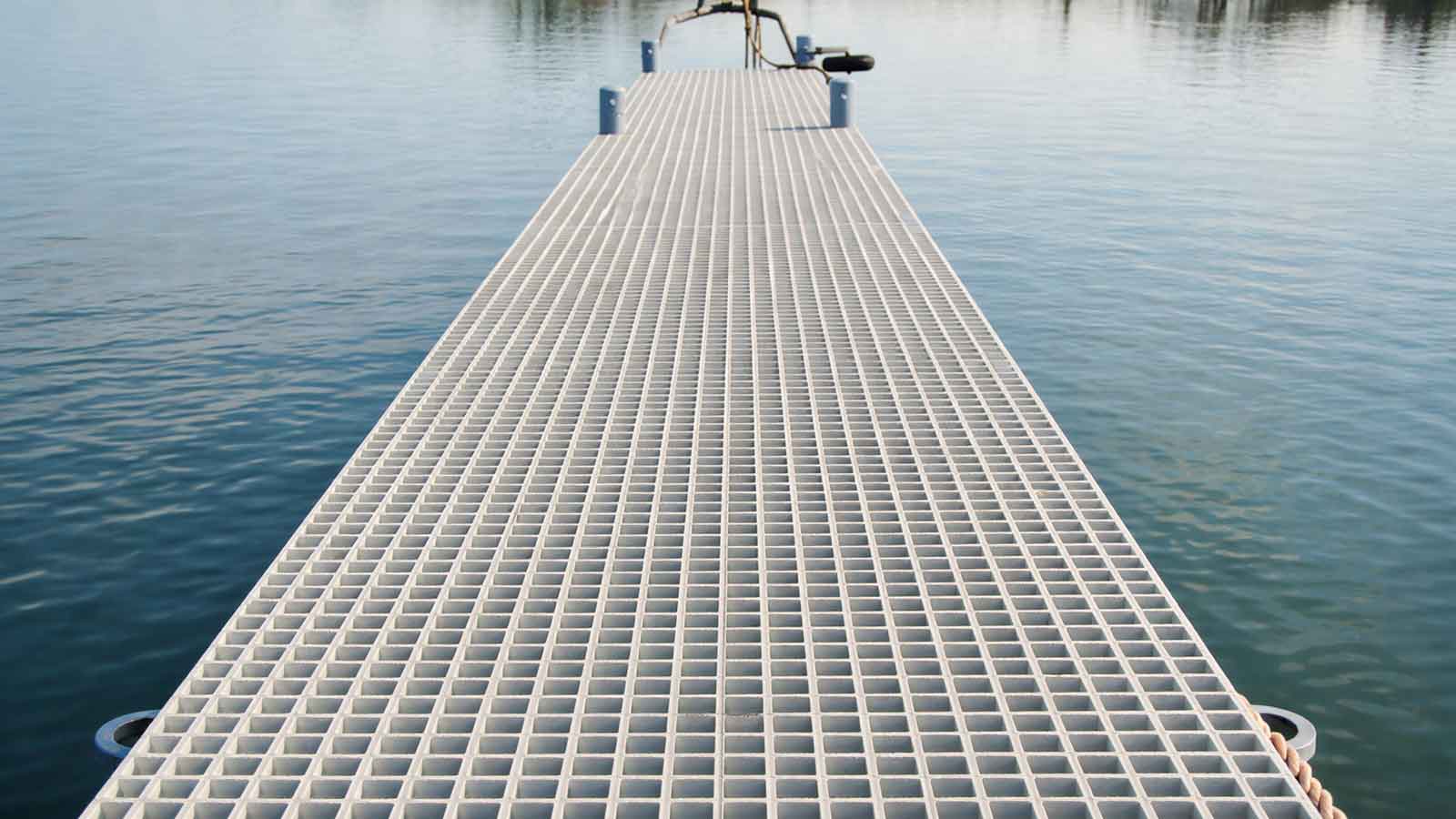
SpanTrak MacroMesh is a popular choice for marina and dock applications where a larger aperture is preferred. With a 1-1/4″ x 1-1/4″ grid opening, MacroMesh allows water and debris to drain freely while maintaining a strong, stable walking surface.
SpanTrak MidiMesh offers a tighter 1/2″ x 1/2″ aperture where preventing smaller objects from falling through is a priority. The closer mesh also delivers a smoother rolling surface for wheelchairs, carts, delivery trolleys, bicycles, and scooters.
Custom panel sizes and colors are available on special order.
Specifications
All our fiberglass grate panels use aluminum hydroxide filler (not calcium carbonate) for maximum fire resistance (flame retardant and smoke suppression) and contain UV stabilizers.
Archatrak MidiMesh
Thickness: 1 1/4″
Primary load bars: 1 1/2″ x 1 1/2″ on center
Secondary load bars: single bar between primary bars – 1/2″ deep
Mesh aperture: 1/2″ x 1/2″
Surface: anti-slip grit embedded in resin
Weight: 3.7 lb/sq.ft.
SpanTrak MacroMesh
Thickness: 1 1/4″
Primary load bars: 1 1/2″ x 1 1/2″ on center.
Mesh aperture: 1 1/4″ x 1 1/4″
Surface: anti-slip grit embedded in resin
Weight: 3.0 lb/sq.ft. of charge with paver(s) of comparible color and shade as determined by us.
Installation
Archatrak SpanTrak fiberglass grate panels for boardwalk decking applications are normally fixed to support bearers with max. span of 48″ (depending on the thickness of the fiberglass panel and anticipated loadings) using stainless steel M clips inserted in the grating apertures, with a minimum of four clips per panel. L clips are generally not recommended as they don’t have the same strength as M clips.
Where necessary, adjacent panels can be joined at the edges by means of stainless steel C clips.
Since the aperture size of MicroMesh panels is only 1/4″ x 1/4″, these panels are typically fixed to bearers with stainless steel screws or bolts with a 1/2″ diam. (min) head and a 6-lobe (Torx or equiv.) drive. A diamond cone drill with no pilot drill can be used to countersink the screws so the screw heads sit flush with the surface of the panels.
Where panels are installed over steel I or H beams and it may be difficult to drill through the beams, hold down clips with an extended base plate may be used.
Where a change in direction is required on a boardwalk, panels can be cut at an angle, taking care to ensure adjacent panels are cut at the same angle so the load bars match up when panels are joined. See our FRP installation page for further details.ree of charge with paver(s) ofcomparible color and shade as determined by us.
Downloads
Load Deflection Tables
FRP Datasheet
3-part FRP Guidespec
Spantrak FRP Brochure
MiniMesh CAD
MidiMesh CAD
MacroMesh CAD
Fire Resistance Test Results ASTM-E84
Slip Resistance Test Results ASTM E303-22
SpanTrak FRP Grating Synthetic Turf Support – CAD Drawings
Yes. FRP grating is highly resistant to saltwater exposure and will not rust or corrode like steel in marine environments. Unlike wood, it will not decay, splinter, or absorb moisture. This makes it particularly well suited for coastal marinas, piers, jetties, and waterfront walkways exposed to constant salt spray and tidal conditions.
SpanTrak FRP grating panels are supplied with a factory-applied gritted surface designed to maintain traction in wet conditions. Even in salt spray, rain, or icy environments, the anti-slip surface provides reliable footing for pedestrians and marina users.
Provided resins, fillers and additives which provide extended life have been used in manufacture, the life of FRP grating panels can exceed 30 years even where they are subject to severe weather or environmental conditions.
FRP grating is resistant to many common marine contaminants, including fuel, oil, and cleaning chemicals. Unlike wood, it does not absorb liquids, and unlike steel, it does not corrode when protective coatings are compromised. This makes it a practical choice for high-traffic dock and fueling areas.
FRP grating panels are typically secured to wood or steel dock framing using stainless steel hold-down clips or fasteners. Panels are commonly supplied in 4′ x 8′ sections and can be cut on site to fit irregular dock layouts.