



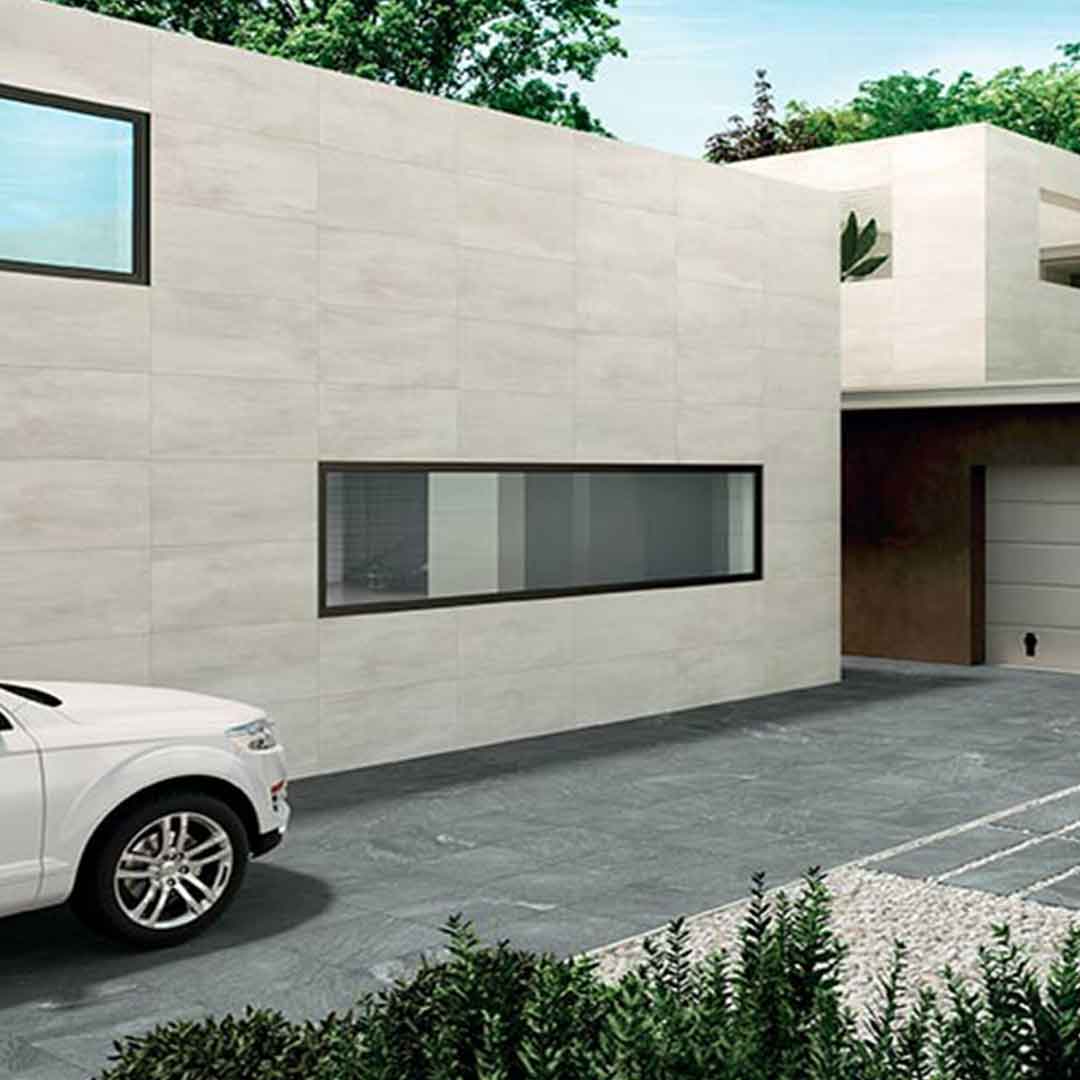
Porcelain pavers for driveways provide a stunning, highly attractive alternative to traditional concrete or asphalt surfaces in residential, multifamily, and light commercial applications.
Porcelain pavers in 2cm, 3cm, and 5cm thicknesses can be specified for vehicular applications when installed over compacted aggregate bases or structural concrete slabs designed to support anticipated loads. For heavier-duty conditions, 6cm porcelain blocks offer increased mass and load-bearing capacity, making them suitable for higher traffic volumes and more demanding roadway environments.
Key advantages and considerations for porcelain driveway paving:
- Resistance to oil, grease, and surface staining: The dense, low-absorption composition of porcelain limits penetration from automotive fluids, reducing permanent staining compared to many concrete or clay driveway pavers.
- Freeze-thaw and climate durability: Minimal water absorption supports long-term performance in regions subject to freezing temperatures and seasonal cycling without surface scaling or spalling.
- Engineered installation for vehicular loads: Successful porcelain driveway installations depend on proper paver thickness selection, joint spacing, and a properly compacted base or structural slab designed to distribute vehicular loads.
2cm Porcelain Pavers for Driveways
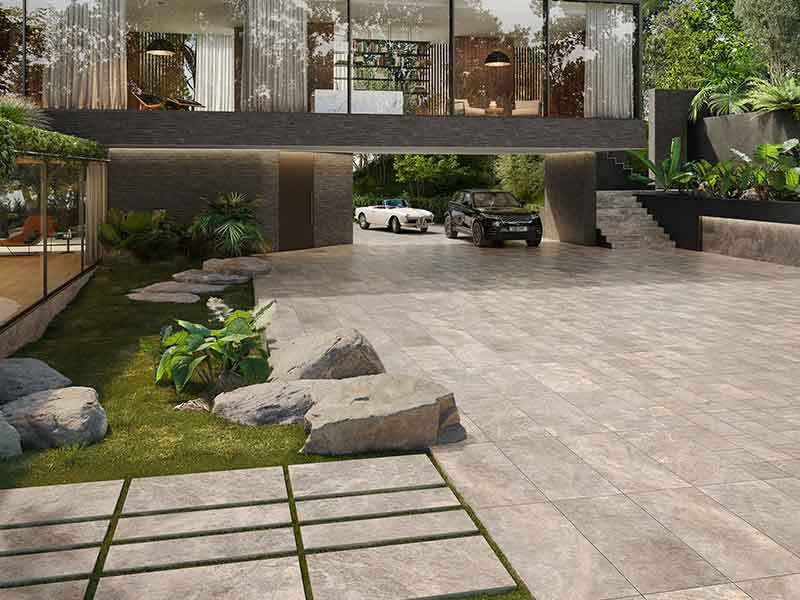
For driveways, carports, garages, and parking areas subject to light residential vehicular traffic, ¾” (2cm) thick Archatrak T20 porcelain pavers offer an attractive and durable alternative to clay brick or traditional concrete paving. With a wide range of colors and surface styles, T20 pavers add charm and visual consistency to paved areas adjacent to homes, supporting coordinated exterior hardscape designs across residential and commercial projects.
Key considerations for ¾” (2cm) porcelain driveway installations:
- Mortar-set installation over reinforced concrete: ¾” (2cm) porcelain pavers require a structural concrete base with cement-based grout joints to distribute vehicular loads and prevent movement under traffic.
- Designed for light residential use: Suitable for passenger cars, SUVs, and light-duty vehicles when installed in accordance with structural base and grouting requirements.
- Stain and surface resistance: Porcelain’s dense composition resists oil, grease, tire marks, and freeze-thaw cycling, maintaining appearance in driveway and carport applications without the sealing or ongoing maintenance required by concrete paving.
3cm Porcelain Pavers for Driveways
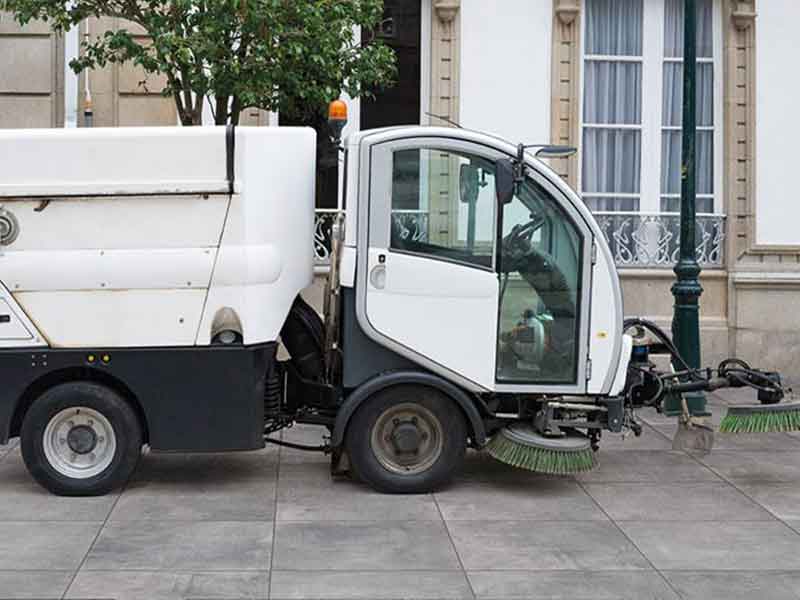
For heavier-duty driveway and parking applications, 3cm thick Archatrak T30 porcelain pavers are the preferred thickness for residential and light commercial vehicular paving. T30 pavers are approximately 50% thicker than 2cm pavers yet deliver more than three times the breaking strength, making them exceptionally well suited for driveways supporting regular vehicle traffic with wheel loads up to approximately 6.5 tons.
Key considerations for 3cm porcelain driveway installations:
- Two installation methods: T30 pavers are typically installed in mortar over a reinforced concrete base for higher-load applications, but may also be dry-laid over well-compacted aggregate with a thin sand bedding layer for lighter residential driveways.
- Superior structural performance: More than three times the breaking strength of 2cm pavers dramatically improves load distribution and resistance to cracking under regular vehicular traffic, confidently supporting heavier passenger vehicles and light commercial use.
- Refined appearance with long-term durability: Like all porcelain driveway pavers, T30 pavers resist oil, grease, and rubber transfer while maintaining color, texture, and surface integrity in vehicular environments without sealing or ongoing maintenance.
5cm Porcelain Pavers
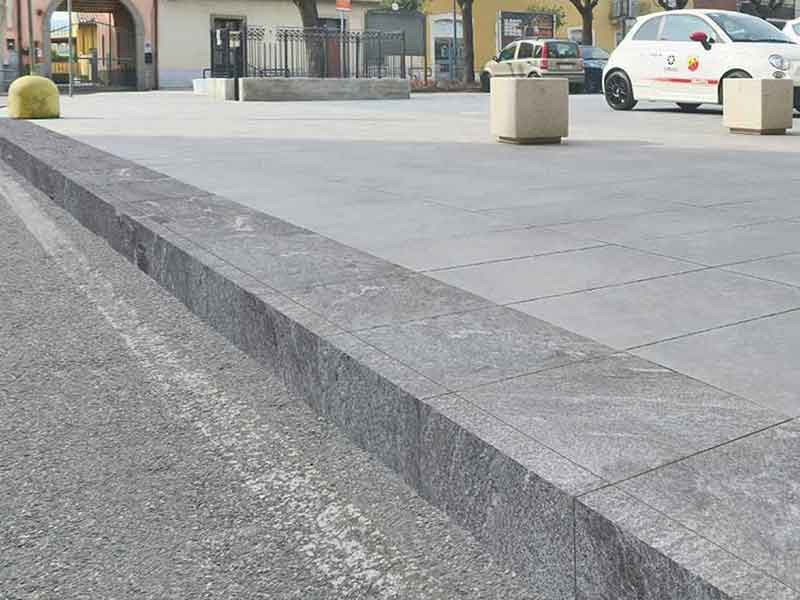
With a breaking strength approximately 2½ times that of 3cm pavers and more than six times that of 2cm pavers, 2″ (5cm) thick Archatrak T50 porcelain pavers deliver exceptional structural capacity for demanding vehicular paving applications. The substantial mass and breaking strength of 5cm porcelain pavers allow them to perform reliably under regular vehicle traffic over compacted aggregate bases, often eliminating the need for a structural concrete slab in most residential and light commercial conditions.
Key considerations for 5cm porcelain vehicular applications:
- Exceptional breaking strength: T50 pavers handle sustained vehicular loads without typically requiring mortar-set installation or structural concrete support, maintaining long-term stability in driveways, parking lots, and access lanes.
- Simplified dry-lay installation: T50 pavers install efficiently over well-compacted sand and gravel bases, delivering structural performance comparable to mortar-set systems while allowing easier adjustments and effective drainage management.
- Rustic cobblestone alternative: Available in 4″ x 4″, 4″ x 8″, and 8″ x 8″ formats with built-in spacer nibs, rustic T50 pavers offer a significantly easier-to-install alternative to traditional cobblestones while delivering authentic texture and visual character.
- Large-format rectified pavers: Standard T50 pavers with clean, rectified edges are available in 24″ x 24″, 16″ x 24″, and 8″ x 16″ sizes for projects requiring modern lines and expansive paving layouts.
Porcelain Cobblestone Pavers for Driveways
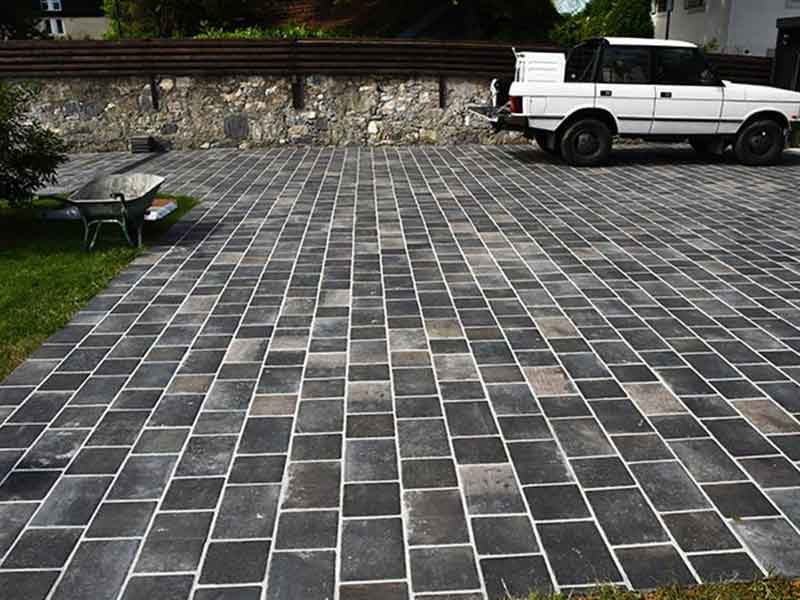
For projects seeking a classic vintage or heritage aesthetic, ¾” (2cm) thick rustic-style 8″ x 8″ and 12″ x 8″ porcelain cobblestone pavers, also called Belgian Blocks, are manufactured to closely replicate quarried natural stone. Featuring distinctly hammered edges, textured surfaces, and subtle surface variation, these pavers recreate the weathered character of traditional cobblestones while maintaining precise dimensional consistency for controlled, professional installation.
Why choose porcelain cobblestones for driveway applications:
- Premium cobblestone aesthetic with dimensional precision: Detailed edge treatment and textured surfaces deliver the visual depth of hand-cut stone while offering the uniform sizing necessary for efficient layout and joint alignment.
- Designed for light vehicular applications: Suitable for driveways and parking areas subject to light vehicle traffic when installed in a mortar-set assembly over a prepared reinforced concrete base.
- Rustic Colors: Available in six color options, offering a unique cobblestone appearance that stands apart from standard concrete or brick paving.
6cm Porcelain Paving Blocks for Driveways and Roadways
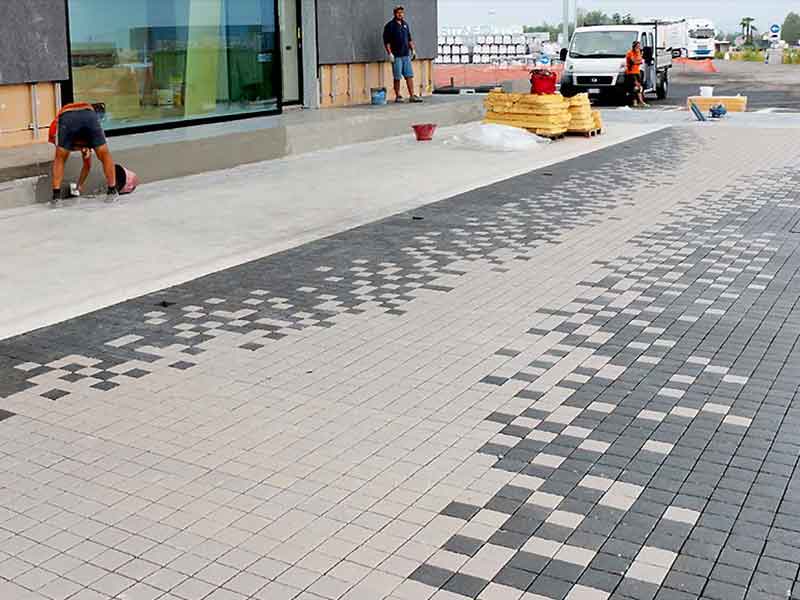
These 4″ x 4″ porcelain paving blocks, 2 1/2″ (6cm) thick, replicate the look of traditional stone cobblestones commonly seen in European city streets, pavements, and alleyways. Their block format and increased thickness make them suitable for heavier-duty vehicular paving where both durability and distinctive character are priorities.
Key considerations for 6cm porcelain block installations:
- High-strength block format for demanding traffic conditions: The 6cm thickness and compact block size provide excellent load distribution, making these units appropriate for roadway and driveway applications when installed over properly prepared bases.
- Multiple installation methods based on stability requirements: Blocks are typically laid over a reinforced concrete aggregate base, either dry-laid in sand or gravel with polymeric sand joints, or mortar-set with polymeric sand or cement-based grout for maximum stability.
- Authentic European cobblestone aesthetic: Available in Nero (charcoal black) and Grigio (light grey), each delivery includes a blended mix of blocks with subtle tonal variation to create a natural, street-scale cobblestone appearance.
FAQs
Frequently asked questions about porcelain pavers used for driveway paving or vehicular traffic
Yes. Porcelain pavers can be used for driveways when the correct paver thickness and installation method are selected for the expected vehicle loads.
For light residential driveways, thinner 2cm porcelain pavers installed over a reinforced concrete base may be appropriate. Heavier-duty installations typically use thicker 3cm or even 5cm porcelain pavers installed over compacted aggregate bases or structural concrete slabs designed to support vehicular loads.
Yes. Porcelain pavers are widely used to create visually refined driveway surfaces that offer greater design control and consistency than traditional poured concrete or asphalt.
They are available in a wide range of colors, textures, and formats, including large-format slabs, stone-look surfaces, and cobblestone-style blocks. This variety allows driveways to coordinate with surrounding architecture, paving, and landscape elements while delivering a clean, durable surface designed for long-term exterior performance.
The appropriate thickness depends on vehicle weight and installation conditions.
- 2cm (¾”) pavers are typically used for light residential traffic when mortar-set over reinforced concrete.
- 3cm pavers are commonly used for residential driveways and light commercial parking areas.
- 5cm and 6cm pavers provide greater mass and strength for heavier-duty vehicular paving applications.
The final thickness selection should align with anticipated traffic loads and the design of the supporting base.
In many cases, yes. Thinner porcelain pavers used in driveway applications are typically installed in a mortar-set system over a reinforced concrete slab to properly distribute vehicle loads.
Thicker porcelain pavers, such as 5cm units, can often be dry-laid over well-compacted aggregate bases for residential and light commercial installations, depending on site conditions and traffic loads.
Yes. Porcelain has a dense, low-absorption composition that limits the penetration of oil, grease, and other automotive fluids.
This makes porcelain driveway pavers more resistant to staining compared with many concrete paving materials, helping maintain a cleaner appearance over time without the need for sealing.
Yes. Porcelain pavers have very low water absorption, which helps them perform well in climates subject to freezing temperatures.
Because minimal water enters the material, porcelain pavers are less susceptible to freeze-thaw damage such as scaling or spalling that can affect some traditional paving materials.


