A pool deck is more than just the space surrounding the water. It shapes the appearance of the entire outdoor environment, influences safety and comfort, and often represents one of the largest hardscape investments on the property. Whether it’s a residential backyard, hotel resort, rooftop amenity deck or community pool, choosing the right surface is a decision that affects maintenance, durability and long-term value for years to come.
For decades, poured concrete and wood decking have been the default choices for pool surrounds. While both remain popular, they also come with well-known drawbacks. Concrete can crack, stain and weather over time. Natural wood requires regular staining or sealing and may warp, splinter or fade after years of exposure to moisture and sunlight. Even composite decking, while lower maintenance than wood, has limitations around heat, expansion and long-term aesthetics.
Today, architects, landscape designers, contractors and homeowners are increasingly turning to as an alternative pool deck surface. Combining exceptional durability with realistic stone, concrete and wood looks, porcelain offers a modern solution that performs well in demanding pool environments while requiring very little ongoing maintenance.
Whether installed on-grade around a backyard pool or elevated on adjustable pedestals for a rooftop amenity deck, porcelain pavers provide one of the most versatile pool deck systems available today.
What Makes a Great Pool Deck Surface?
Not every paving material performs equally well around a swimming pool.
For most homeowners and designers, the first consideration is appearance. A pool deck is one of the largest visual elements in an outdoor living space, so the surface plays a major role in defining the overall style and atmosphere. Porcelain pavers, natural stone, wood, concrete, and composite decking can all create attractive pool surrounds, but aesthetics are only part of the equation.
A great pool deck should also withstand years of sun exposure, pool chemicals, wet foot traffic, and changing weather with minimal maintenance. When comparing pool deck materials, it’s important to look beyond the initial appearance and consider how the surface will perform over time.
When comparing pool deck materials, consider:.
- Slip resistance when wet
- Durability under heavy foot traffic
- Resistance to chlorine and salt water
- Fade resistance from UV exposure
- Comfort for barefoot traffic
- Low maintenance requirements
- High SRI Values (especially in hot climates)
- Stain resistance
- Freeze-thaw durability
- Ease of repair
- Design flexibility
- Installation options
- Long-term value
The best material balances all of these characteristics rather than excelling in only one area.
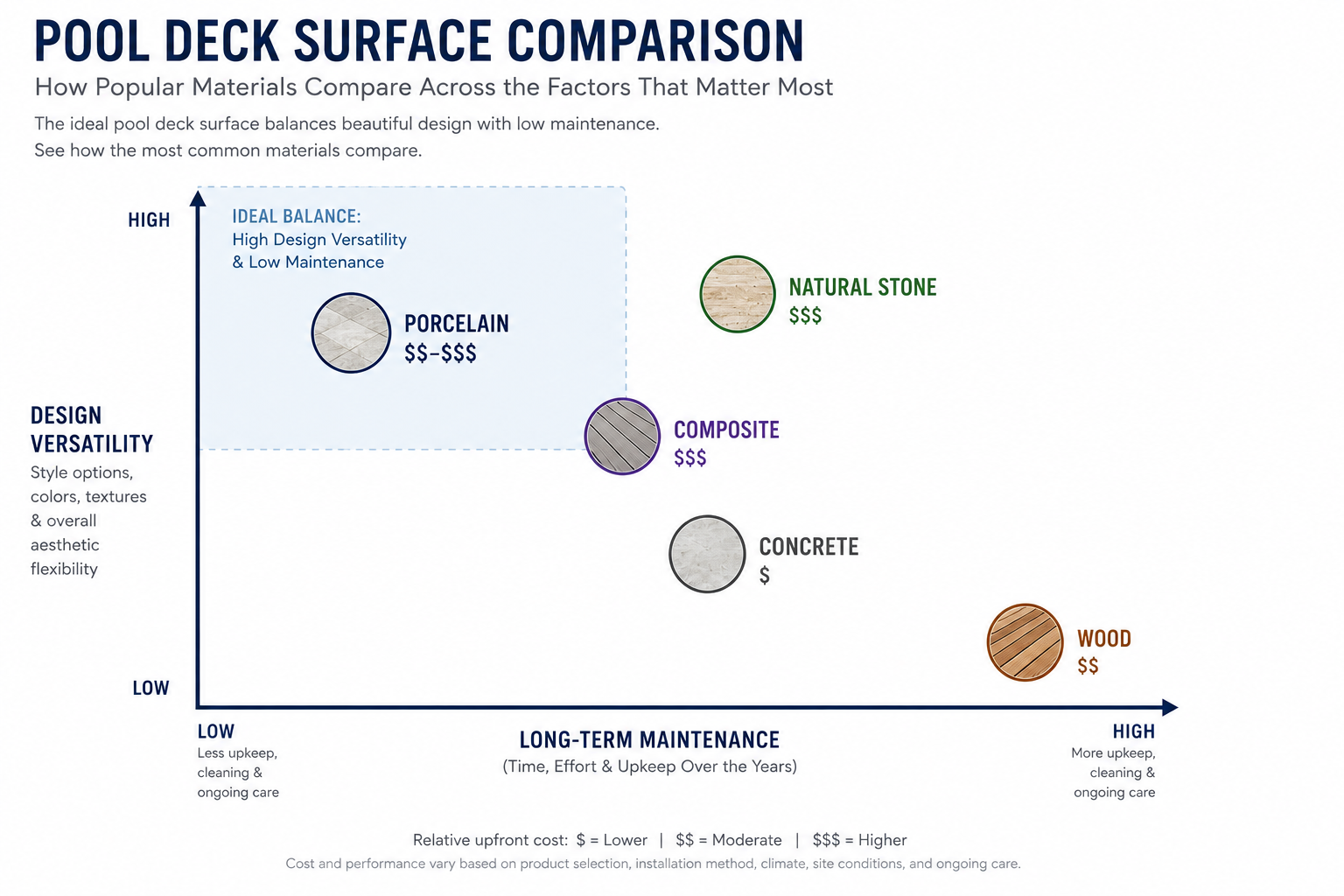
Comparing Popular Pool Deck Surfaces
Every pool project is different, and each material offers advantages depending on budget, appearance and maintenance expectations.
Poured Concrete
Concrete remains one of the most common pool deck materials because it is readily available and relatively economical. It can be broom finished, stamped or colored to create different appearances.
However, concrete is still a continuous slab. As the ground moves and seasons change, cracks can develop. Surface stains, fading and repairs are also common over time.
Best for:
- Budget-conscious projects
- Simple residential installations
Potential Drawbacks:
- Cracking Staining
- Visible repairs
- Periodic sealing
- Limited design flexibility
Natural Wood Decking
Wood creates warmth and character that many homeowners love.
Unfortunately, constant exposure to moisture and sunlight means ongoing maintenance is almost unavoidable.
Over time wood may:
- Over time wood may:
- Fade
- Splinter
- Warp
- Cup
- Require staining
- Require sealing
Composite Decking
Composite decking reduces many maintenance concerns associated with natural wood while maintaining a similar appearance.
It can be an excellent solution where a framed deck is already required, although some products can become quite warm in direct sunlight and generally don’t provide the architectural appearance or lifespan of porcelain paving.
Natural Stone
Composite decking reduces many maintenance concerns associated with natural wood while maintaining a similar appearance.
It can be an excellent solution where a framed deck is already required, although some products can become quite warm in direct sunlight and generally don’t provide the architectural appearance or lifespan of porcelain paving.
Outdoor Porcelain Pavers
Porcelain combines many of the visual benefits of natural materials with the consistency of modern manufacturing.
It won’t rot like wood, doesn’t form one continuous slab like concrete, requires virtually no sealing, and is available in an enormous variety of colors, textures and formats.
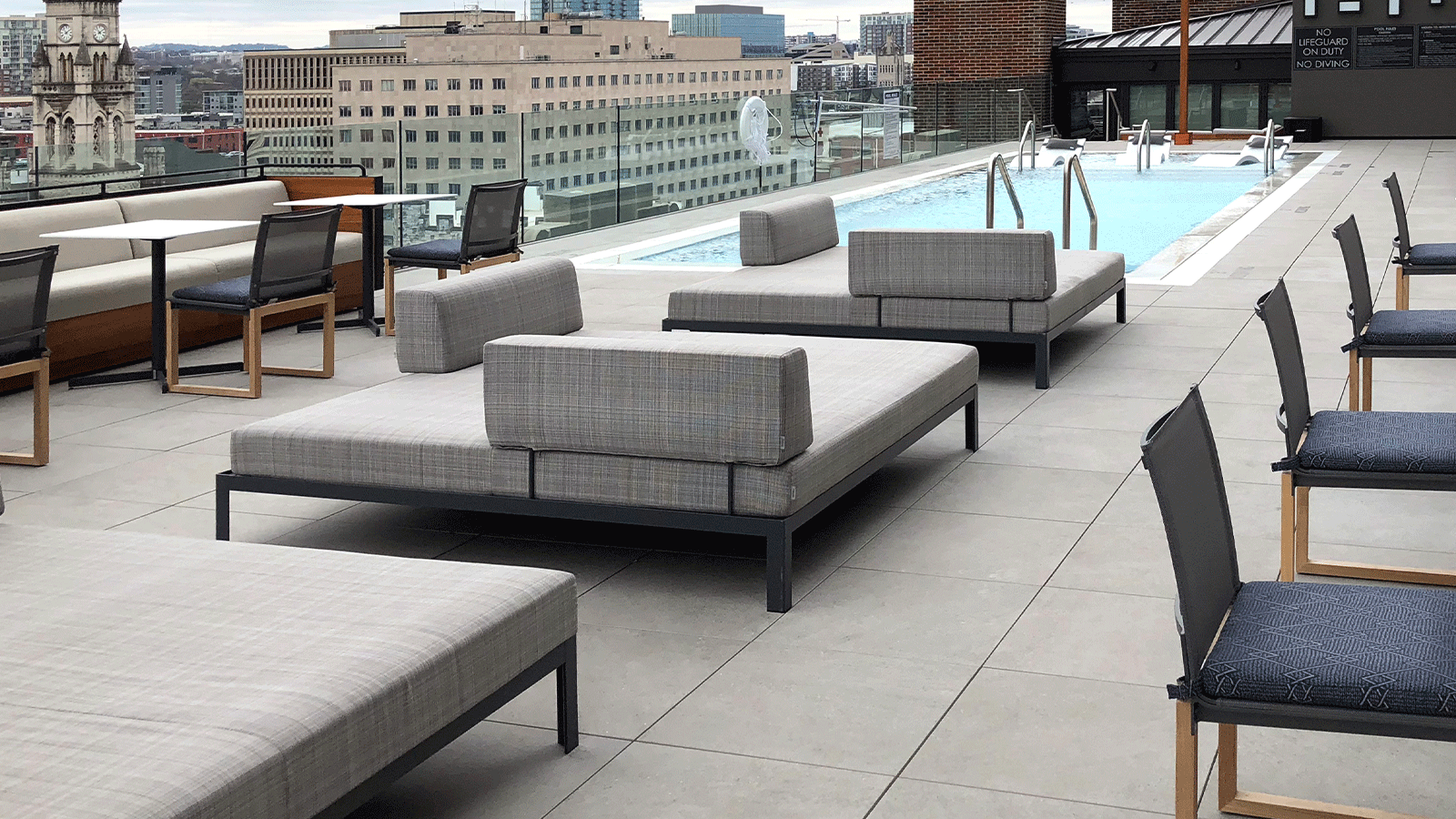
Why More Homeowners, Contractors, and Designers Are Choosing Porcelain Pool Decks
The popularity of porcelain pool decks has grown rapidly over the last decade—not because it’s trendy, but because it addresses many of the maintenance and durability concerns associated with traditional pool surfaces.
Unlike concrete, porcelain doesn’t rely on one large slab. Unlike wood, it doesn’t require ongoing refinishing. Unlike many natural materials, it resists staining, fading and moisture without special treatments.
For homeowners, that means spending more time enjoying the pool and less time maintaining the surrounding deck. For architects and commercial property owners, it means a surface that continues looking good year after year with relatively little upkeep.
Top reasons porcelain outperforms other pool deck materials
- Overall stunning aesthetics
- Excellent slip resistance with textured exterior finishes
- Extremely low water absorption
- Resistant to chlorine, saltwater and common pool chemicals
- Will not rot, warp or splinter
- Highly resistant to fading
- Scratch and abrasion resistant
- No sealing or refinishing required
- Easy routine cleaning
- Individual pavers can be replaced if damaged
- Suitable for residential and commercial projects
- Available for both on-grade and elevated installations
- Wide variety of contemporary colors and styles
Pool deck material comparison chart
| Porcelain | Concrete | Wood | Composite | |
| Slip-resistant finishes | ||||
| Will not crack as continuous slab | ||||
| Rot Resistant | ||||
| Splinter Free | ||||
| Requires Sealing | No | Often | Yes | No |
| Fade Resistance | Excellent | Moderate | Moderate | Good |
| Stain Resistance | Excellent | Moderate | Poor | Good |
| Individual Repairs | Easy | Difficult | Moderate | Moderate |
| Wood-look options | Some | N/A | Good | |
| Pedestal Installations | Requires Framing | Requires Framing |
On-Grade vs. Elevated Pool Deck System
One advantage unique to porcelain pavers is installation flexibility. The same paver can be installed in multiple ways depending on the project requirements.
On-Grade Pool Decks
Most residential pools use an on-grade installation. Porcelain pavers may be:
- Mortar set
- Set over existing concrete
- Installed on rubber support pads for resurfacing cracked or drab surfaces
Elevated Pedestal Pool Decks
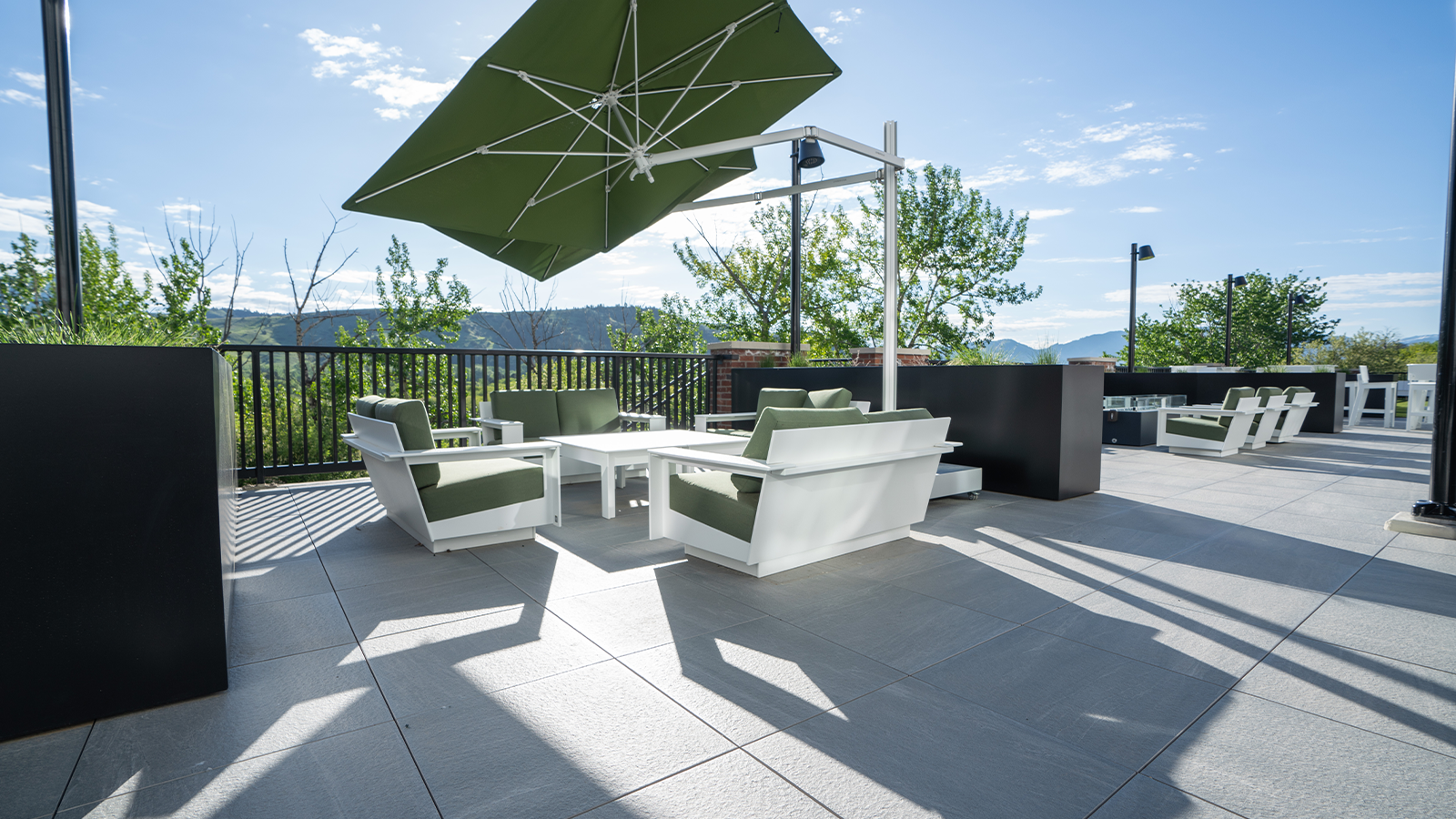
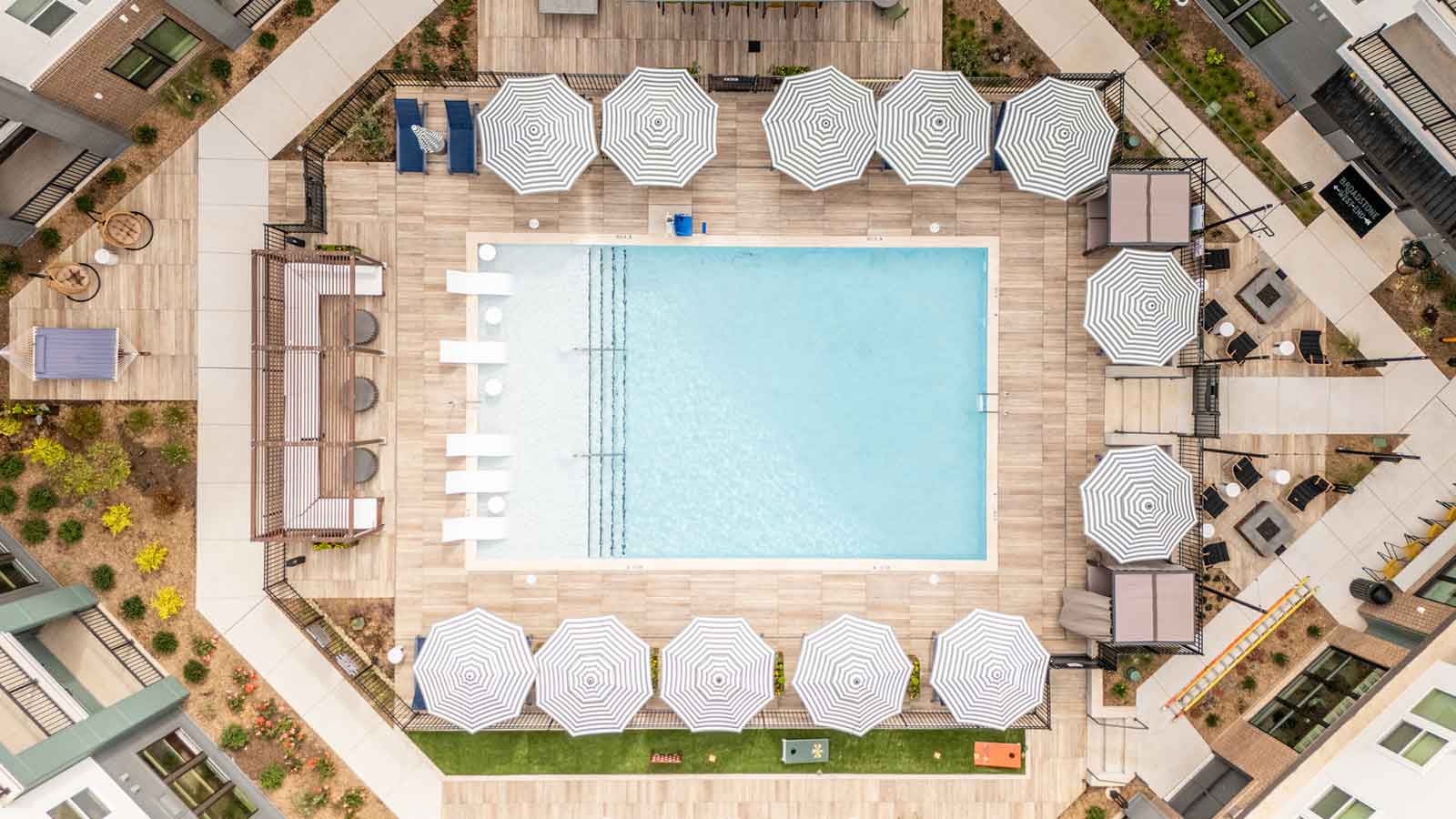
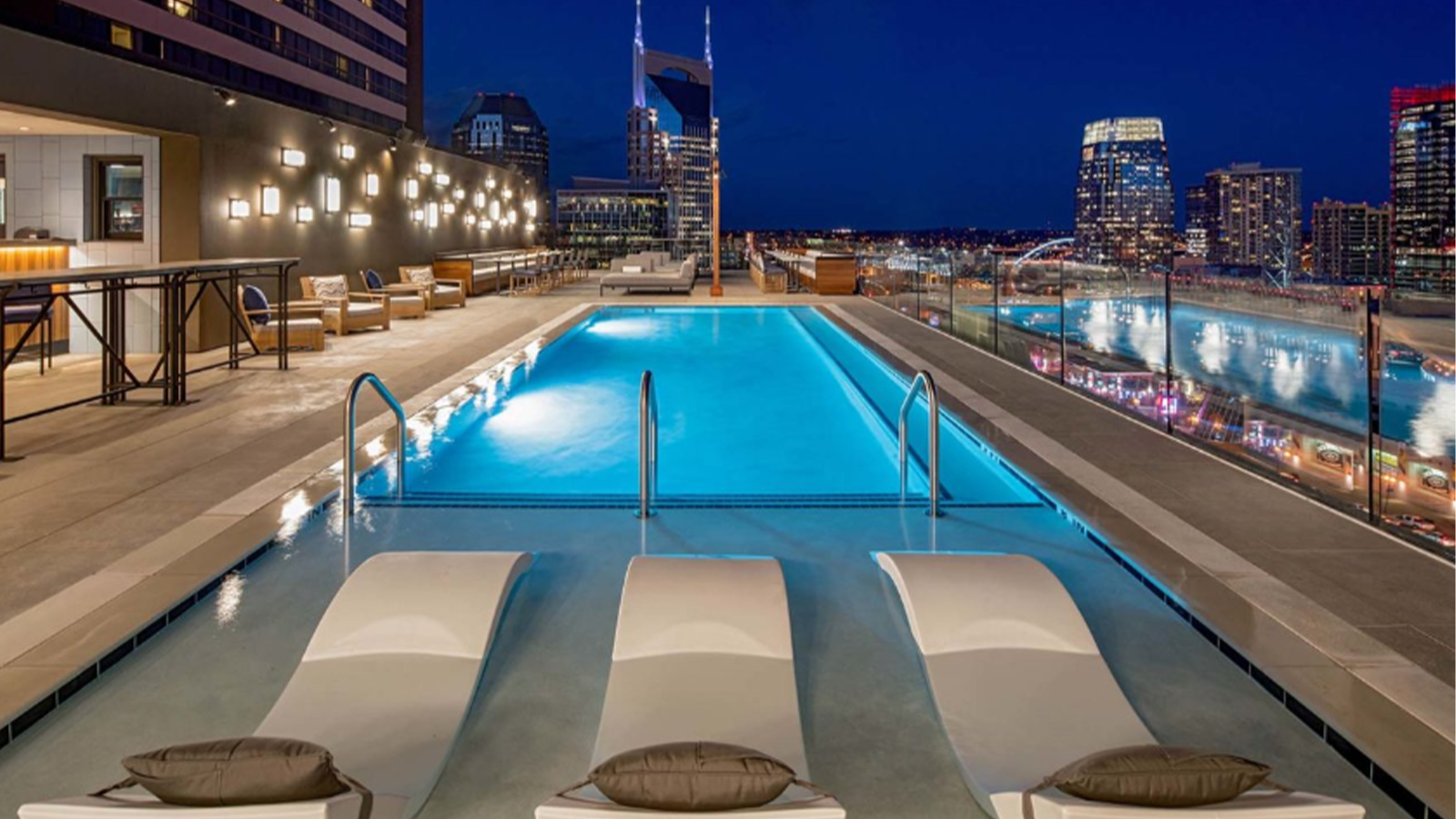
Hotels, rooftop pools, podium decks and mixed-use developments frequently need a walking surface above waterproof membranes or occupied spaces.
Adjustable-height deck pedestals create a level finished surface while allowing drainage and access to utilities below. They are also helpful if there is ever damage as individual pavers are easily replaced.
Benefits Pedestal systems around pool decks include:
- Protects waterproofing
- Excellent drainage
- Access below the deck
- Conceals utilities
- Replaceable pavers
- Level surfaces over sloped roofs
Ideal for:
- Hotels
- Rooftop pools
- Apartment amenities
- Podium construction
- Commercial developments
Pool Deck Design Ideas: Stone, Travertine, and Wood Looks Without the Maintenance
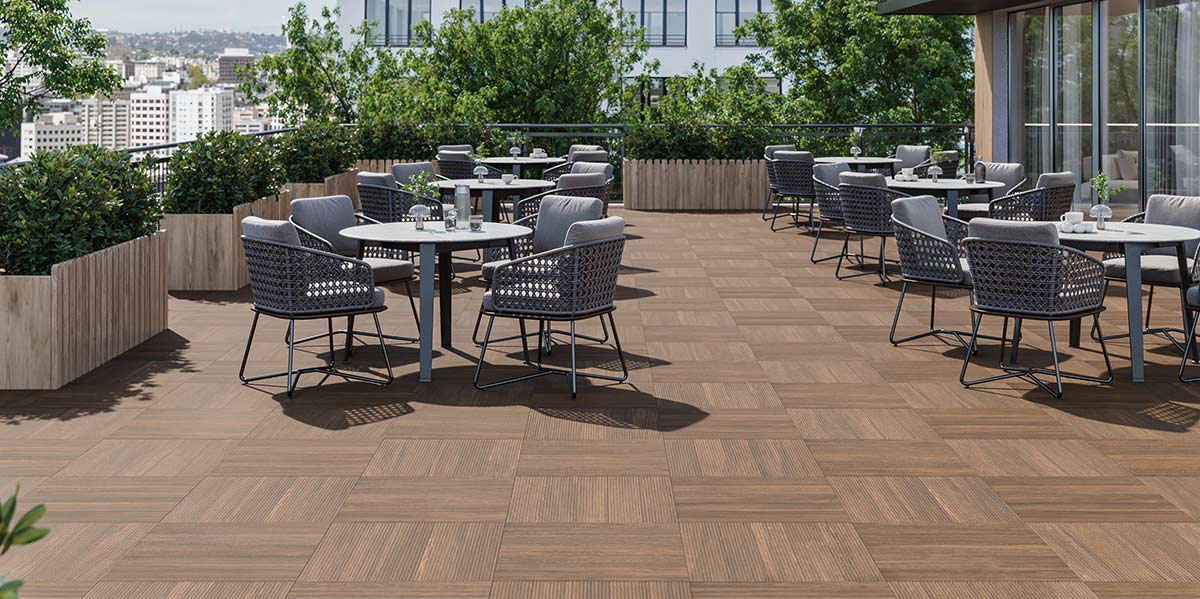
Performance is only part of the story. Porcelain pavers offer an extraordinary range of architectural finishes, allowing designers to achieve virtually any aesthetic without sacrificing durability.
Whether you’re creating a contemporary rooftop retreat, a luxury resort pool, or a traditional backyard oasis, porcelain offers finishes that complement nearly every architectural style.
Some of our most popular colors, styles and collections for pool decks include:
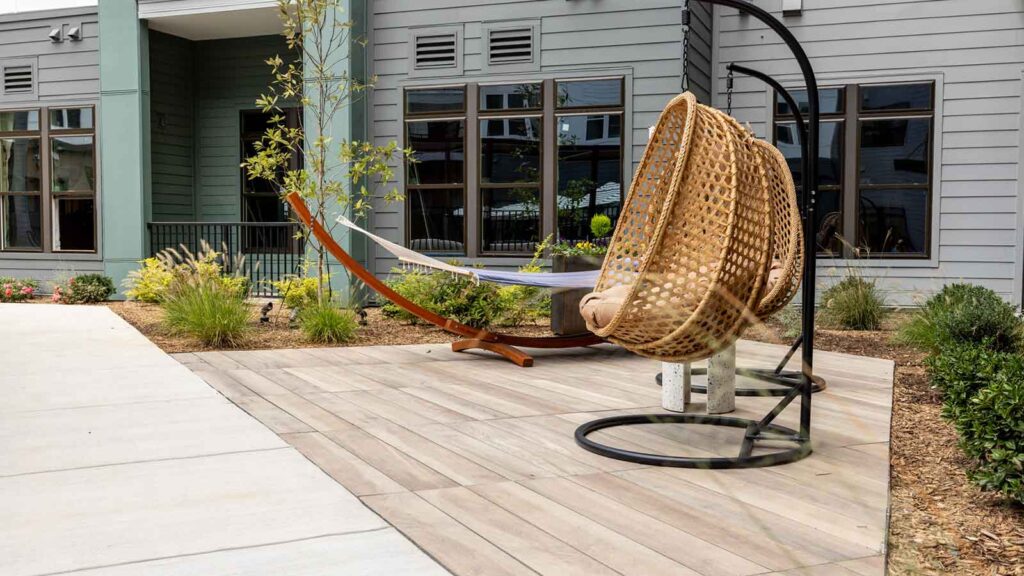
Wood-look Collection
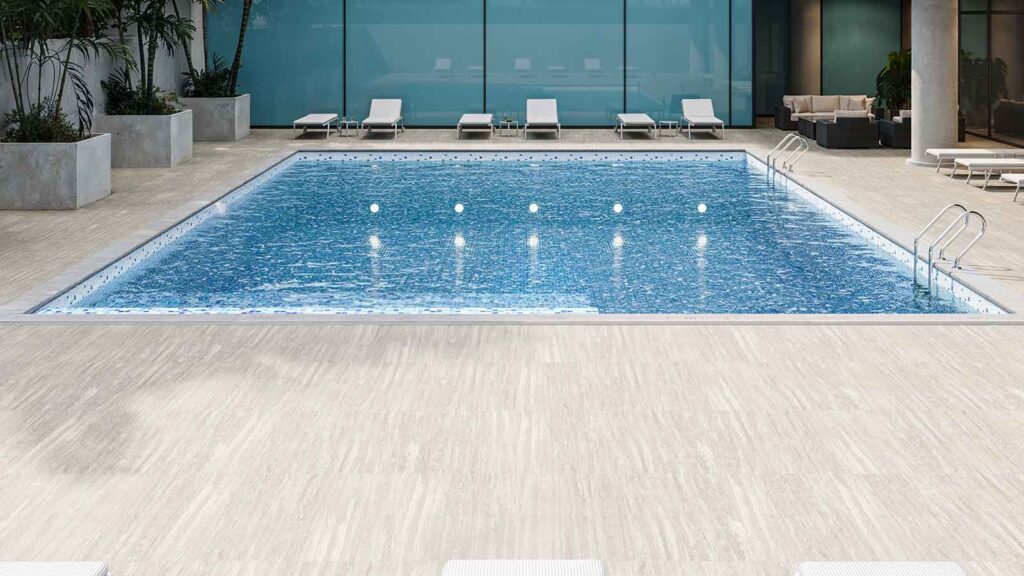
Travertine Collection
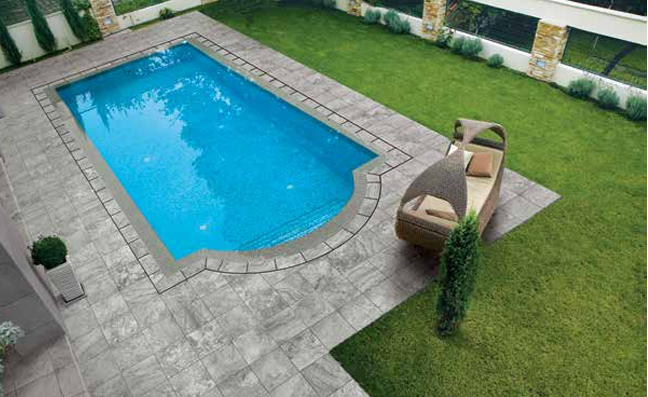
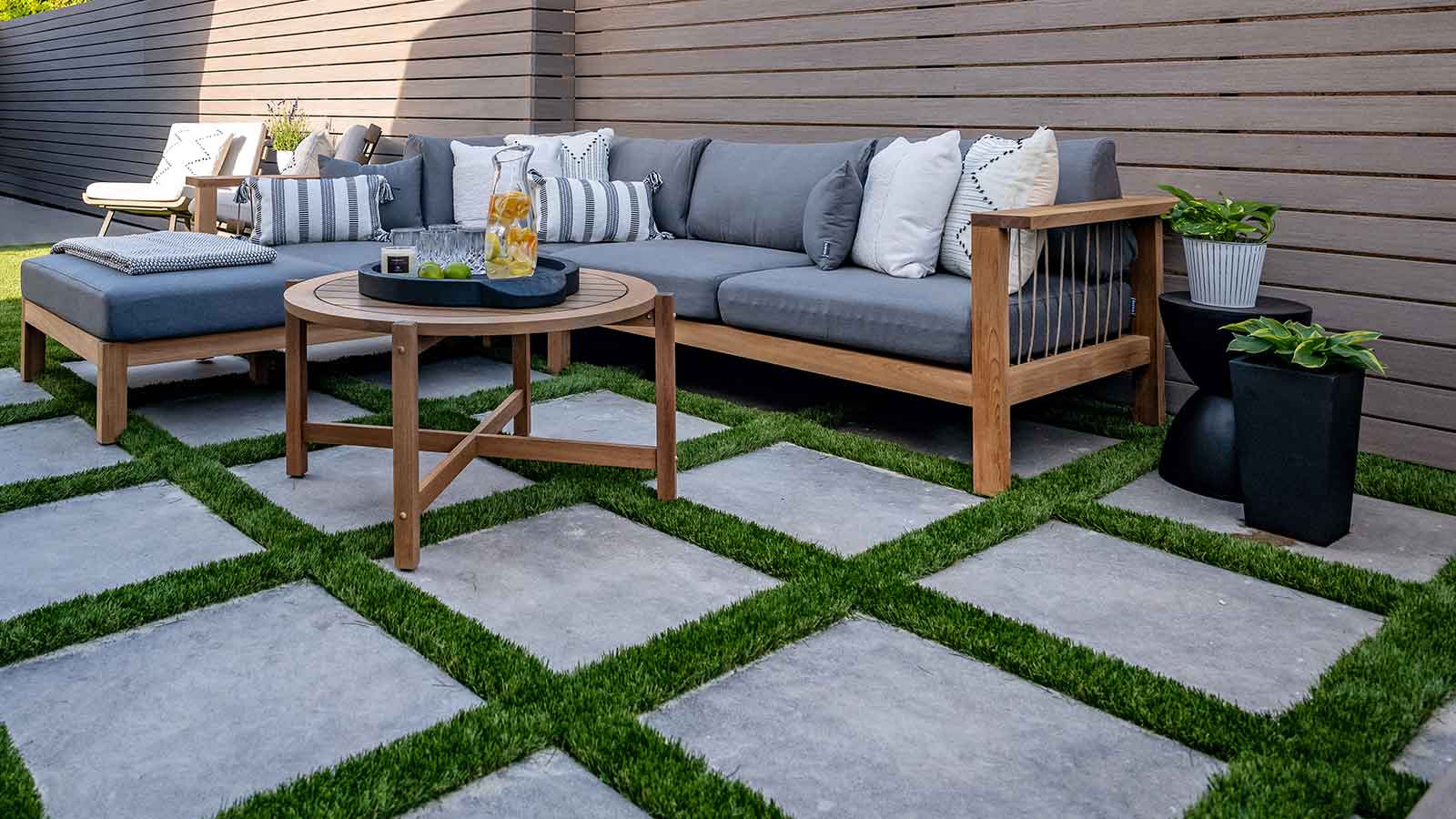
Stone-look Collection
Renovating an Existing Pool Deck Surface?
Replacing an aging concrete pool deck doesn’t necessarily mean pouring another concrete slab.
Depending on existing site conditions, porcelain pavers may be installed over a prepared concrete base, on fixed-height rubber support pads or as part of an elevated pedestal system.
For many renovation projects, porcelain provides an opportunity to dramatically update the appearance of the pool area while reducing long-term maintenance.
FAQs
What is the best material for a pool deck?
The best material depends on your priorities. If low maintenance, durability and long-term appearance are most important, porcelain pavers are among the best-performing pool deck surfaces available.
Are porcelain pavers slippery around swimming pools?
Exterior porcelain pavers are manufactured with textured, slip-resistant surfaces specifically designed for outdoor environments. For pool decks and other wet areas, Archatrak recommends porcelain pavers that meet ANSI A326.3 with a Dynamic Coefficient of Friction (DCOF) of 0.42 or greater for wet conditions. Many products also carry DIN 51130 R11 slip-resistance ratings, providing secure footing around pools, spas, and other wet outdoor spaces. Always verify the slip-resistance rating for the specific product being specified.
Do porcelain pavers get hot?
Like any outdoor paving material, porcelain absorbs heat from the sun. Lighter colors generally remain more comfortable underfoot than darker finishes. Archatrak offers multiple colors and styles with hight SRI (Solar Reflective Index) ratings.
SRI ChartCan porcelain be installed around saltwater poolS?
Yes. Porcelain is highly resistant to moisture, salt and common pool chemicals, making it an excellent choice for both chlorinated and saltwater pools.
Can porcelain pavers replace a cracked concrete pool deck?
In many cases, yes. Depending on the condition of the existing slab and the desired finished elevation, porcelain can often be incorporated into renovation projects using several installation methods.
Are Porcelain Pavers suitable for commerical hotel pool decks?
Absolutely. Their durability, stain resistance and low maintenance requirements make them an excellent choice for hotels, resorts, multifamily developments and other high-traffic pool environments.
Summary
The best pool deck surface is one that balances aesthetics, safety, durability, maintenance, and long-term value. While concrete, wood, composite decking, and natural stone each have their place, porcelain pavers offer one of the most complete solutions for both residential and commercial pool environments.
With exceptional design versatility, slip-resistant finishes, resistance to fading, stains, chlorine, and freeze-thaw cycles, and installation options for both on-grade and elevated pedestal systems, porcelain pavers deliver a pool deck that looks beautiful on day one and continues to perform for decades with minimal maintenance.
Whether you’re building a backyard retreat, renovating a resort pool, or designing a rooftop amenity deck, porcelain pavers provide the flexibility and long-term performance needed for virtually any project.
Order a Free Sample!If you have questions about pool deck application using porcelain pavers, email us at [email protected] or reach out to one of our experts today: