Landscape pavers offer virtually endless possibilities for transforming outdoor spaces. But before designing any outdoor space, it’s important to get to know the different landscape paver options, their respective pros and cons and any other aspects of the project location and condition that need to be considered to ensure a long service life with minimal maintenance.
This blog post discusses what you should consider before embarking on any major landscaping project using pavers.
What are the Main Types of Landscape Pavers?
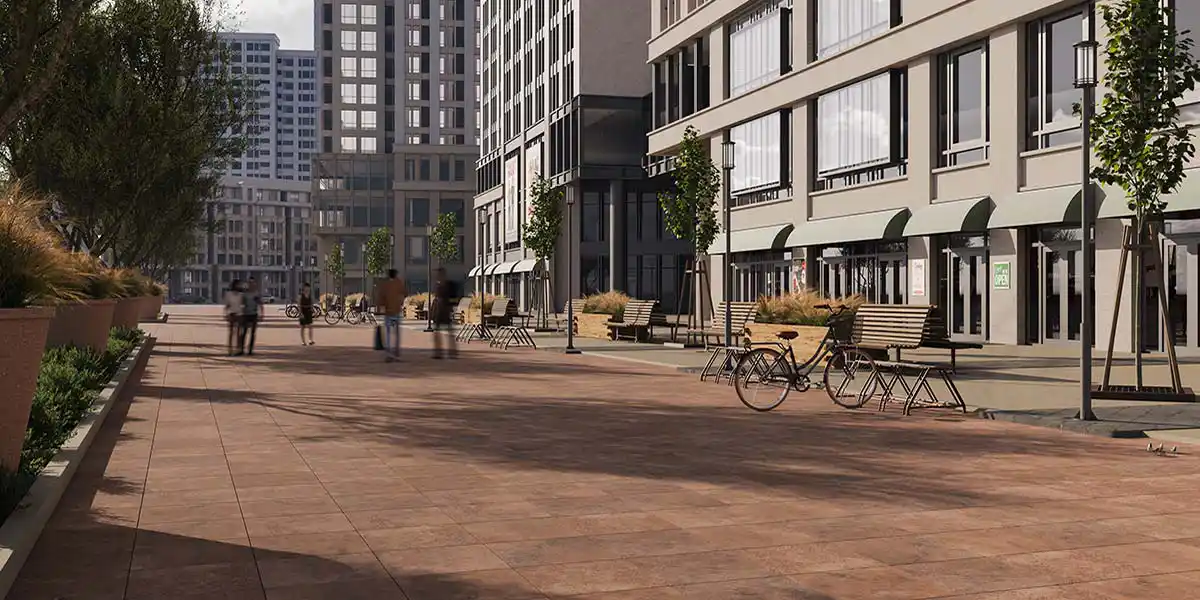
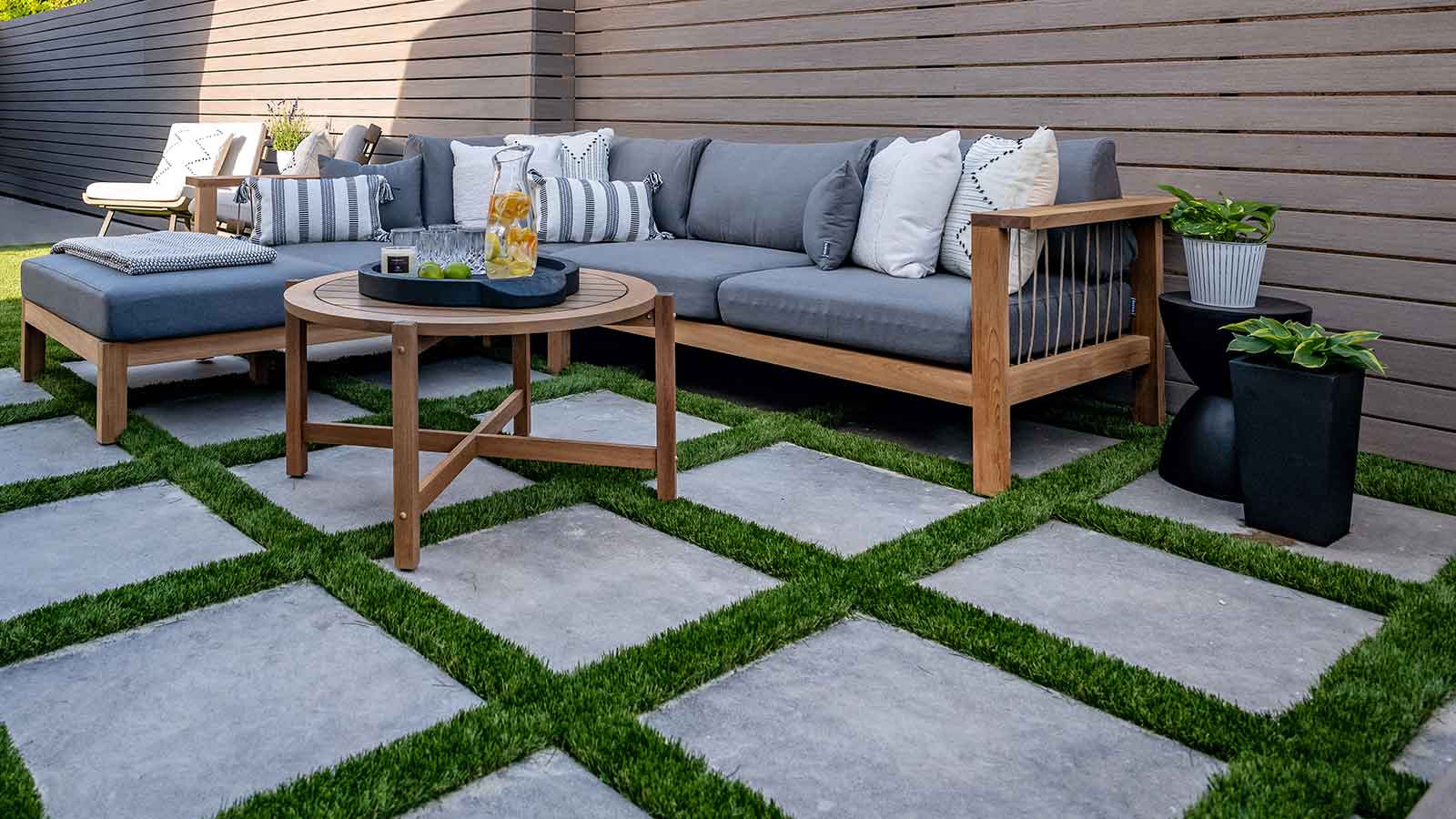
Landscape pavers, including paving stones and flagstones, are dimensioned slabs of stone, porcelain or concrete and most commonly used for outdoor surfaces such as patios, paths and driveways. They may also be set directly over grass, mortar set over a concrete slab or laid on a sand, crushed stone or gravel base.
Landscape pavers are generally one of the following materials:
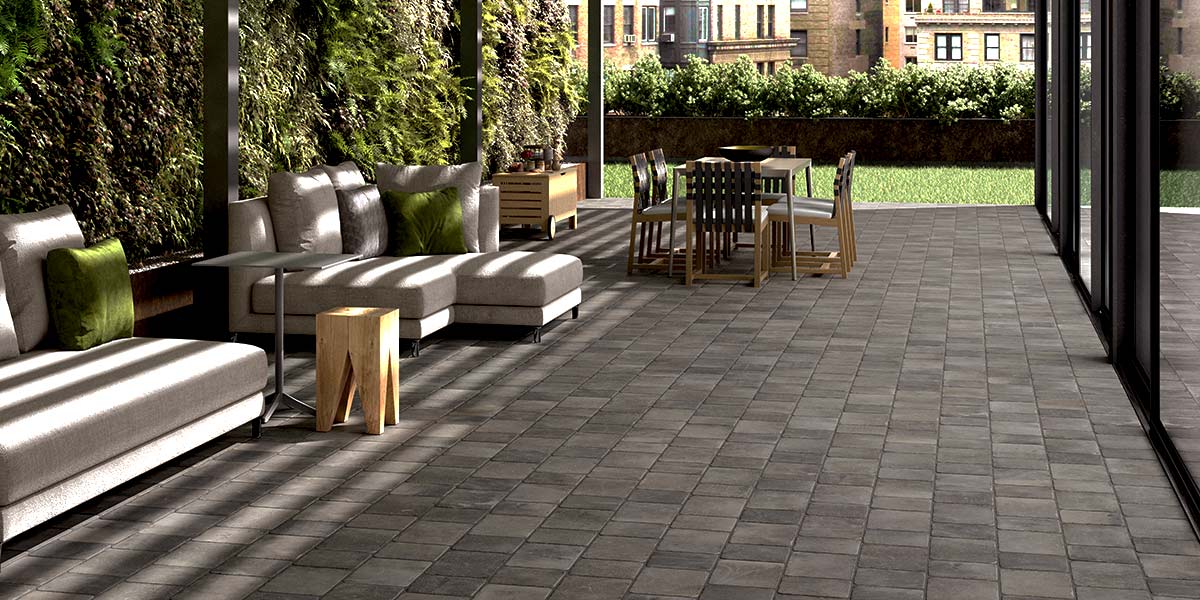
Porcelain: Porcelain pavers are precision dimensioned clay-based pavers, fired at a very high temperature, featuring exceptionally low porosity, scratch resistance, stain resistance and fade resistance. They are available in a very wide range of styles, textures and colors, and can accurately replicate the look of other materials such as cement, wood, slate and marble. They are, however, somewhat brittle and like ceramic tiles, care must be taken to avoid edge chipping. The most common thickness used in landscaping applications is ¾” (2cm), but for heavy duty applications, 1 1/8” (3cm) or even 2” thick porcelain pavers may be used.
Concrete: Concrete pavers are relatively inexpensive to produce and straightforward to install. They are nevertheless quite heavy, so transport costs can be significant. Concrete pavers can also suffer from staining and although they are sufficiently durable enough to cope with most weather conditions, they can be damaged by freeze/thaw cracking in more severe climates.
Natural Stone: Natural stone pavers are typically cut thicker than porcelain pavers because their breaking strength is less due to the crystalline structure and natural defects in the stone. Some types of stone such as travertine, sandstones or limestone can be quite porous, so staining and freeze/thaw cracking can be a problem in certain regions or applications.
Clay Pavers: These pavers are also produced from clay like porcelain pavers but are fired at lower temperatures and have a greater porosity. Due to their thickness and small size, they are most commonly used for paving of pathways, driveways and walkways, especially for residential use where their small size gives a better opportunity for Do-It-Yourself installation on sand or gravel foundations.
Primary Reasons for Using Landscape Pavers
Landscape pavers offer a broad range of functional, practical and aesthetic benefits including:
Durable even surfaces: Pavers provide a flat, even surface for both foot and vehicular traffic that will not significantly degrade over time, is clean underfoot and minimizes tripping hazards.
Better drainage: Landscape pavers provide better and more consistent drainage without pooling or puddles, especially with sand set pavers where gaps between pavers allow water to pass through.
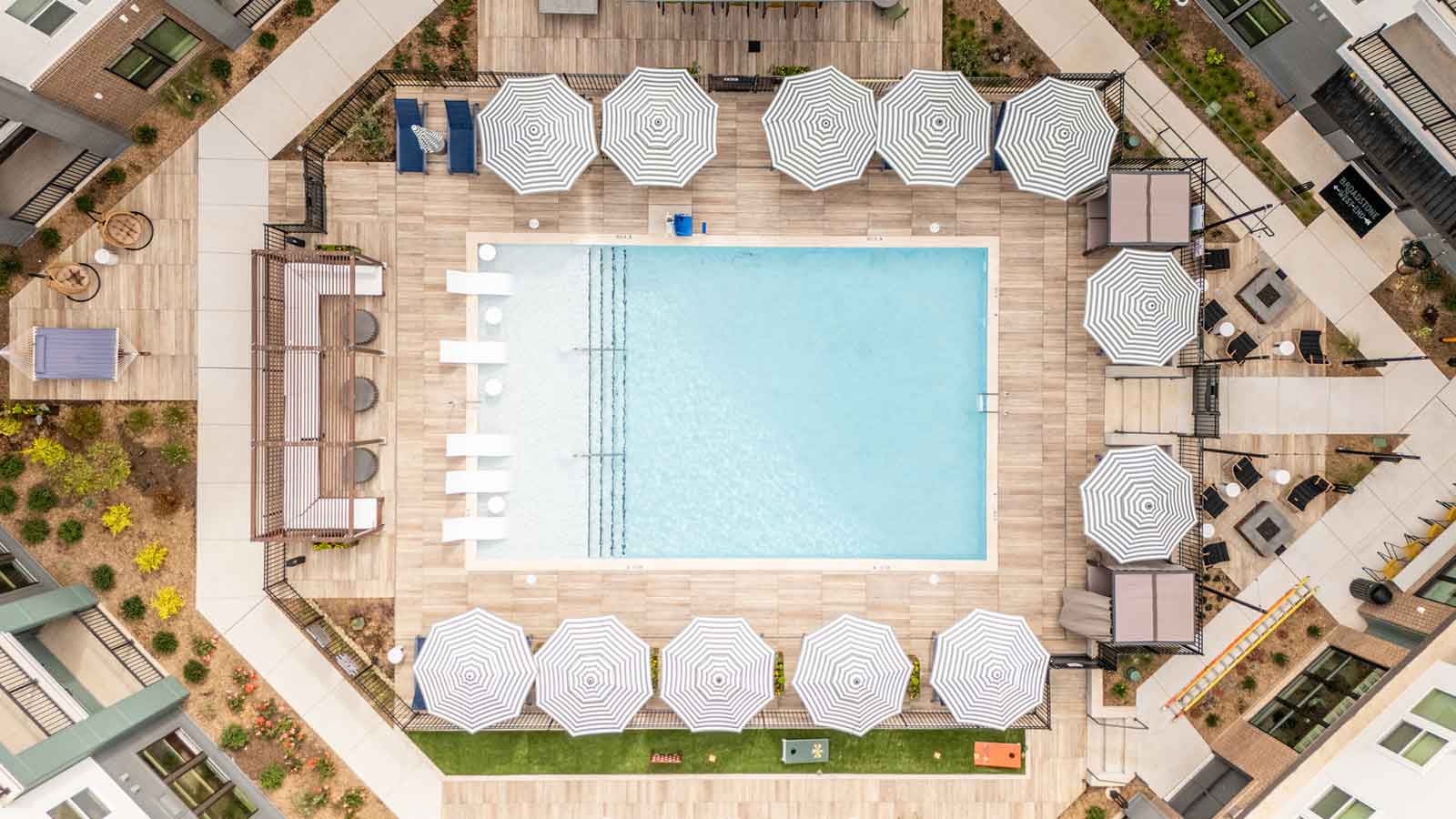
Enhanced slip resistance: Most paver materials have very good anti-slip properties, providing safer surfaces for areas like pool surrounds.
Aesthetically pleasing landscapes: Since pavers are available in such a huge range of styles, colors, shapes and sizes, they offer almost unlimited opportunities to design aesthetically pleasing surroundings for any application.
Low maintenance: Most pavers can last for decades and typically need very little ongoing maintenance except for maybe a power wash from time to time.
Cost-effective: The longevity of pavers makes them a cost-effective investment over the long term, and can also increase the value of a property.
What Should you Consider When Choosing a Landscape Paver?
Apart from aesthetic considerations, you need to consider a range of other factors to ensure the pavers you choose will remain looking just as good many years or decades later as on the day they are laid.
Aesthetics
Quite naturally, aesthetics are generally the primary consideration when choosing a paver but aesthetic preferences are of course subjective. And it can be hard to visualize what a tiny sample piece of a paver will actually look like on the project site and under different lighting conditions. So tools like Archatrak’s 3D visualizer can be of considerable benefit in helping you picture what different porcelain paver materials, colors, sizes and patterns will look like in different environments and at different times of day.
Order a SampleRegional and Climatic Conditions
Climatic conditions can be very important. Good drainage will be much more important in places with heavy rainfall. Shady conditions can foster growth of moss or algae which could be a problem with travertine pavers. Freeze/thaw resistance must be considered in colder regions. Dark paver colors should normally be avoided in hot locations, particularly if they are to be installed around pools. Light pavers may be less appropriate for regions subject to tornados or hurricanes, unless they are mortar set.
Durability
Will the pavers be subject to heavy foot traffic? Will vehicles be moving over the pavers – frequently or infrequently? Will scratch and stain resistance be important? If any paver breaks or part of the paved area needs to be lifted up for maintenance work under the pavers, will replacement pavers still be available?
Installation Considerations
Will installation costs be significant? With many pavers, installation costs can easily exceed the cost of the pavers. Is Do-It-Yourself installation a viable option? Porcelain pavers for example, can be laid over existing concrete slabs patios simply using rubber support pads, creating a ‘floating’ deck surface that either slopes with the existing substrate or the pads can be stacked to build a totally level surface.
Paver Thickness
The ideal paver thickness for a project can depend on a number of factors – how the pavers will be laid (e.g. on sand or mortar set), the amount of traffic (foot or vehicular) expected, the substrate type and condition, and in some cases, access considerations in bringing the pavers on site.
Paver Size and Shape
Large pavers typically require more preparation of the substrate to minimize the risk of future damage. Curved spaces require consideration to be made about cutting pavers. Pathways typically use smaller paver like clay pavers since they can be easier to create gentle curves.
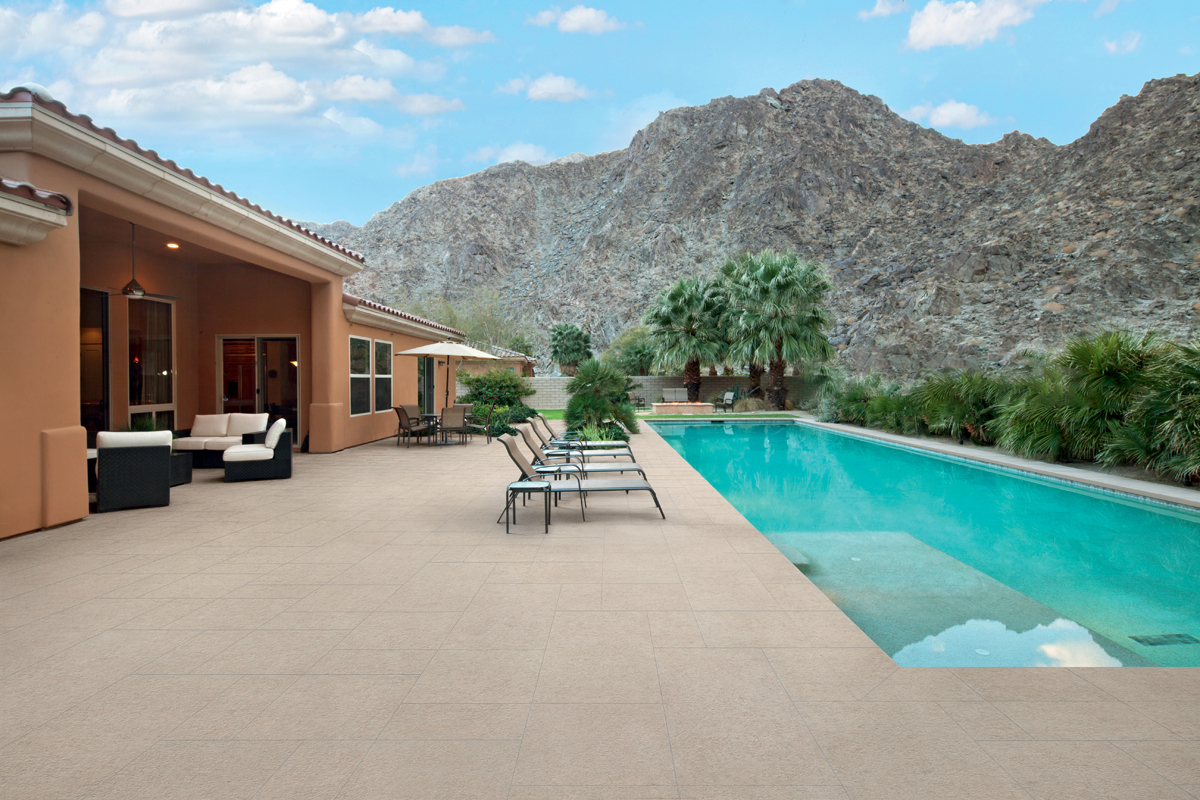
Slip Resistance and Surface Texture
Is high slip resistance essential? In both wet and dry conditions? Will a trade-off between a highly textured surface which can attract dirt and moss but having a high slip resistance be acceptable over the long term?
Cost
Concrete pavers are typically the lowest cost option, natural stone will vary a lot depending on the type of stone and distance from the source while the cost of porcelain pavers will mainly depend on the thickness. Archatrak’s 3cm pavers for example are almost three times the breaking strength of 2cm porcelain pavers but the cost of 3cm pavers is much less than 3 times that of 2cm pavers.
Paver Layout
A few factors to keep in mind here are the interlocking strength of the pavers, aesthetics, and existing slopes. While a simple grid pattern (stack bond) of square pavers may suit an outdoor patio, a driveway application may benefit from a more elaborate or unique pattern, such as a running bond, or herringbone pattern to increase interlocking strength.

Summary
The options available with landscape pavers might seem quite overwhelming at first. So, taking time to think through the pros and cons of each paver type for a particular project is the best way to start. At Archatrak, we have provided both homeowners and construction industry professionals with high-quality exterior porcelain pavers for over two decades. Whether your project is a simple residential patio over gravel or a high-end courtyard or rooftop deck in a public space, don’t hesitate to reach out to us with any questions you may have with your project. To explore our full range of porcelain landscape pavers and order samples, take a look at our browse all colors page.
Speak with a paver expert:
Contact Us