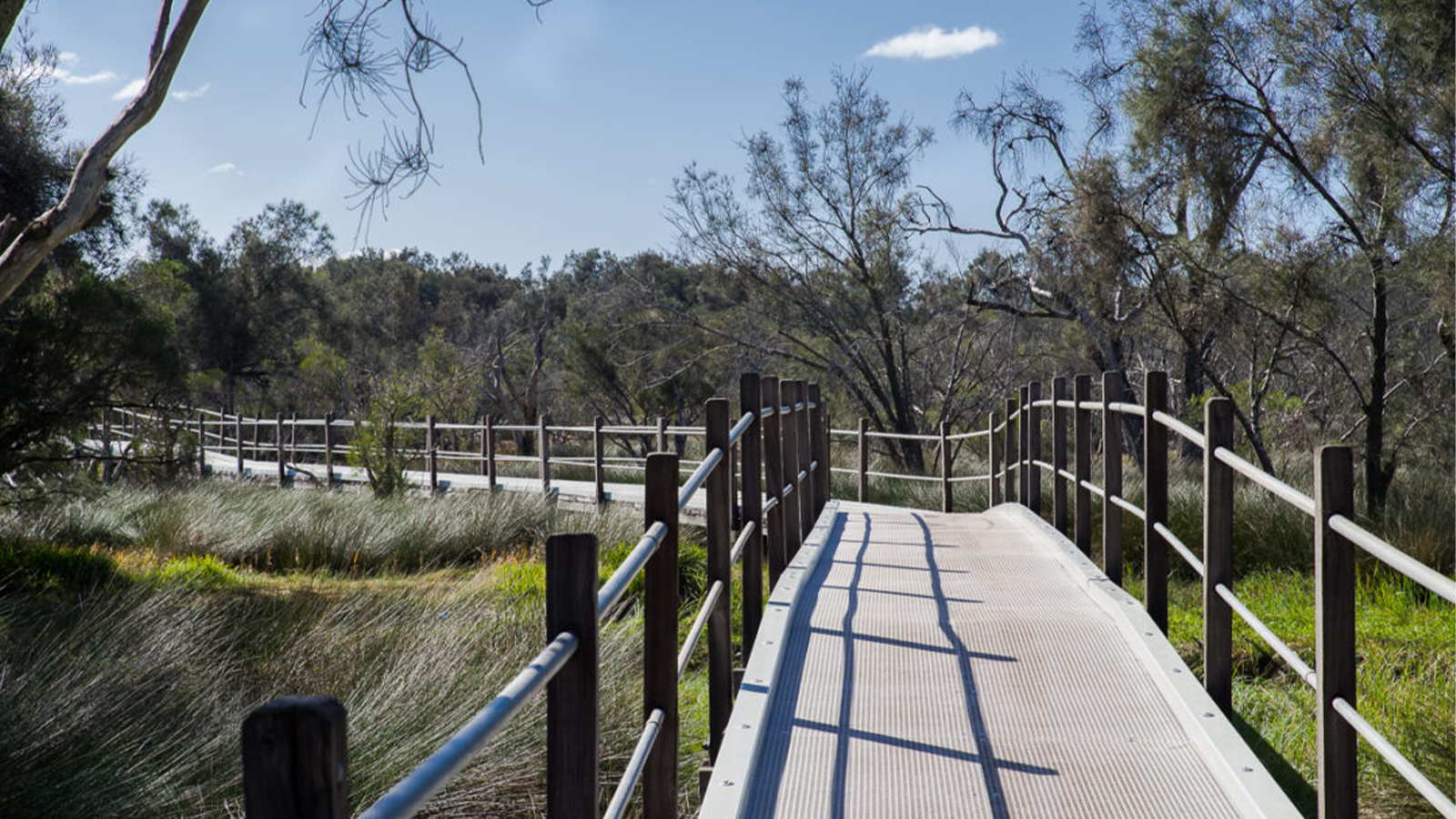
Fiberglass Reinforced Plastic (FRP) grating has become the preferred boardwalk decking material for projects where long-term performance, public safety, and low maintenance are non-negotiable.
Exceptionally durable, slip resistant, and fire resistant, FRP boardwalk decking outperforms traditional softwood, hardwood, steel, composite wood, and precast concrete across virtually every measure that matters for boardwalk construction.
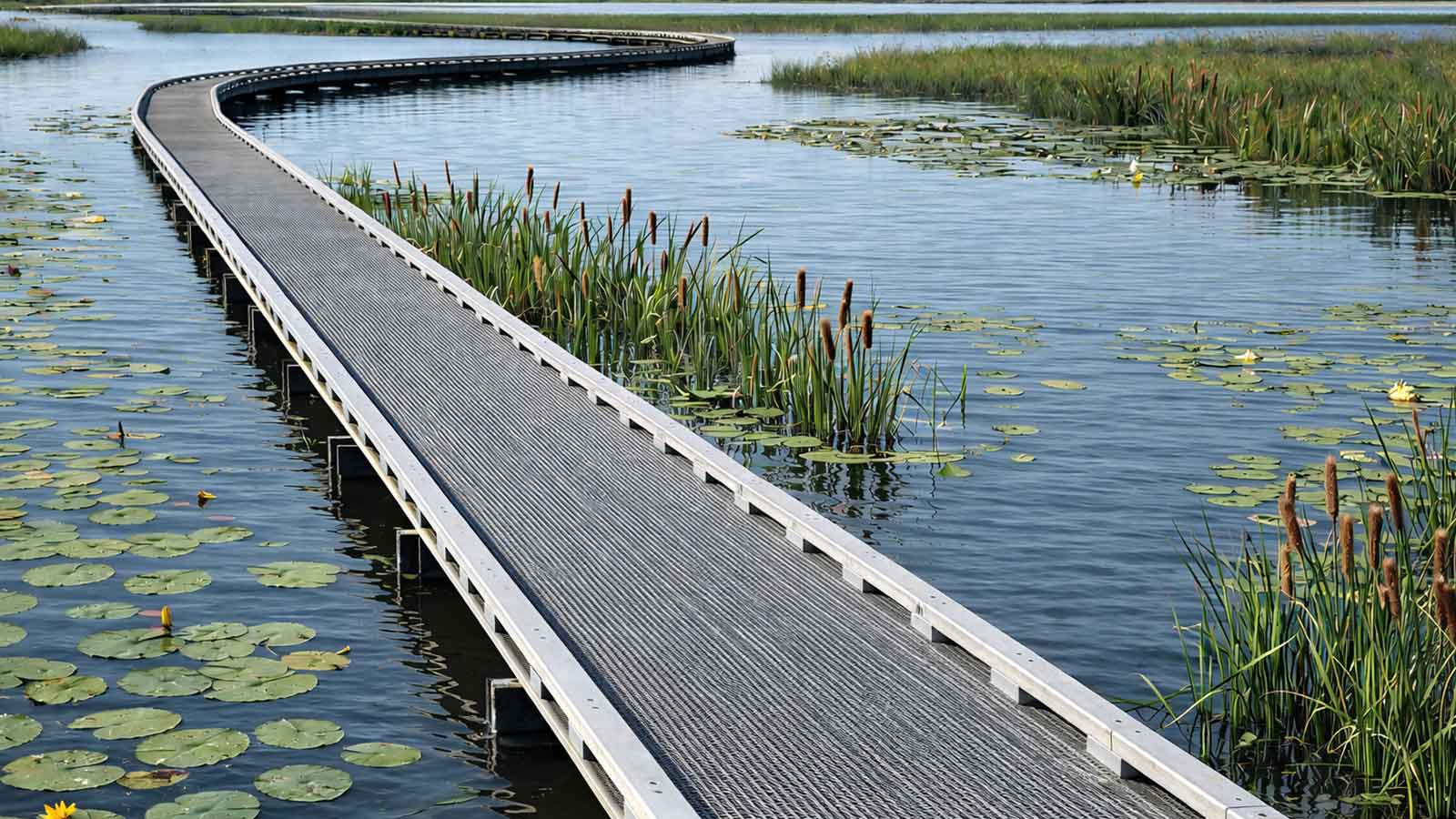
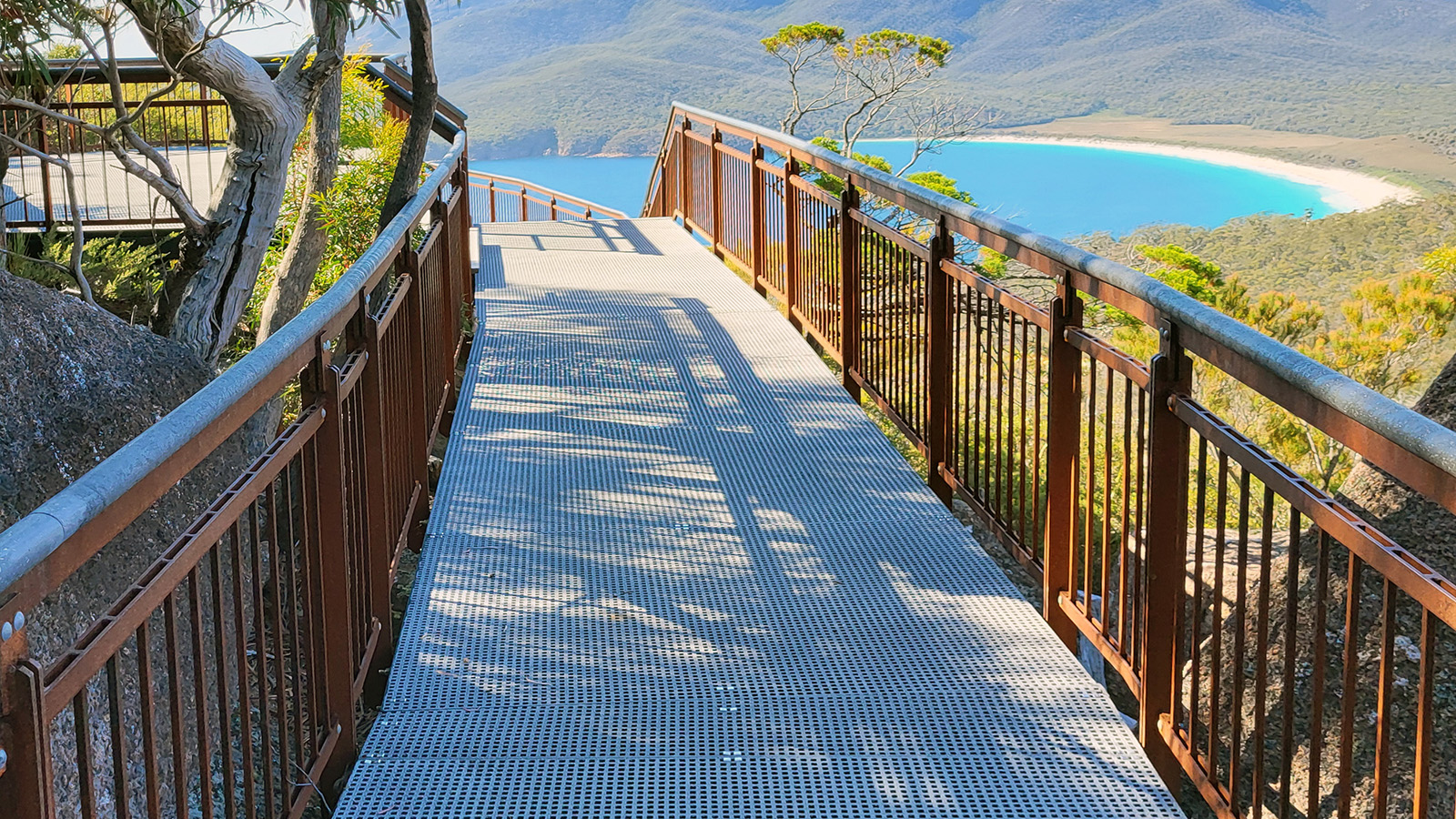
In many regions, including Australia, FRP has largely replaced all other boardwalk decking materials over the past few decades. From scorching desert pathways to remote coastal walkways battered by frigid ocean weather, FRP boardwalk grating has proven itself in some of the most extreme climatic conditions on earth, handling constant daily foot traffic with practically zero maintenance.
Archatrak SpanTrak FRP grating panels are manufactured with Type I Isophthalic resins and Aluminum Hydroxide filler, achieving a Class A fire resistance rating when tested to ASTM E84. Supplied in 4′ x 8′ structural panels, SpanTrak panels are optionally available with a gritted slip-resistant surface and install faster than wood planking with no ongoing treatment, sealing, or inspection required.
Benefits of SpanTrak FRP Grating for Boardwalk Decking

Slip Resistant Surface
Grit is molded in during manufacturing, not applied, so it won’t wear off over time.

Comfortable Underfoot
Slight flex under load feels less jarring than steel or concrete, with smoother finish available for barefoot areas.

Lightweight and Easy to Handle
Much lighter than steel, reducing material hauling in remote or difficult to access sites.
Simple Onsite Fabrication
Cut and drill with standard power tools, no special-order sizes or prefabrication needed.

Long-Term Durability
Where wood rots in five years and steel corrodes in ten, FRP keeps performing.
Class A Fire Resistant
Aluminum Hydroxide filler achieves Class A rating when tested to ASTM E84.
Low Environmental Impact
Open grid lets sunlight and rain reach vegetation below with no chemical leaching.
Low Maintenance
No warping, no raised edges, no sealing, staining, painting, or periodic inspection required
Gallery
Technical Specs
Spantrak Grating Options
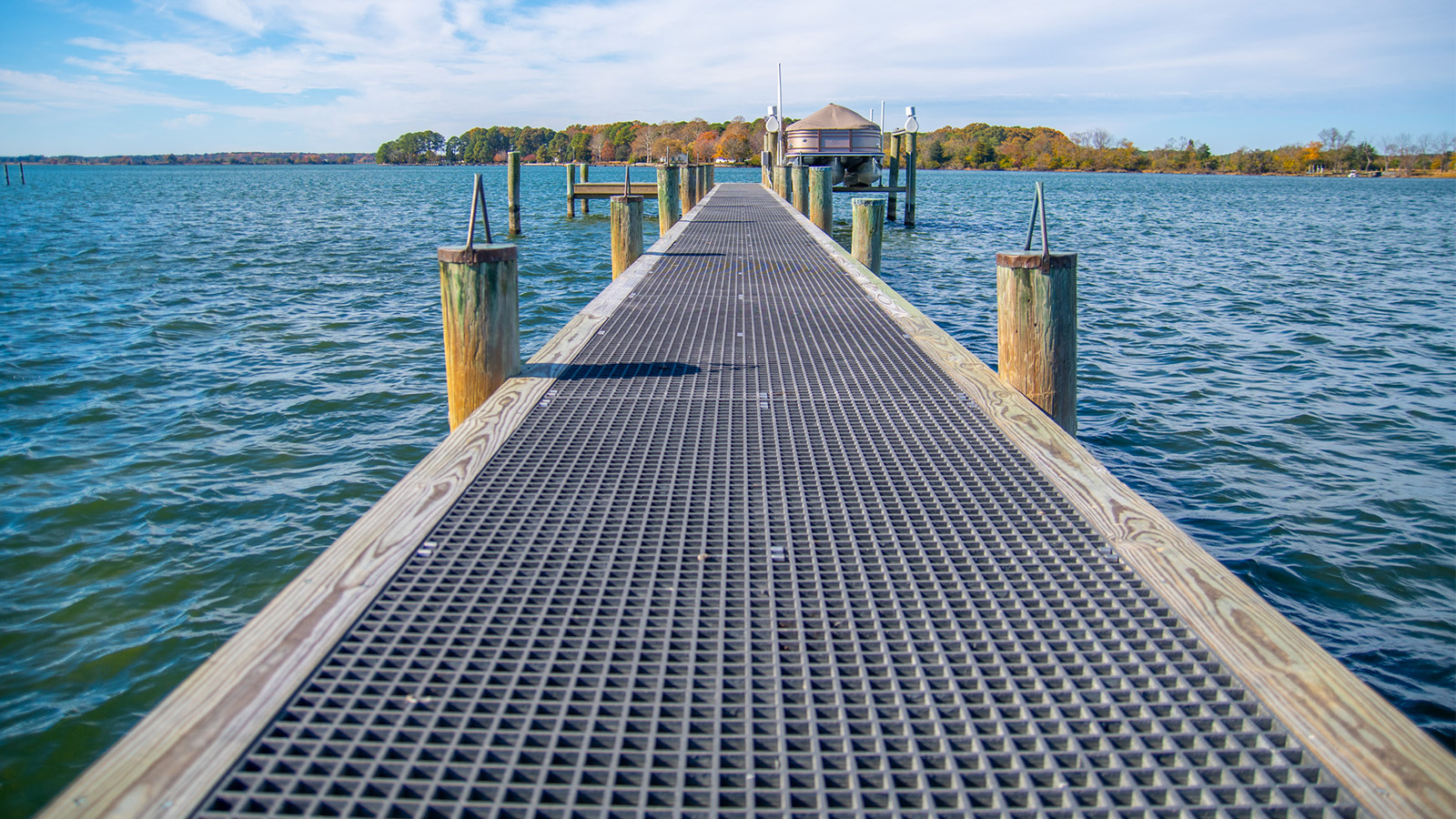
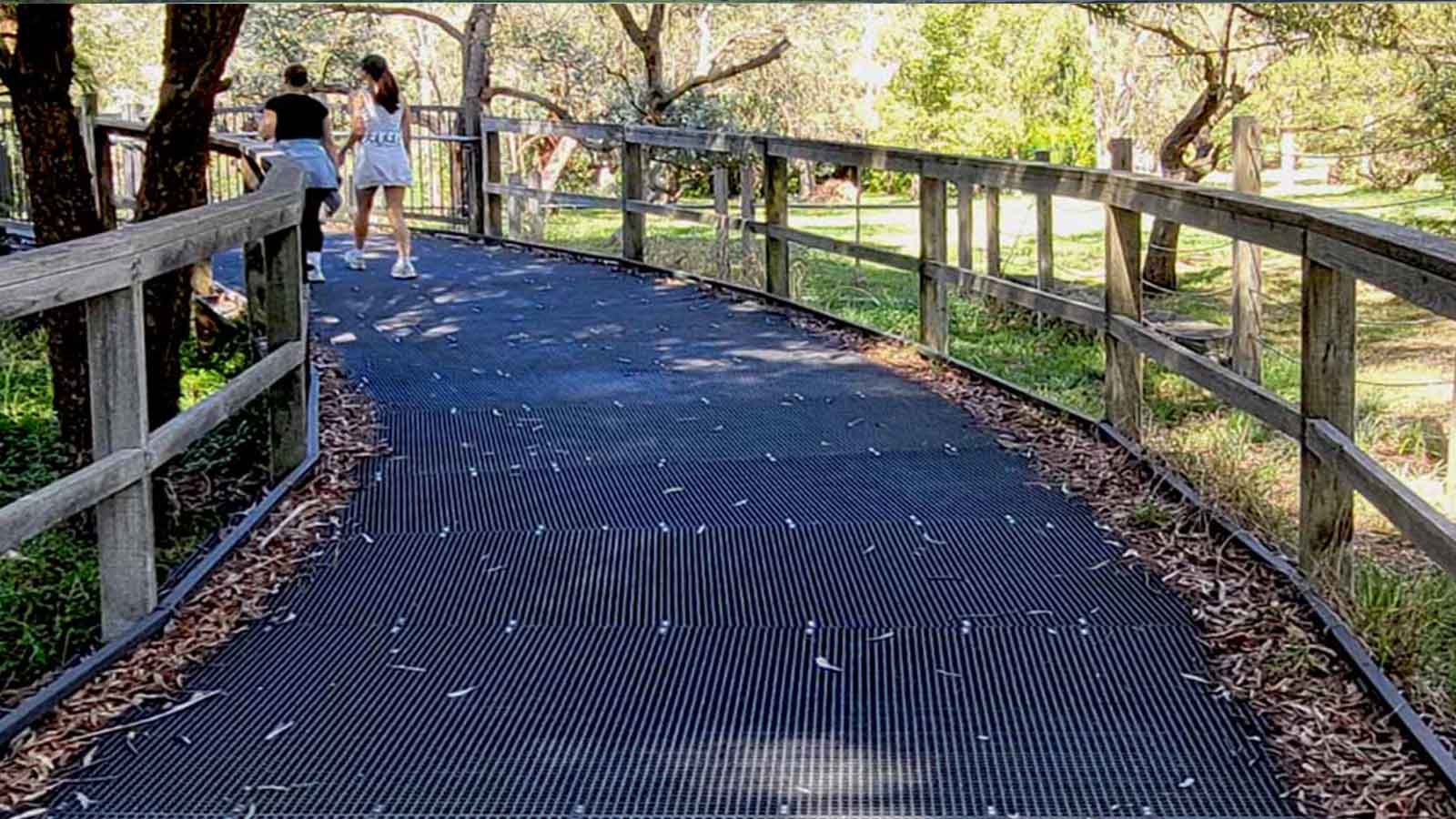
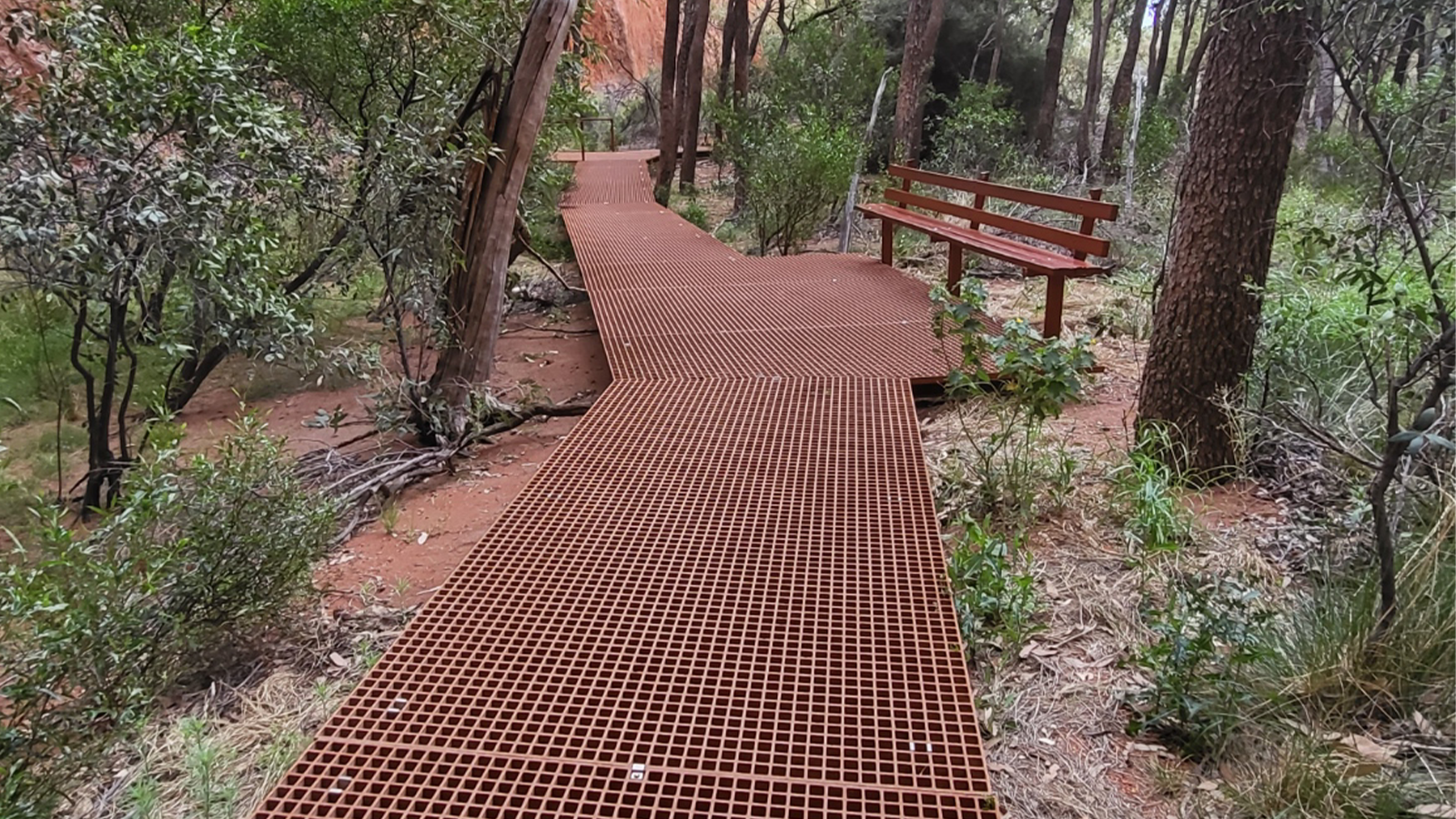
SpanTrak panels are supplied as standard in 4′ x 8′ sheets with a gritted anti-slip surface finish in dark grey. For beachfront boardwalks where barefoot traffic is common, a smoother meniscus finish is available as an alternative to the standard grit.
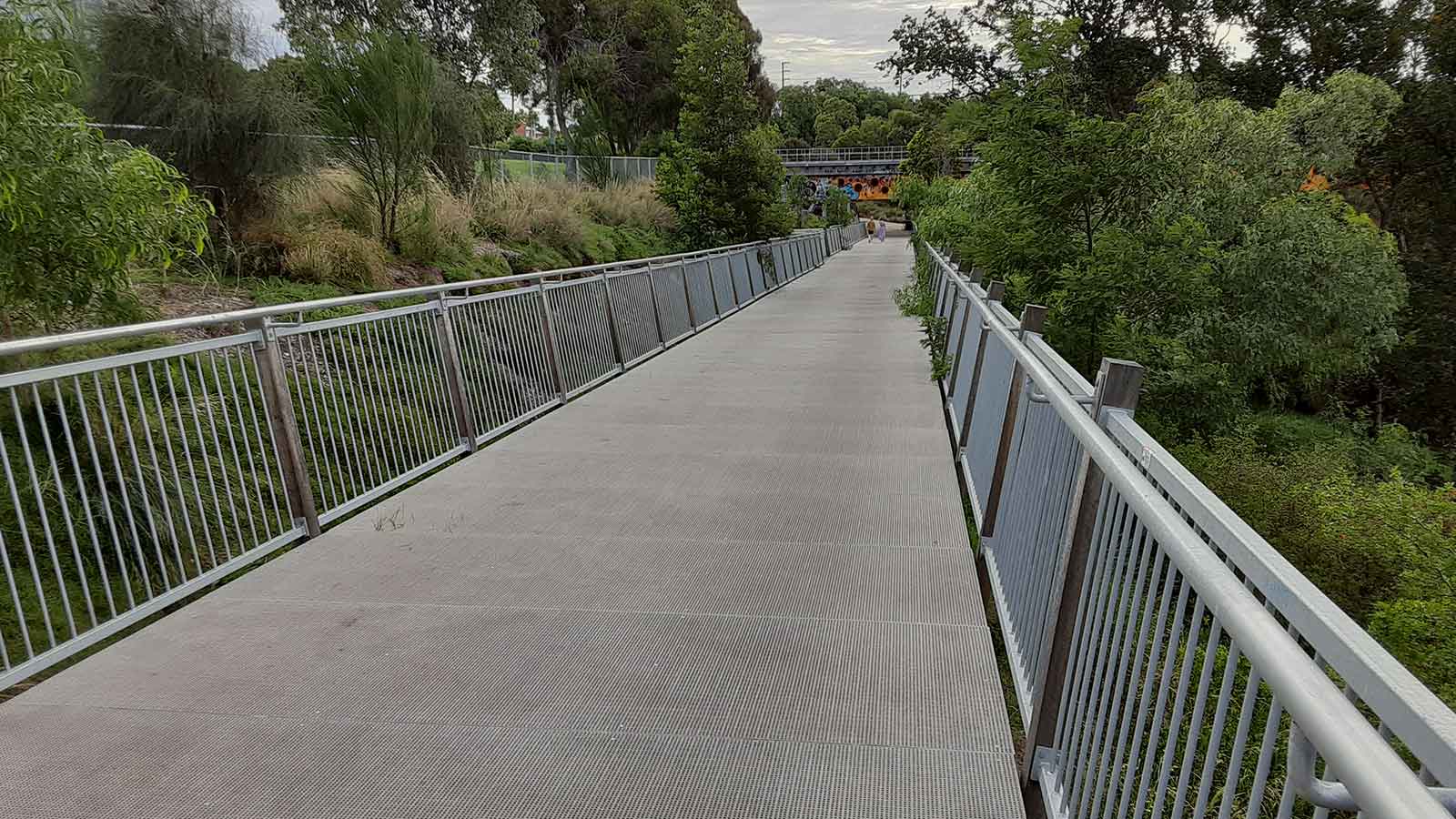
SpanTrak MidiMesh is our recommended choice for most boardwalk and pedestrian pathway applications. With a 1/2″ x 1/2″ aperture size, MidiMesh provides excellent foot coverage, accommodates high heel traffic, and delivers a smooth rolling surface for wheelchairs, bicycles, and carts. Panels are supplied in 1-1/4″ thickness for joist spacing up to 24″ on center.
SpanTrak MiniMesh offers a tighter 1/4″ x 1/4″ aperture for applications where an exceptionally smooth rolling surface is the priority. A good option for high-traffic accessible pathways or where scooters and wheeled equipment are in regular use. Available on special order.
Custom panel sizes and colors are available on special order for either option.
Specifications
For boardwalk decking applications, Archatrak only supplies gratings manufactured with pure isophthalic resins and not lower cost polyester resins which do not offer sufficient long-term durability in harsh exterior conditions.
All our fiberglass grate panels use aluminum hydroxide filler (not calcium carbonate) for maximum fire resistance (flame retardant and smoke suppression) and contain UV stabilizers.
Archatrak MidiMesh
Thickness: 1 1/4″
Primary load bars: 1 1/2″ x 1 1/2″ on center
Secondary load bars: single bar between primary bars – 1/2″ deep
Mesh aperture: 1/2″ x 1/2″
Surface: anti-slip grit embedded in resin
Weight: 3.7 lb/sq.ft
Archatrak MiniMesh
Thickness: 1 1/4″
Primary load bars: 1 1/2″ x 1 1/2″ on center
Secondary load bars: two bars between primary bars – 1/2″ deep
Mesh aperture: 1/4″ x 1/4″
Surface: anti-slip grit embedded in resin
Weight: 4.5 lb/sq.ft.
Installation
Archatrak porcelain cobblestone pavers used as driveway pavers should be laid Archatrak SpanTrak fiberglass grate panels for boardwalk decking applications are normally fixed to support bearers with max. span of 48″ (depending on the thickness of the fiberglass panel and anticipated loadings) using stainless steel M clips inserted in the grating apertures, with a minimum of four clips per panel. L clips are generally not recommended as they don’t have the same strength as M clips.
Where necessary, adjacent panels can be joined at the edges by means of stainless steel C clips.
Since the aperture size of MicroMesh panels is only 1/4″ x 1/4″, these panels are typically fixed to bearers with stainless steel screws or bolts with a 1/2″ diam. (min) head and a 6-lobe (Torx or equiv.) drive. A diamond cone drill with no pilot drill can be used to countersink the screws so the screw heads sit flush with the surface of the panels.
Where panels are installed over steel I or H beams and it may be difficult to drill through the beams, hold down clips with an extended base plate may be used.
Where a change in direction is required on a boardwalk, panels can be cut at an angle, taking care to ensure adjacent panels are cut at the same angle so the load bars match up when panels are joined. See our FRP installation page for further details.
Downloads
Load Deflection Tables
FRP Datasheet
3-Part FRP Guidespec
Spantrak FRP Brochure
MiniMesh CAD
MidiMesh CAD
MacroMesh CAD
Fire Resistance Test Results ASTM-E84
Slip Resistance Test Results ASTM E303-22
SpanTrak FRP Grating Synthetic Turf Support – CAD Drawings
While both products offer a strong, lightweight and corrosion resistant alternative to steel and wood in outdoor decking, boardwalks, walkways, stairs, ramps, platforms and access walkway applications, there are key differences in how the two products are manufactured and thus how they perform.
Molded grating as the name implies, is produced as a single piece in a mold, typically in a mesh pattern, where the application requirements determine the aperture size of the mesh and height of the grating to be used. Its excellent bi-directional strength makes it particularly useful for covering broad areas with a minimum of joins.
On the other hand, pultruded grating is produced with continuous fiberglass rovings laid to form parallel load bearing bars and cross rods. It typically offers higher strength and stiffness in the direction parallel to the bars and can be produced in longer spans, making it more suitable for demanding structural applications.
While the basic resins used to produce FRP grating have limited fire resistance, fire retardant additives can be included during the manufacturing process
Archatrak SpanTrak FRP grating for example has been tested in accordance with ASTM E84 and achieved a Class A fire rating for both spread of flame and smoke developed index.
Much lighter: FRP is ¼ the weight of steel
Corrosion resistant: FRP does not suffer from corrosion or rust
Softer underfoot: FRP panels deflect slightly under load giving a slightly springy feel which is generally preferred by pedestrians
Lower maintenance: Since steel can rust or corrode, it requires regular inspections to check that structural integrity is maintained or if protective coatings must be re-applied.
Longer lifespan: Lifetime of steel depends to a large extent on the quality of corrosion protection which means that working life can be as short as 5 years or in excess of 30 years. Lifetime of FRP grating however is generally quoted as more than 30 years.
Easier Installation: Steel grating generally needs to be fabricated off site to comply with size and shape requirements at the installation site. FRP grating panels can be cut to shape and size as needed on site with standard power tools.
Provided resins, fillers and additives which provide extended life have been used in manufacture, the life of FRP grating panels can exceed 30 years even where they are subject to severe weather or environmental conditions.