Wildfires are an increasing concern for homeowners throughout the western United States, particularly in areas where residential development borders forests, grasslands, and other natural vegetation. As communities adapt to these risks, building codes and construction practices are placing greater emphasis on fire-resistant materials and reducing potential ignition hazards around homes.
Outdoor decks deserve particular attention. Traditional wood decking and framing can be vulnerable to flying embers, radiant heat, and direct flame exposure. Non-combustible decking materials, such as exterior porcelain pavers supported by steel framing or pedestal systems, offer an alternative to conventional wood deck construction.
For homeowners building a new deck or replacing an existing one, material selection is only part of the equation. The supporting structure, deck-to-house connections, drainage, and applicable local building codes all influence how a deck performs during a wildfire.
Below, we’ll explore two approaches to building residential decks with non-combustible materials, along with important design considerations for homes in wildfire-prone areas.

Building a Non-Combustible Deck Structure
For homeowners replacing an existing wood deck or building a new elevated deck in a wildfire-prone area, the supporting structure is just as important as the finished surface. Steel or aluminum framing offers a non-combustible alternative to traditional wood joists, while structural cementitious panels, such as Structo-Crete, provide a stable base for the deck assembly.
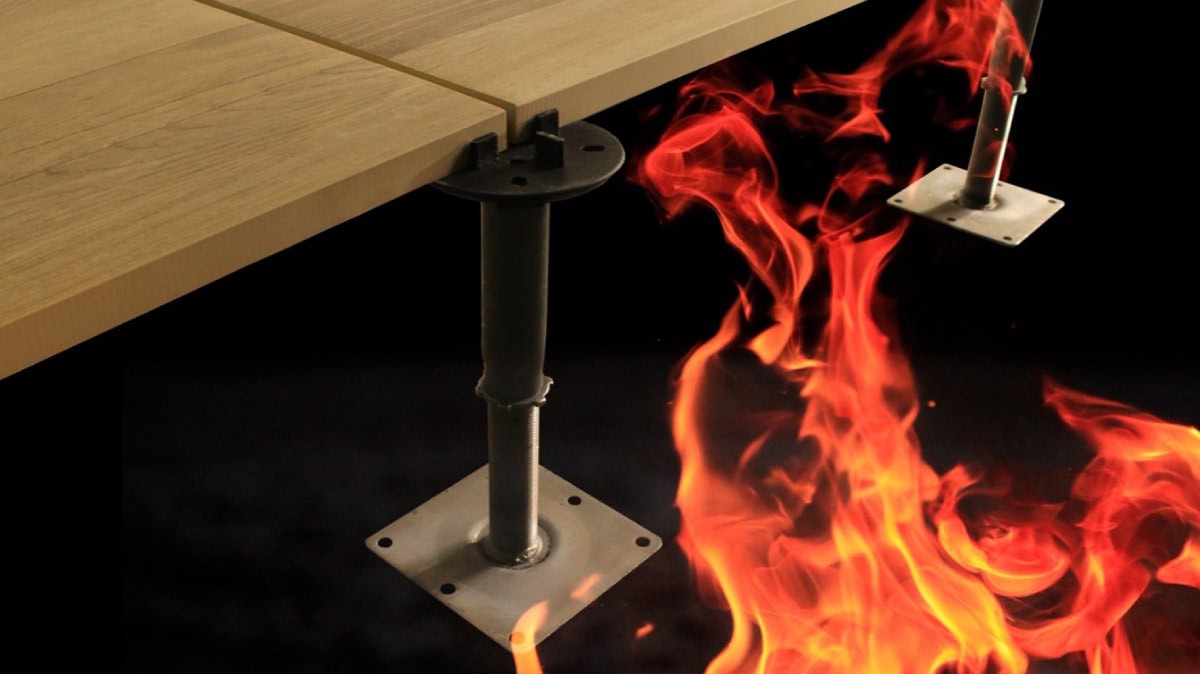
Archatrak’s Incendio steel pedestals are designed for projects requiring non-combustible paver supports. Installed over a suitable structural base, these adjustable-height pedestals support 2cm and 3cm porcelain pavers while providing space beneath the walking surface for drainage. Their height can be adjusted to create a level deck, even where the supporting surface has a slight slope.
When combined with non-combustible framing, appropriate structural panels, and porcelain pavers, Incendio pedestals can form part of a deck assembly designed to reduce combustible materials. The complete installation, including perimeter restraint and connections to the home, must still meet applicable building and fire-code requirements.
Porcelain Paver Decks Over Concrete Slabs
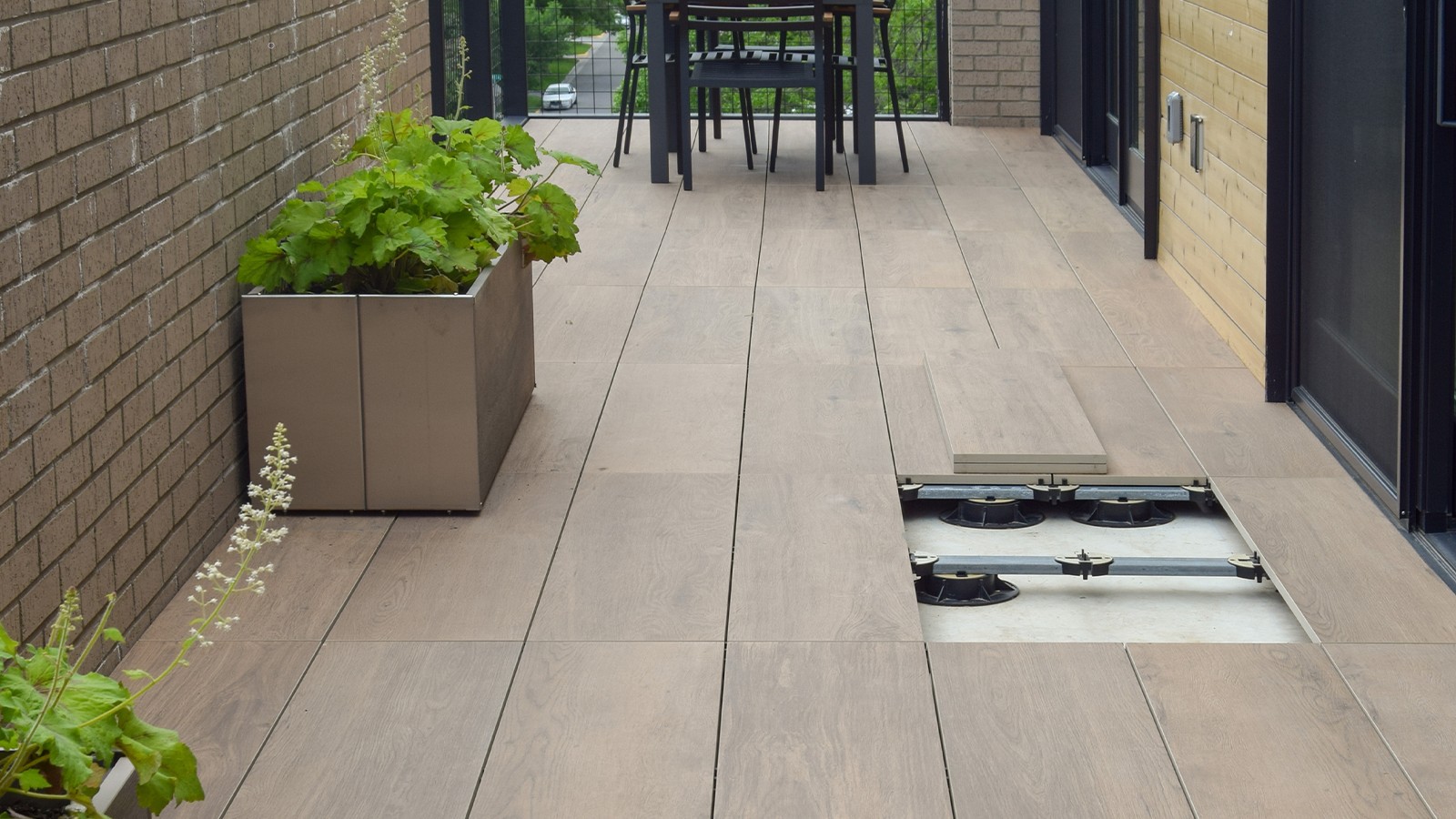
Not every residential deck project requires a fully non-combustible support assembly. For homeowners resurfacing an existing concrete patio or creating an elevated surface over a concrete slab, porcelain pavers can be installed over adjustable-height plastic pedestals or low-profile rubber support pads.
Adjustable pedestals are particularly useful where the concrete has a slope or minor variations in elevation. They support the pavers above the slab, creating a level walking surface with space underneath for drainage. Where installation height is limited, rubber pads provide a simpler, low-profile option.
Both methods retain the advantages of a non-combustible porcelain paver surface without the need for a conventional wood deck structure. Plastic pedestals and rubber pads are not themselves non-combustible, however, and should only be used where permitted by local building and fire requirements.
Wood-Look Porcelain Planks for Residential Decks
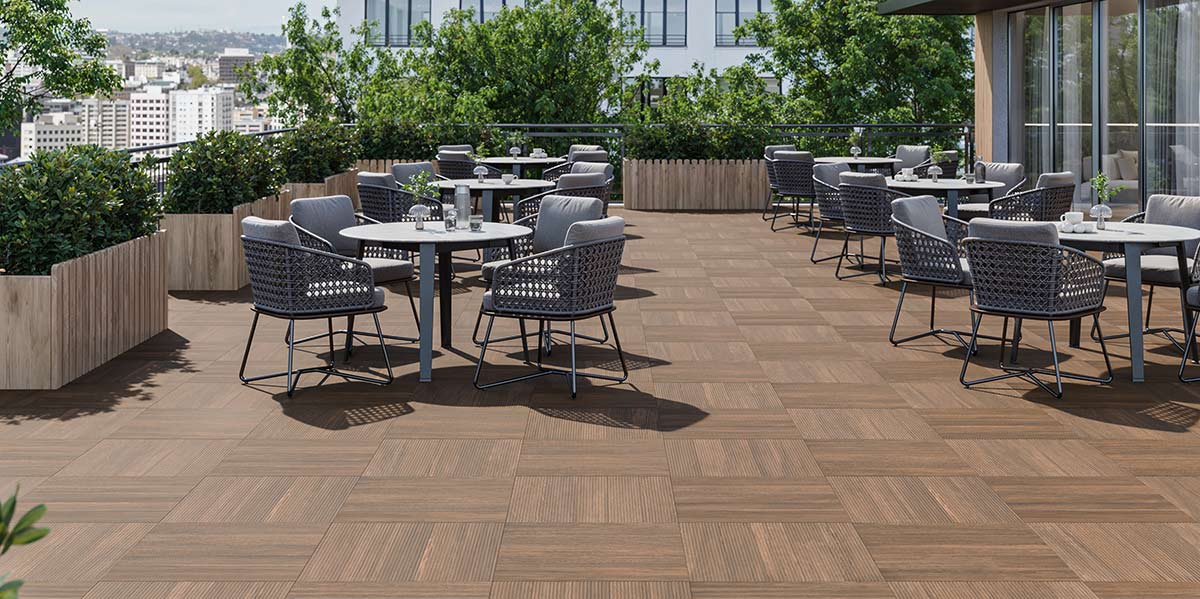
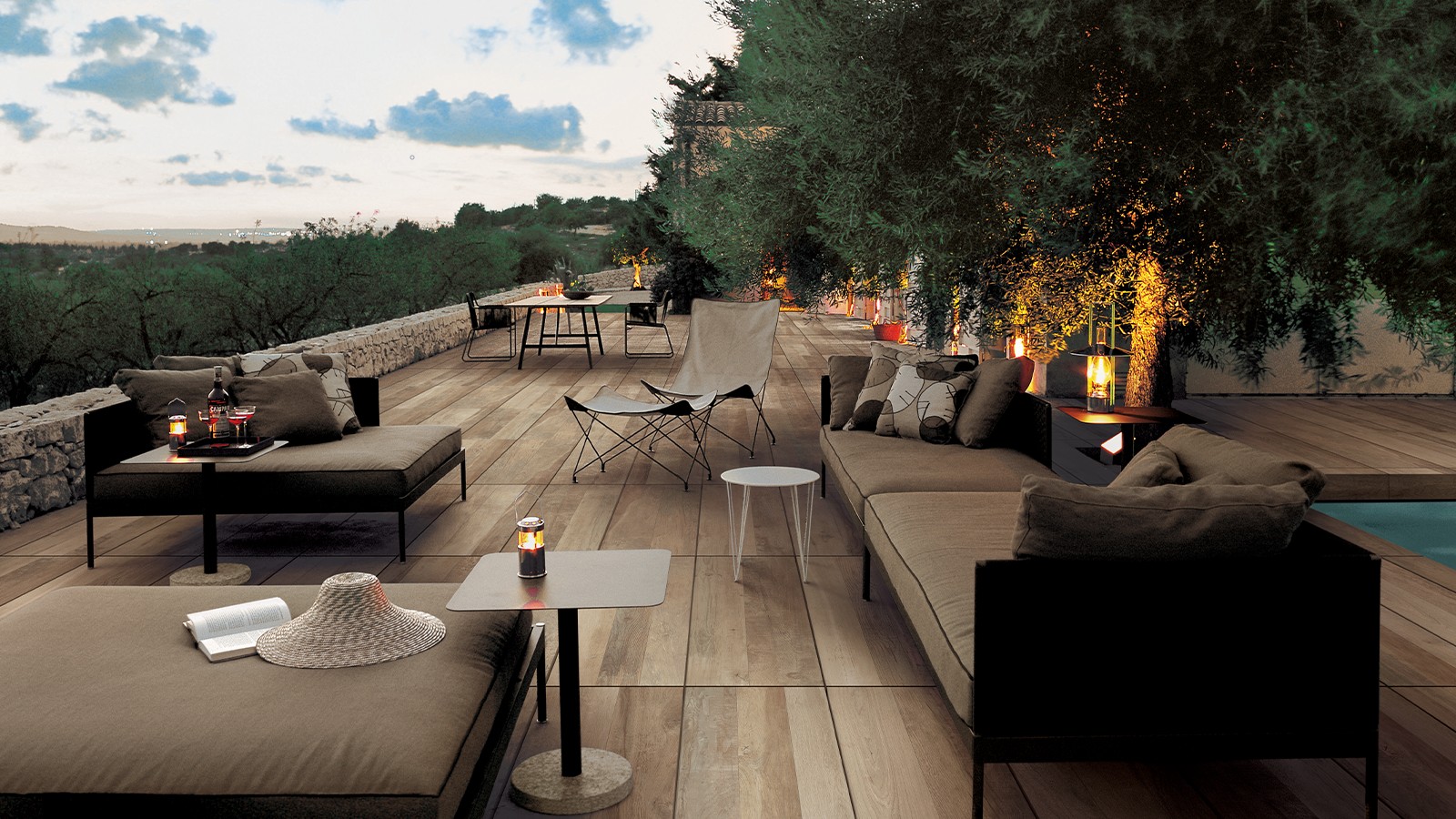
For homeowners who prefer the appearance of traditional wood decking, wood-look porcelain planks offer an attractive alternative. These long-format planks replicate the color and grain patterns of natural wood without the ongoing staining, sealing, and refinishing associated with conventional wood decks.
Archatrak’s aluminum rail support system provides a framework for installing porcelain planks on elevated decks, balconies, and rooftop terraces. The aluminum rails and porcelain planks are non-combustible materials, making them particularly appealing for residential projects where reducing combustible construction materials is a priority.
The rail system can be installed over compatible pedestal supports to accommodate varying deck heights and provide a level walking surface. Where a non-combustible assembly is required, the pedestal selection and other supporting components must be evaluated as part of the overall design.
Choosing a Non-Combustible Porcelain Deck Surface
Regardless of the supporting structure, exterior porcelain pavers offer several advantages over traditional wood decking. Manufactured from high-density porcelain and fired at extremely high temperatures, these pavers are non-combustible and provide a durable surface for residential decks and patios.
Porcelain resists moisture, staining, scratches, and freeze-thaw exposure. It doesn’t require regular sealing or refinishing, and routine cleaning is generally sufficient to maintain its appearance. For homeowners looking to reduce deck maintenance, these characteristics can be just as appealing as the material’s fire performance.
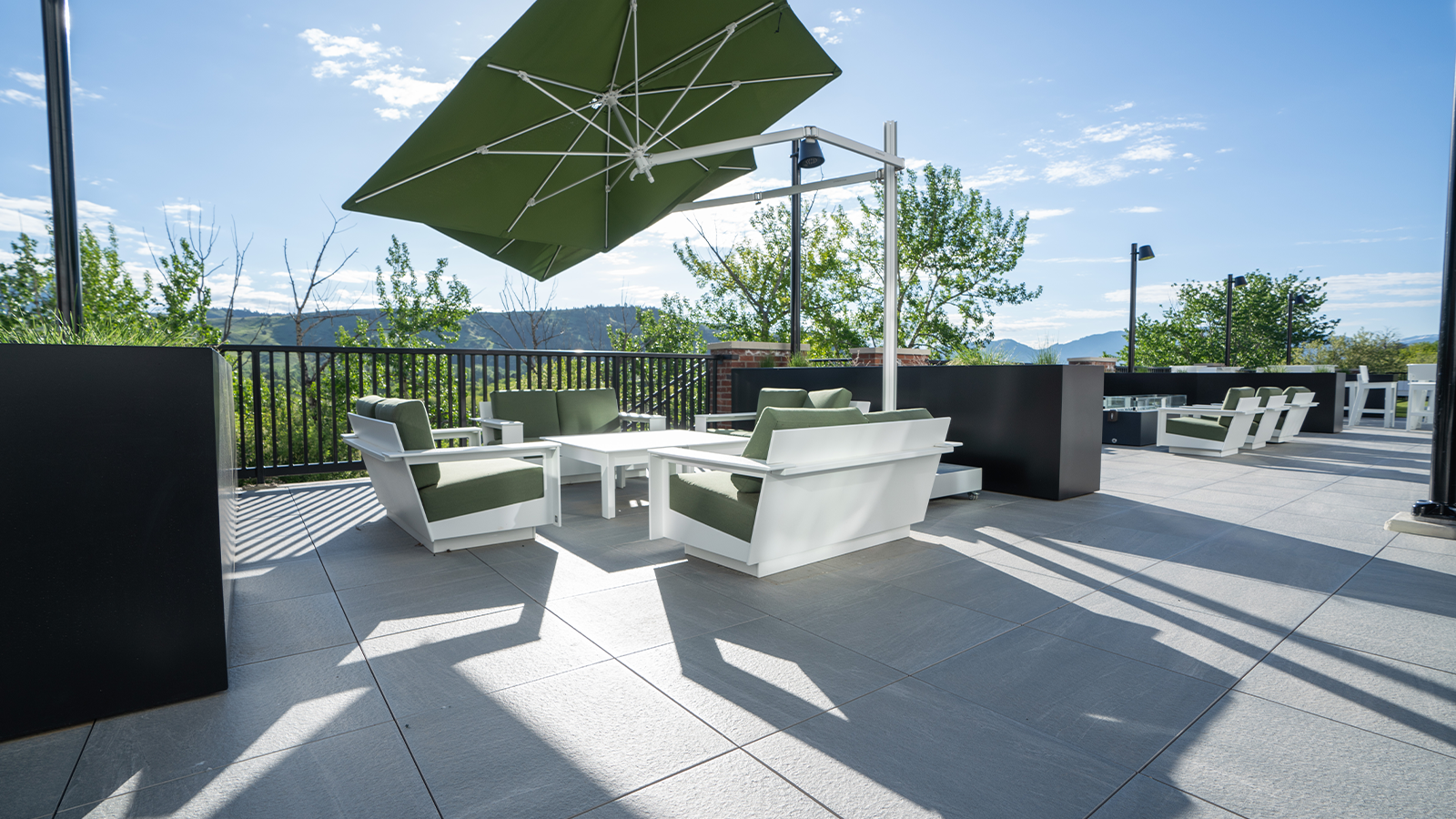
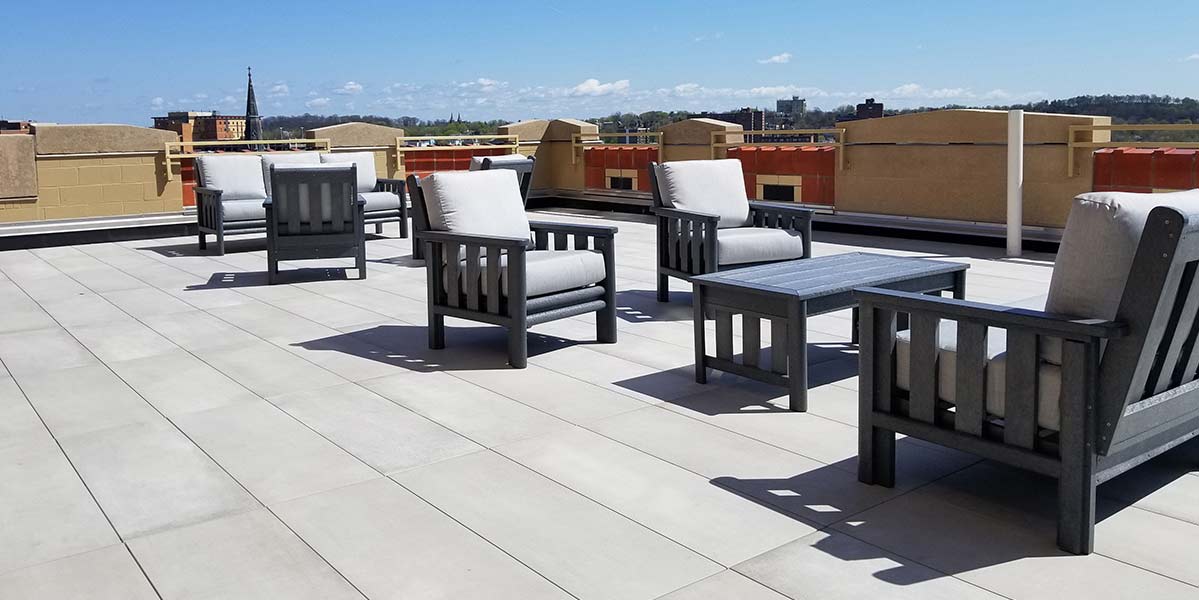
Design options have also expanded considerably. Porcelain pavers are available in natural stone, concrete, cement, and wood-look finishes, with multiple sizes and textures suited to outdoor applications. Whether replacing an aging wood deck or designing a new outdoor living space, homeowners can select a finish that complements the home without relying on combustible wood for the walking surface.
Browse All Porcelain Paver Colors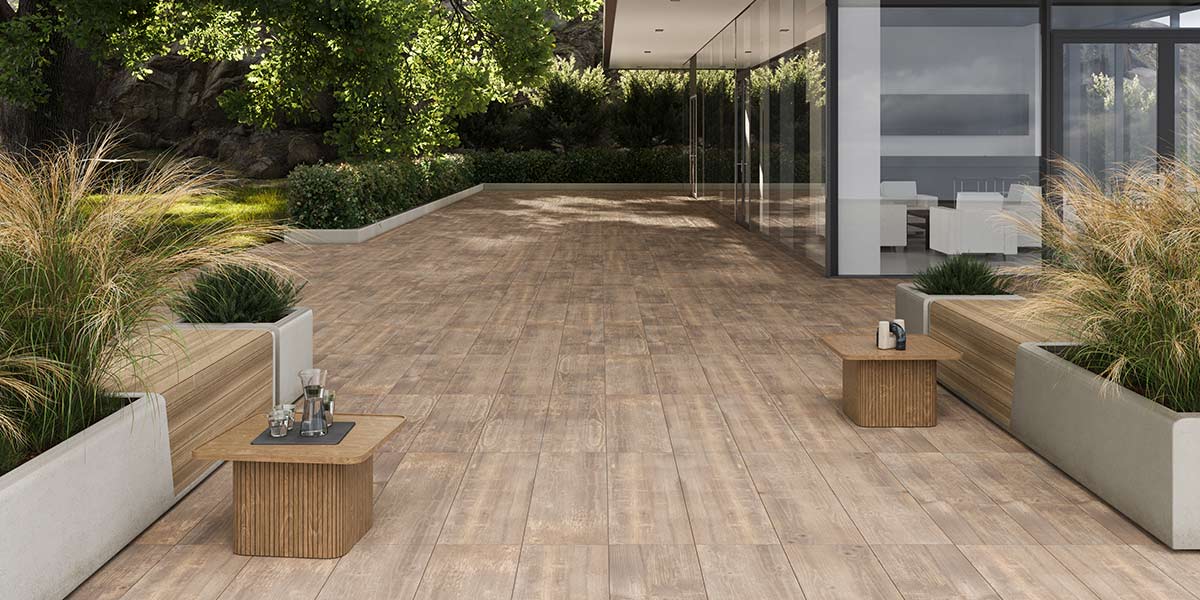
Wildfire-Resistant Deck Design and Building Code Requirements
Choosing non-combustible decking materials is an important step toward reducing wildfire risks, but the way a deck is constructed matters just as much. Wind-driven embers can collect between deck boards, beneath elevated structures, and where a deck connects to the home. Combustible debris, furniture, and stored materials can also contribute to ignition during a wildfire.
Homeowners in wildfire-prone regions should pay particular attention to the following:
Understanding Wildland-Urban Interface (WUI) Requirements
Many communities in wildfire-prone regions have adopted special construction requirements for properties within designated Wildland-Urban Interface (WUI) areas. These regulations may address decking materials, ignition resistance, and the fire performance of exterior deck assemblies.
California, for example, has specific requirements for exterior decking in designated wildfire hazard areas under Chapter 7A of the California Building Code. Homeowners planning a new or replacement deck can consult CAL FIRE’s wildfire preparedness and home-hardening resources to better understand the risks and recommended construction practices.
It’s important to distinguish between a non-combustible material and a code-compliant deck system. Porcelain pavers and steel pedestals may be non-combustible individually, but that doesn’t automatically establish compliance for every complete installation. Homeowners and builders should confirm local requirements with their building department before selecting materials or beginning construction.
Frequently Asked Questions About Fire-Resistant Decking
Is there such a thing as non-combustible wood?
No. All natural wood is combustible, although some hardwood species, including Ipe, have relatively low flame-spread ratings. Ipe can achieve a Class A flame-spread classification under certain test conditions, but this does not make it non-combustible. Homeowners in wildfire-prone areas should distinguish between fire-resistant wood products and materials classified as non-combustible.
What is the best decking material for homes in wildfire-prone areas?
Porcelain pavers are an excellent option for homeowners seeking a non-combustible deck surface. They offer the appearance of natural stone, concrete, or wood without introducing combustible material into the walking surface. For projects with stricter fire requirements, porcelain pavers can be combined with steel framing and non-combustible pedestal supports. The complete assembly must still be evaluated for applicable code requirements.
Can I install porcelain pavers over an existing wood deck?
Porcelain pavers should not simply be placed over existing wood decking without evaluating the supporting structure and installation method. The framing must be capable of supporting the additional weight, and appropriate paver supports, drainage, and perimeter restraint are necessary. More importantly, installing non-combustible porcelain over wood framing does not make the complete deck non-combustible.
Final Thoughts on Non-Combustible Decking
For home and property owners in wildfire-prone areas, replacing combustible decking materials is one practical way to reduce potential fire hazards around the home. Porcelain pavers, steel framing, and non-combustible pedestal supports offer alternatives to traditional wood deck construction, without sacrificing the appearance or everyday functionality of an outdoor living space.
The right approach depends on the existing structure, local fire requirements, and how the deck will be used. Some projects may call for a fully non-combustible assembly, while others can benefit from a porcelain walking surface installed over conventional supports.
Whether you’re replacing an aging wood deck or planning a new outdoor space, Archatrak offers porcelain pavers, pedestal systems, and technical guidance to help you evaluate your options. Explore our porcelain paver systems or contact our team to discuss your project.