In recent years, porcelain pavers have gained significant popularity in the landscape paving market, due in part to their ability to closely replicate the look of traditional materials such as natural stones, including bluestone, quartz, travertine and other popular styles.
Bluestone has long been a preferred option for patio pavers, pathways, and other landscaping applications because of its natural appearance and durability. Porcelain pavers, however, are increasingly being considered alongside bluestone, particularly in projects where long-term maintenance and consistency are important.
Both porcelain pavers and natural stone offer unique benefits. Choosing one over the other often depends on the specific requirements of the project, as well as design preferences, installation methods, and long-term performance expectations.
Below, we compare bluestone paving and porcelain pavers across several key factors to help determine which is the better fit for patios and outdoor spaces.
| Feature | Bluestone Pavers | Bluestone Porcelain Pavers |
| Material Type | Natural quarried stone | Manufactured porcelain (kiln-fired) |
| Appearance | Natural variation in color and texture | Consistent color and finish, can replicate bluestone |
| Cost (per sq ft) | ~$6–$14 depending on type and finish | ~$6–$10, more consistent pricing |
| Maintenance | Requires sealing and ongoing upkeep | Low maintenance, no sealing required |
| Stain Resistance | Can absorb moisture and stains over time | Non-porous, highly resistant to staining |
| Slip Resistance | Naturally textured, varies by finish | Engineered surface, tested for slip resistance |
| Durability | Strong, but varies by piece | Highly consistent performance |
| Impact Resistance | Generally, more impact resistant at greater thickness | Not as impact resistant as thicker stone, may chip under impact |
| Weight | Heavier material | Lighter and easier to handle |
| Installation | Traditional on-grade methods | Flexible options including sand, concrete, or pedestal systems |
| Best Use Cases | Patios, pathways, natural landscape designs | Patios, pathways, and projects requiring low maintenance and consistency |
Material Composition
Bluestone Pavers: In the USA, natural bluestone is primarily known as a fine-grained sandstone sourced from quarries in Pennsylvania and New York and characterized by its grey-blue color. ‘Pennsylvania Bluestone’ is a unique sandstone found only in NE Pennsylvania. In Australia however, bluestone refers to a fine-grained extrusive igneous rock, otherwise known as basalt. In both cases, the stone features a dense, tightly bound structure that contributes to its durability.
Porcelain Pavers: Porcelain pavers are man-made. They are created from a mixture of clay, sand, and other natural materials that are fired at very high temperatures to produce a dense, non-porous product. Porcelain pavers are digitally printed using a combination of pigments which can closely replicate the look of natural stone, including bluestone, as well as wood and concrete.
Because porcelain is manufactured in controlled conditions, it offers a level of consistency in size, thickness, and performance that natural stone cannot always match.
Aesthetic Appeal
Bluestone Pavers: Bluestone is valued for its natural beauty. Its color range includes shades of blue, gray, brown, and purple, giving it a distinctive, earthy appearance. Because it is a natural product, each paver varies slightly, creating a unique look across patios, pathways, and landscaped areas.
This natural variation is often what makes bluestone appealing in traditional or rustic designs.
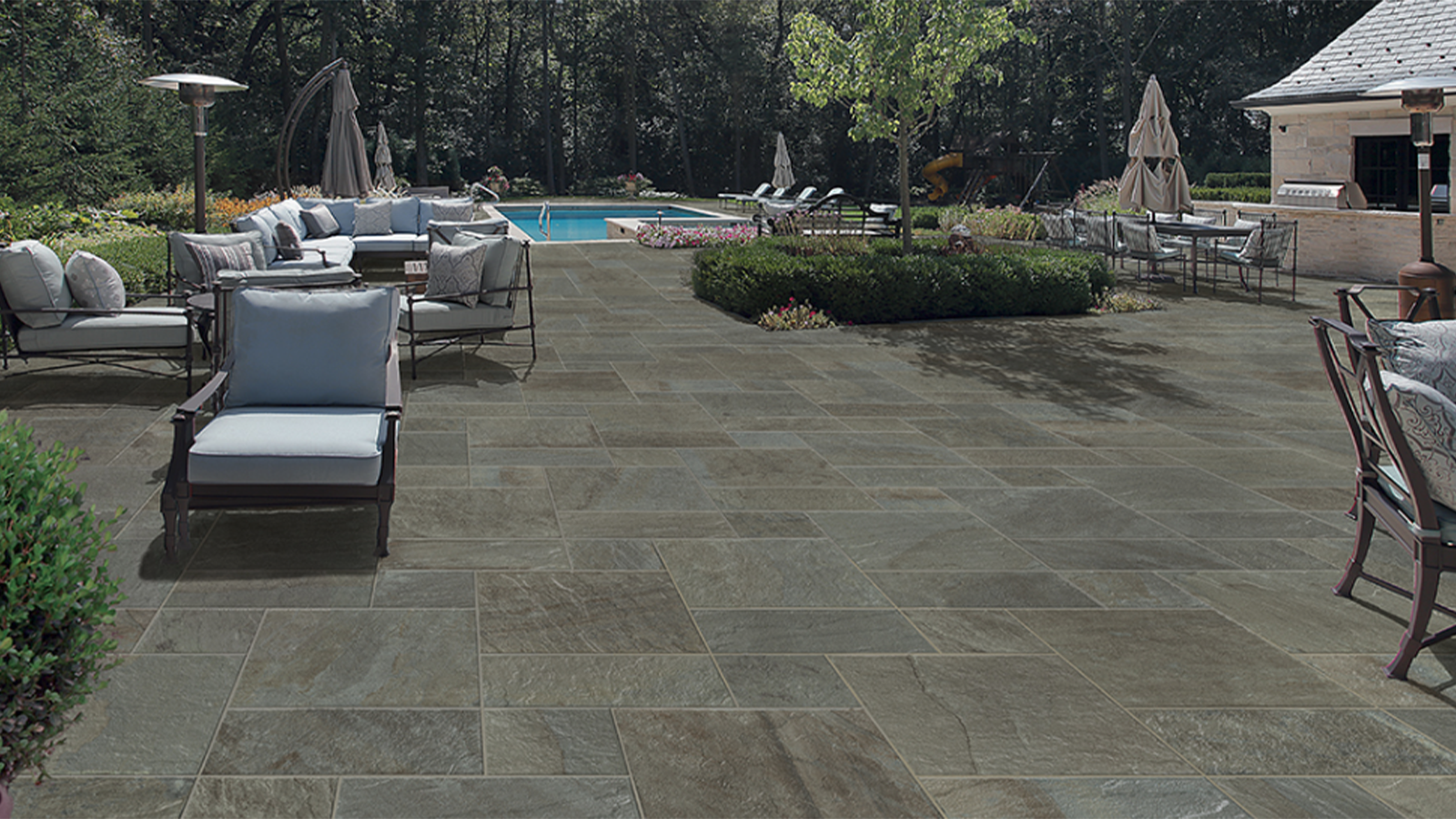
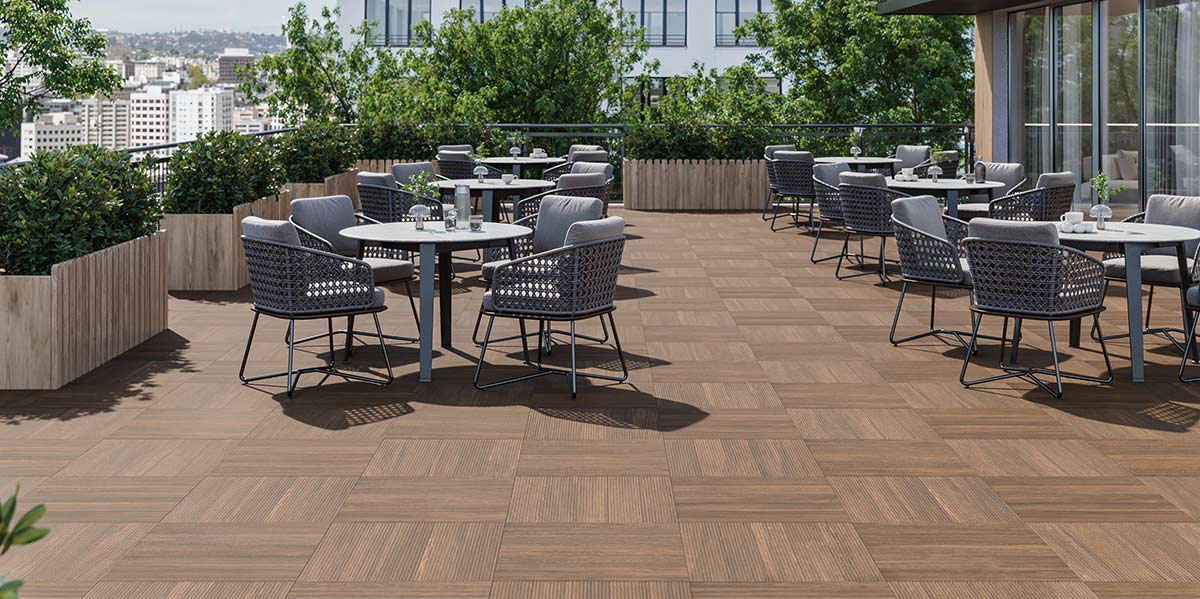
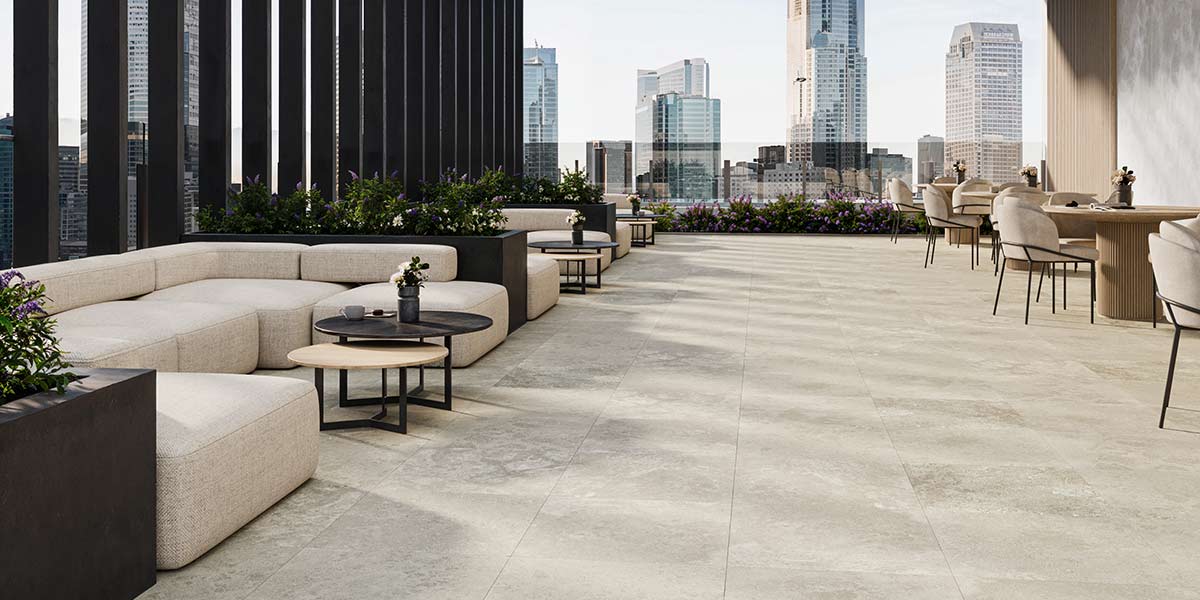
Porcelain Pavers: Porcelain pavers offer a broader range of design possibilities due to the wide variety of colors and styles available. In addition to replicating bluestone, porcelain products can mimic stone from different regions, as well as wood and concrete finishes.
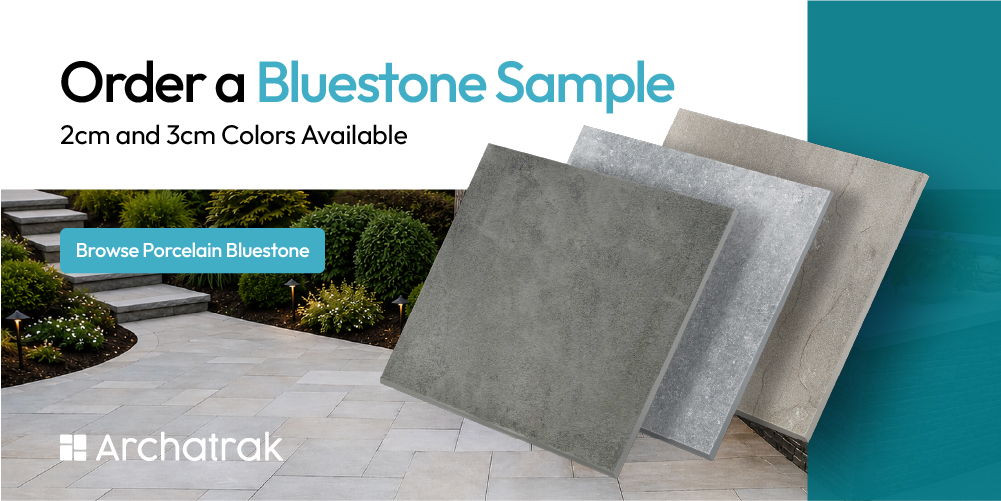
They also tend to display a more consistent color and pattern across a complete project, since each product line is produced with a limited number of repeating faces. Select one of the colors below for more detail and to order a physical sample.
Versatility in Design
Bluestone Pavers: Bluestone pavers are commonly used for patios, pathways, garden walkways, pool surrounds, steps, and even driveway applications depending on installation. Their availability in a range of sizes and thicknesses allows them to be adapted to many landscaping layouts.
They are often selected for projects where a natural, organic look is desired across multiple outdoor features.
Porcelain Pavers: Porcelain pavers are produced in standardized sizes with consistent dimensions and thickness, which supports precise layouts and clean installation across larger areas. Many product lines also offer multiple size formats within the same color range, allowing for modular patterns similar to natural stone.
At the same time, porcelain pavers are designed with variation between individual pieces to replicate the look of natural materials. This combination of controlled sizing and built-in variation allows porcelain to offer both layout flexibility and consistent long-term performance.


3 Aesthetic options
Capturing the timeless character of natural bluestone, our porcelain pavers faithfully recreate the subtle veining, tonal variation, and textured surface that have made bluestone a favorite for generations. Advanced digital printing and precision manufacturing deliver an authentic appearance with the durability, consistency, and low maintenance of porcelain. Explore our three bluestone-inspired colors below, then request samples to see the remarkable realism for yourself.
Durability and Strength
Bluestone Pavers: Bluestone is a dense and durable material that performs well in outdoor environments. It is suitable for patios, pathways, and other on-grade applications exposed to weather and foot traffic.
However, as a natural material, quality can vary between pieces, and it may be susceptible to chipping or cracking under certain conditions.
Porcelain Pavers: Porcelain pavers are also highly durable due to their manufacturing process. They are non-porous and resistant to stains, mold, and moisture. Their performance tends to be more consistent across an installation.
While porcelain is strong, it is generally not as impact resistant as thicker natural stone and may be more susceptible to chipping under certain conditions.
Maintenance Needs
Bluestone Pavers: Bluestone paving is somewhat porous. To maintain its appearance and reduce staining, sealing is typically recommended. Over time, it may require cleaning, particularly in shaded or damp areas where moss or algae can develop.
Porcelain Pavers: Porcelain pavers are very low maintenance. Because they are non-porous, they resist staining and are easier to clean. Sealing is not required, and surface appearance tends to remain more consistent over time. For most residential patios, the ongoing maintenance required for bluestone is one of the main reasons homeowners and contractors ultimately consider porcelain alternatives.
Slip Resistance
Bluestone Pavers: Bluestone has a naturally textured surface that offers good slip resistance, making it suitable for patios, pathways, and pool areas. However, like most materials, it can become slippery in certain conditions such as heavy rain or ice.
Porcelain Pavers: Exterior porcelain pavers are typically manufactured with textured surfaces designed for slip resistance, making them suitable for patios, pathways, and pool areas. Performance can vary by product, but many outdoor porcelain pavers provide adequate traction under normal conditions.
Porcelain pavers are also tested using industry standards such as ASTM E303, which measures slip resistance using a pendulum test method. Results for exterior porcelain pavers typically indicate low slip potential, even in wet conditions, when properly specified for outdoor use.
Bluestone vs. Porcelain Paver Cost
Bluestone Pavers: Natural bluestone is generally considered a premium material. Material costs typically range from about $6 to $14 per square foot, depending on the type and finish. For example, natural cleft bluestone is often on the lower end of that range, while thermal or more uniform cuts tend to fall on the higher end.
Pricing can vary based on factors such as stone quality, thickness, quarry location, and finish, which can make total project costs less predictable compared to manufactured materials.
Porcelain Pavers: Porcelain pavers offer more consistent and predictable pricing compared to natural stone. Material costs are often comparable to mid-range bluestone, with many 2cm exterior porcelain pavers available at approximately $6 to $10 per square foot depending on the product and finish. Because porcelain is manufactured under controlled conditions, pricing tends to be more stable, with fewer variations related to sourcing, grading, or material quality.
Environmental Impact
Natural Bluestone: Bluestone is a natural material sourced from quarries. While extraction has environmental impacts, the stone itself is durable and long-lasting, which can reduce the need for replacement over time.
Porcelain Pavers: Porcelain is produced through an energy-intensive process, though most manufacturers incorporate recycled materials and more efficient production methods. Its durability and low maintenance can help offset long-term environmental impact.
Installation
Natural Bluestone: Bluestone pavers can be installed using traditional on-grade methods such as mortar over concrete or dry-laid over a compacted base. Because they are natural stone, additional care may be required for alignment and leveling.
Porcelain Pavers: Porcelain pavers offer more installation flexibility. They can be installed on sand, gravel, concrete, or pedestal systems. Their lighter weight and consistent thickness can make handling and layout more predictable.
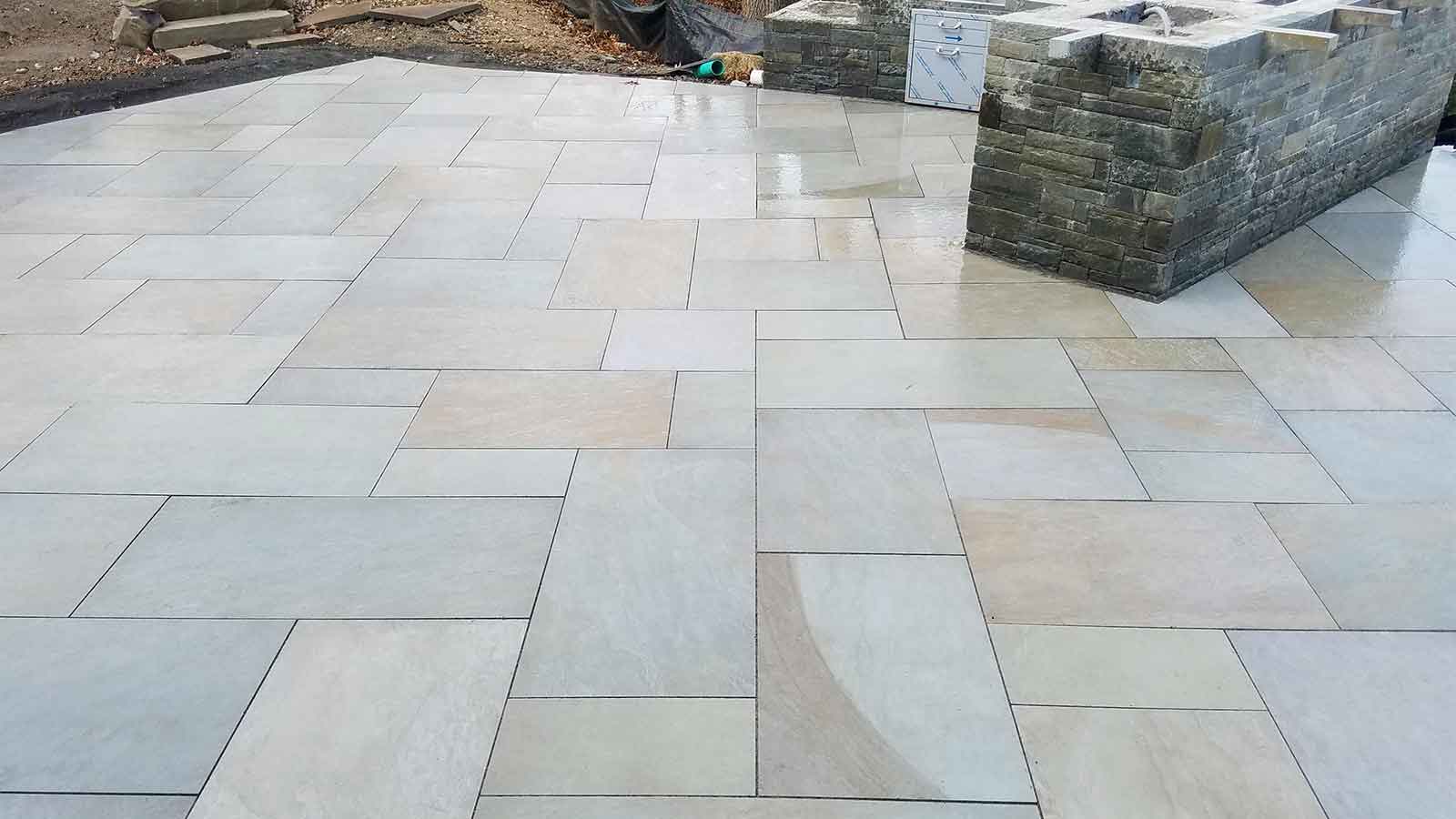
Traditional Bluestone vs Bluestone Porcelain for Patios
Bluestone has traditionally been one of the most common materials used for patio pavers, particularly in residential landscaping. Its natural variation and texture create a distinctive look that many homeowners prefer.
However, bluestone patios often require more ongoing maintenance. Sealing is usually needed to help prevent staining, and variation between pieces can lead to inconsistencies across the surface.
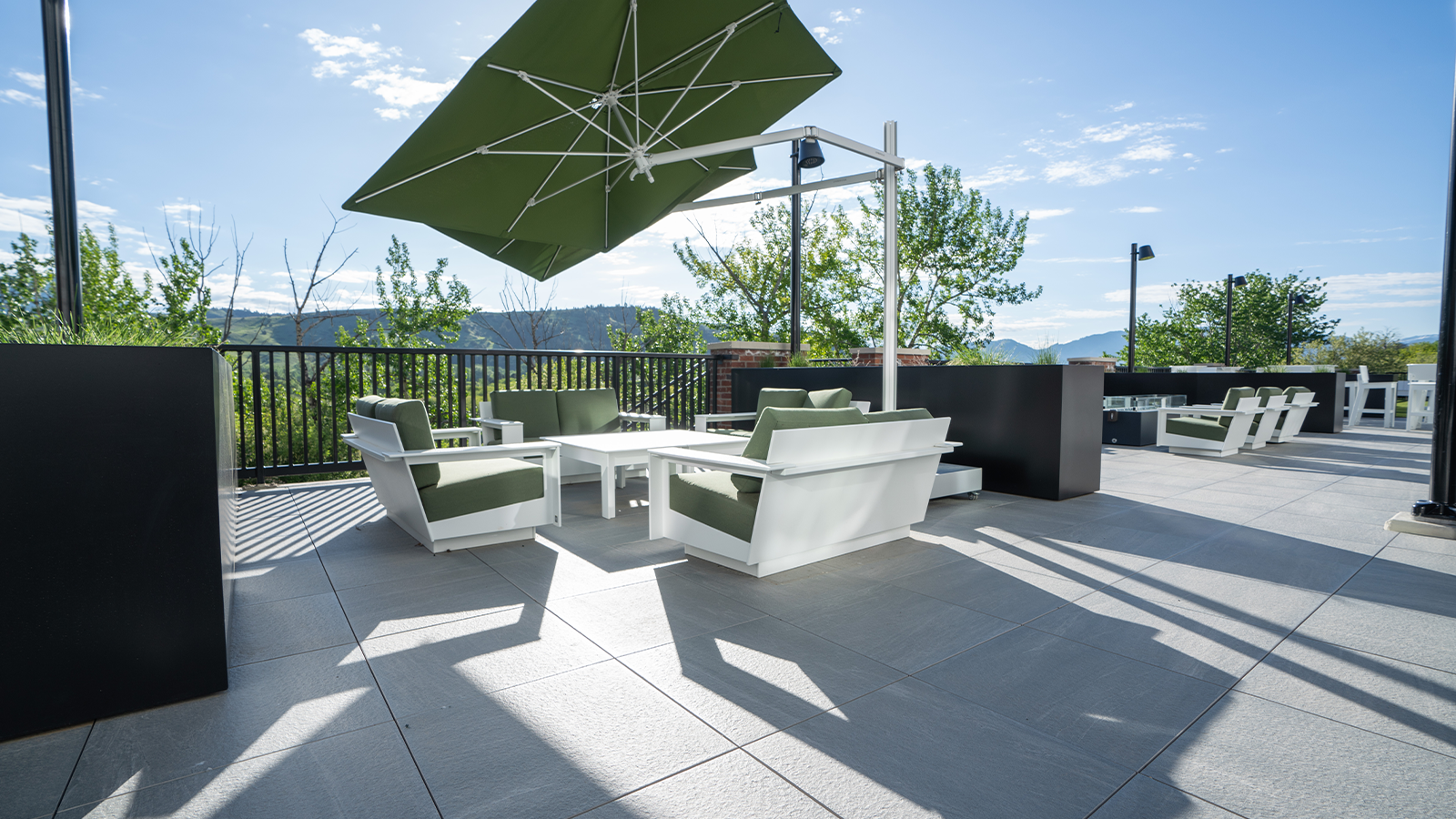
Porcelain pavers are increasingly being used for patio applications where a more consistent appearance and lower maintenance are priorities. Because they are non-porous and manufactured to uniform standards, they tend to perform more predictably over time.
For many patio projects, the decision comes down to whether natural variation or long-term consistency and ease of maintenance is the higher priority.
Bluestone vs Porcelain for Landscaping and Pathways
Bluestone is commonly used in landscaping for pathways, garden walkways, and connecting outdoor areas, where its natural variation can create a more organic look.
In larger landscape applications, however, variation in color, thickness, and performance can become more noticeable across different areas of a project. Maintenance requirements such as sealing and cleaning also tend to increase as the paved surface expands.
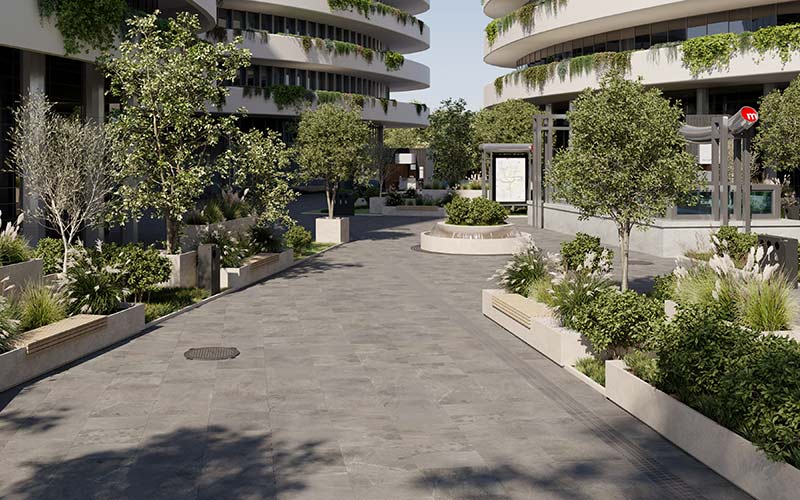
Porcelain pavers are often preferred in these situations due to their consistency and low maintenance. They allow for a more uniform appearance across patios, pathways, and other landscape features, while reducing the need for ongoing upkeep.
For projects that extend beyond a single patio into a broader landscape design, porcelain pavers are often the more efficient and predictable choice.
Bluestone Pavers for Driveways
Bluestone can be used for driveway applications, but it typically requires thicker material and a properly prepared base to handle vehicle loads. As a natural stone, its performance can vary depending on the density and quality of the individual pieces, and it may be more susceptible to cracking or chipping under repeated stress compared to pedestrian applications like patios or pathways.
Because of these factors, bluestone is more commonly used for patios and walkways, where the structural demands are lower and its natural appearance can be fully appreciated.
For projects where a similar aesthetic is desired but with more predictable performance, porcelain pavers set in a mortar bed can be considered as an alternative. When properly installed over a suitable concrete base, porcelain pavers can provide a stable, consistent surface that is better suited to handling vehicle loads while still maintaining a clean, uniform appearance.
In addition, the non-porous nature of porcelain makes it highly resistant to oil and rubber stains, which can be a consideration in driveway applications where vehicles are parked regularly.
As with any driveway installation, the long-term performance of either material depends heavily on the base preparation and installation method.
Summary – So Which Should You Choose?
Both natural bluestone and porcelain pavers offer advantages for patios, pathways, and landscaping applications. However, for most projects, porcelain pavers are the more practical choice.
Bluestone is often selected for its natural appearance and traditional aesthetic, particularly in designs where variation and character are a priority.
Porcelain pavers, on the other hand, provide more consistent performance, lower maintenance, and greater resistance to staining and moisture. These factors tend to become more important over time, especially in patios and larger outdoor spaces that see regular use.
For projects where long-term durability, ease of maintenance, and a uniform appearance are key considerations, porcelain pavers are generally the better option.