What is a Parklet?
Parklet: a small seating area or green space created as a public amenity on or alongside a sidewalk, especially in a former roadside parking space.
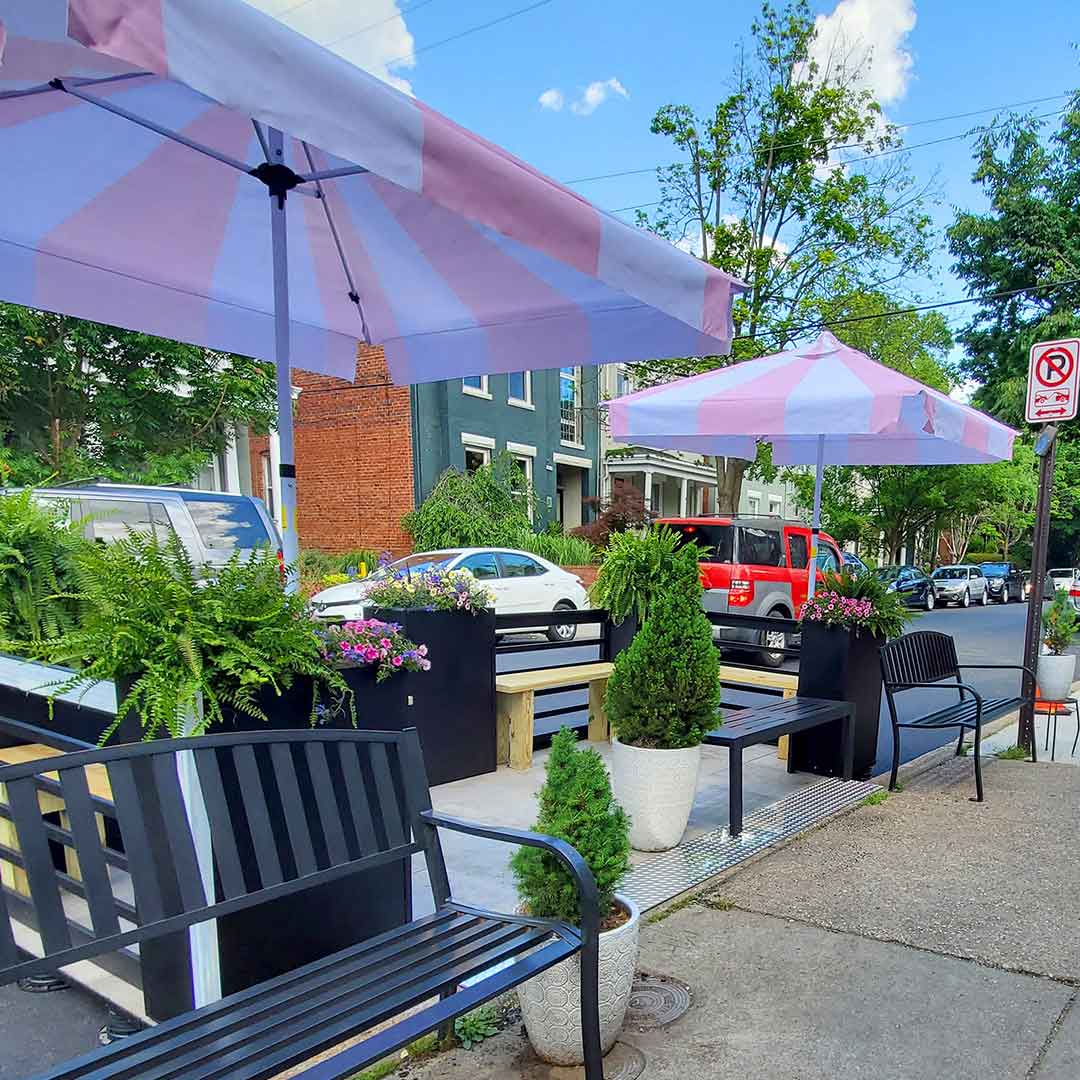
StreetDeck parklet with solar lit umbrellas
Where Did Parklets First Appear?
The term ‘Parklet’ is generally attributed to San Francisco where it was first used to describe the process of converting one or more street parking spaces on urban streets into a small public ‘park’ or enclosed seating area.
Since that time, numerous cities have adopted alternative names for street parklets and curbside seating including People Spots, Street Seats, Streateries, Pocket Parks, Street Patio and Spark, although some of these terms like Streatery are more commonly applied to structures which are used for outdoor dining and may extend beyond one or more shop fronts.
The term ‘pedlet’ is also used in relation to parklets, but this really refers to a structure built on the roadway adjacent to the curb acting as a pedestrian walkway to permit outdoor dining on the sidewalk . This arrangement allows for unobstructed passage by both pedestrians and restaurant staff.
What is The Most Common Use for a Parklet?
Parklets are primarily intended as assets for the entire community by introducing new streetscape features such as plantings, bicycle parking, and additional outdoor street seating for nearby shops. They were originally not intended to be associated with a specific retail outlet or to provide exclusive space for restaurant patrons, even if they were located directly outside such outlets, but were meant to be available for use by passing pedestrians to meet friends, linger for a while, read a book and simply enjoy the outdoor ambiance.
This situation did change somewhat during the 2020 and 2021 pandemic years when parklets morphed more widely into their use as a streatery where they offered a convenient solution for many cities to allow restaurants to remain open by serving patrons in the open air.
This trend has continued in recent years with more and more restaurants seeking approval to construct a parklet in parking spaces outside their premises, to expand their dining area, subject of course to local regulations. Many temporary parklet structures built during the Covid pandemic have now given way to permanent structures or modular structures which can be deconstructed and stored away during winter months.
StreetDeck parklet in Jackson WY
How is a Parklet Established?
Establishing a local street parklet or streatery normally begins as a proposal by an individual or group who commits to the process and expense of gaining community support for their vision, applying for a permit, designing the parklet, submitting proposals and all required documentation to the relevant authorities, organizing the installation and taking responsibility for ongoing maintenance.
Employing an architect to custom design a parklet can be a significant cost burden, so modular parklets in pre-designed configurations like Archatrak’s StreetDeck parklet can be advantageous, not only from the design viewpoint, but also from a construction viewpoint.
What Features Should Parklets Include?
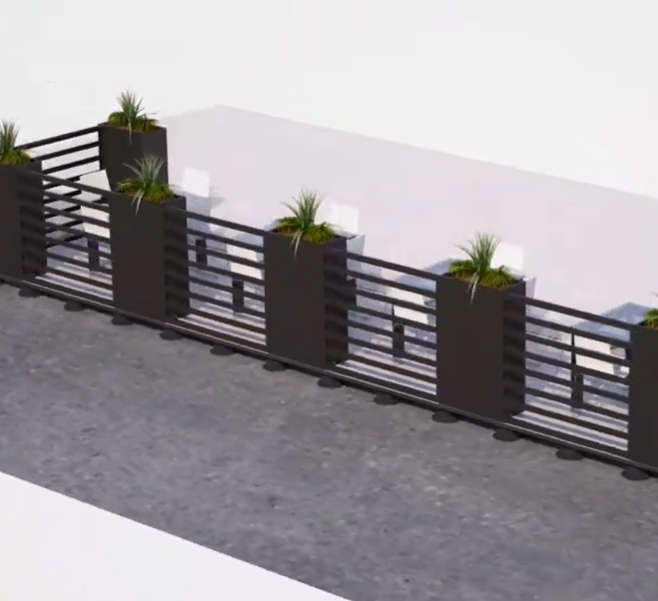
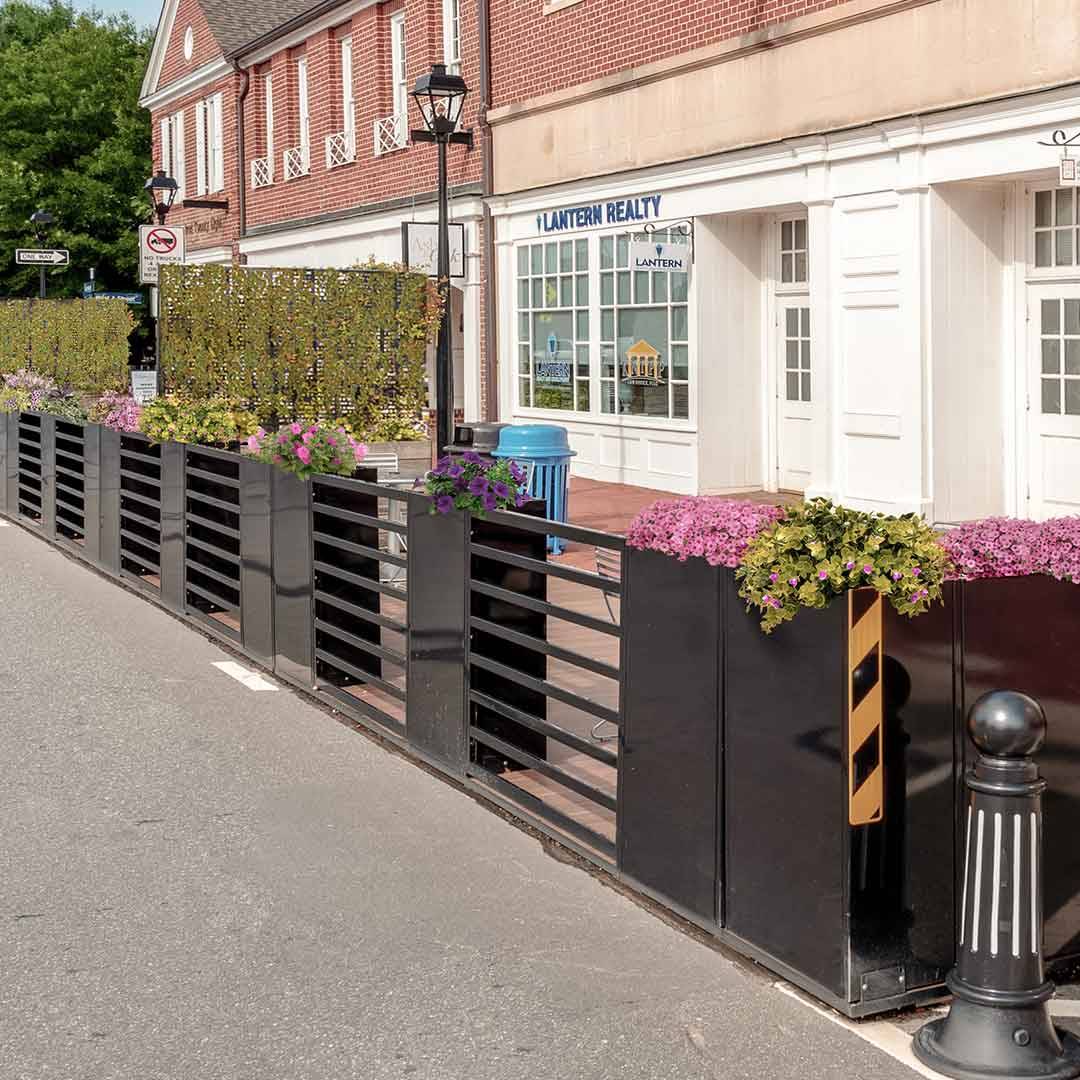
The best-designed street parklets take into consideration amenities that would benefit the immediate surroundings, such as tables and chairs, bench seating, lighting, planters, and landscaping. They should also blend in with streetscape, so structures like Archatrak’s StreetDeck Parklets which feature large planters every 4′, can be filled with extensive vegetation to soften the impact of the structure.
Solar phone charging stations, which can be incorporated into seating, tables, or umbrellas, can also be a very effective means of increasing patronage. Bicycle racks can also be included in the parklet design as well.
How Are Parklets Regulated?
All parklets must comply with local regulations and design criteria for street seating which put user safety and functionality at the forefront. They are limited to where they can be positioned in relation to bus stops, utilities, and street corners, are required to have a perimeter of a specific height while still providing vistas across the street and end buffer zones to safely separate the seating area from vehicle traffic. They must possess all required permits, meet ADA requirements, maintain roadway drainage, allow for access to any below-ground utilities, be properly insured, possess a maintenance plan, and should enhance the vibrancy of the area with suitable seating and landscaping.
StreetDeck parklet with plantings
What Are the Benefits of Parklets?
Parklets can be an outstanding addition to any neighborhood. Many studies have shown that they typically result in increased pedestrian activity and additional sales at nearby businesses by breaking the flow of foot traffic and giving passersby a reason to stop, socialize and relax. Naturally, they work best in shopping strips with active pedestrian traffic and which feature a mix of retail outlets.
How Difficult is it to Build a Parklet?
Many custom designed parket structures are quite complex and can take days to construct with most fabrication being undertaken on site, often requiring either sections of the road or the sidewalk to be blocked off for safety.
Archatrak is committed to making more parklets and street seating a reality by offering modular, easy to build and disassemble, self-contained deck structures that are much cheaper to construct than custom built structures. Our ‘StreetDeck’ modular Parklet kits are specifically designed for any roadside seating installations and are supplied with completely pre-made components, ready to be bolted together, including support structure, integrated planters, decking, ramps and railings.
And while StreetDeck is supplied as a ready to assemble parklet kit, it can also serve as the basis for totally customizable designs, by using just the self-contained platform and adding planters, railings, furniture, etc. from other suppliers.
Due to the modular design, StreetDeck Parklets can also be extended to any practical length, subject to site conditions, and although 6′ or 8′ widths are most common, other widths are also possible.