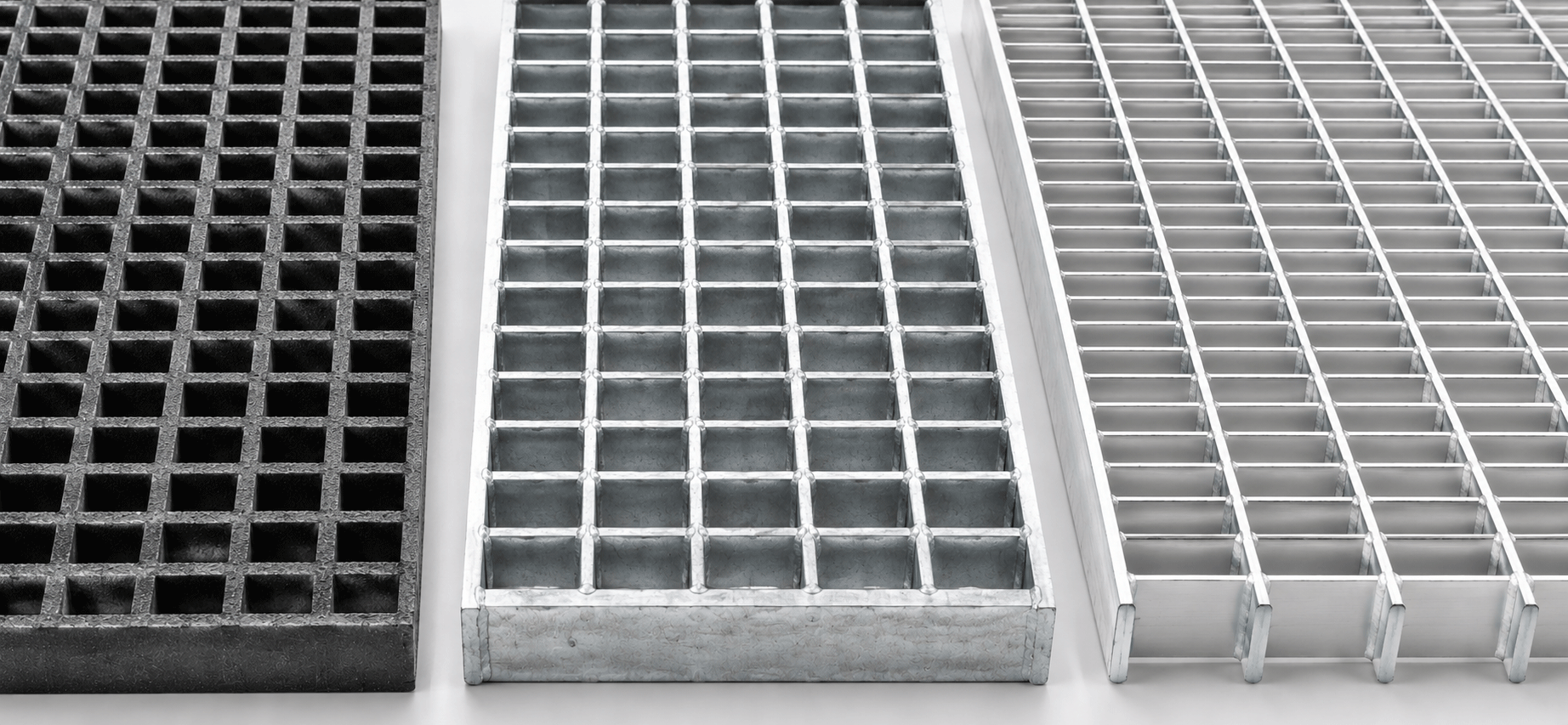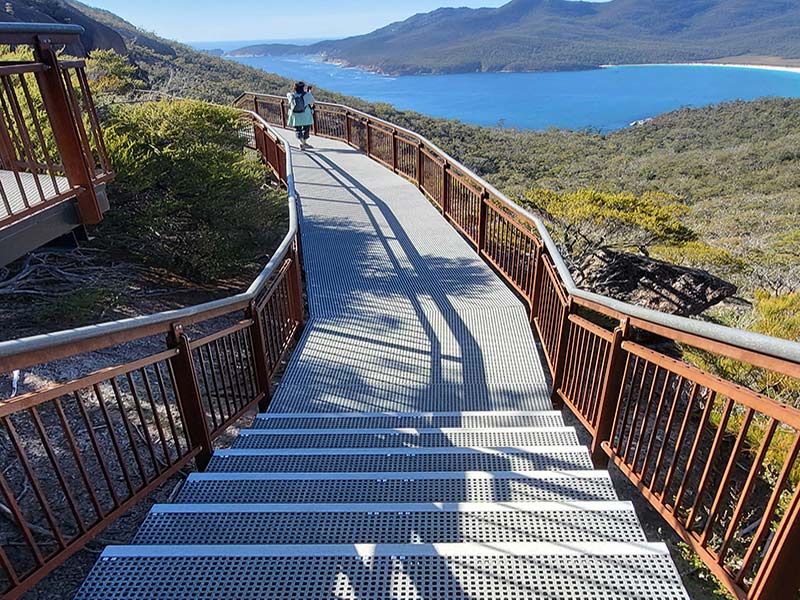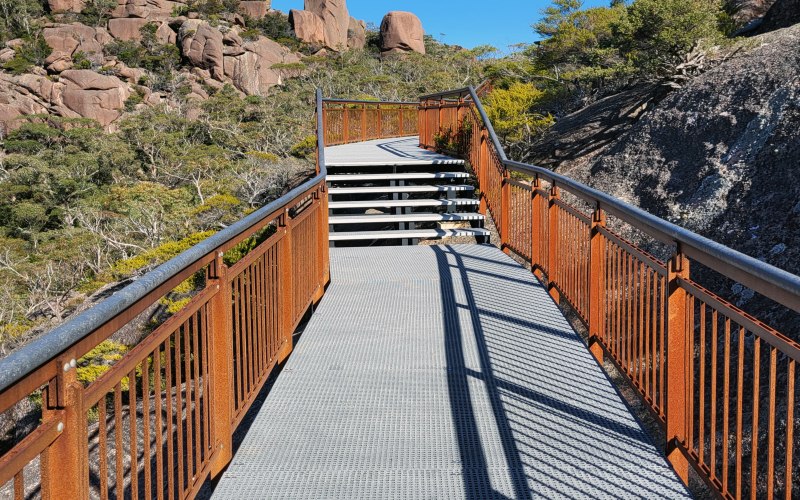
Fiberglass (FRP) grating panels are rapidly replacing wood as the preferred decking material for outdoor viewing platforms, walkways, marina docks and especially isolated applications where maximum resistance to extreme weather conditions with minimal maintenance is essential. In this blog, we explain why.
What are the Main Benefits of Fiberglass as a Decking Material?
Excellent Durability and Performance
Fiberglass is a composite material made from layered glass fibers and resins — is as lightweight as aluminum, 40% as heavy as steel and only 20% as heavy as concrete. It also has a very high level of impact resistance. It performs without peer in the most extreme climatic conditions – wet icy, hot, dry making it an excellent decking material.
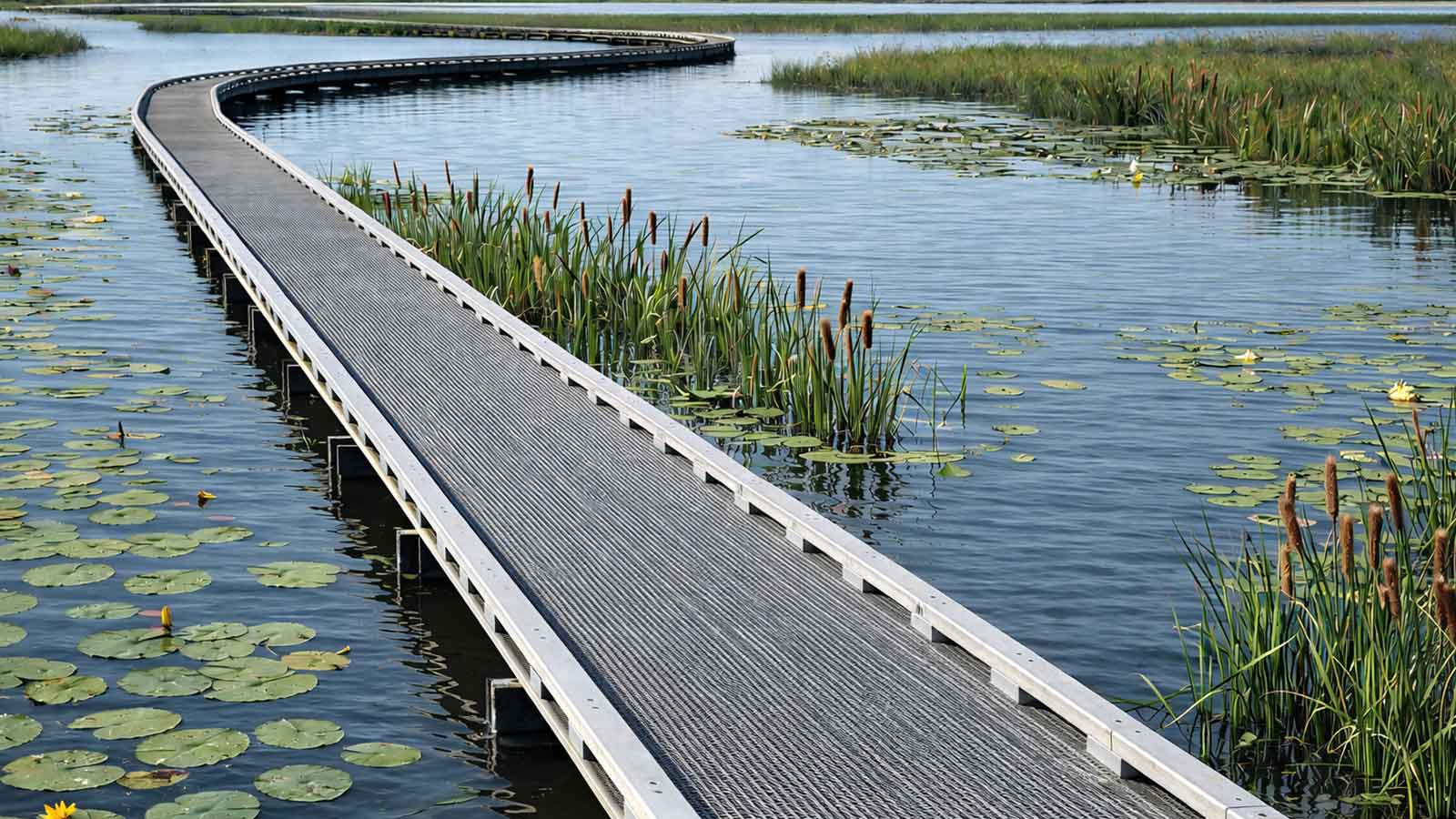
The ability to withstand tough conditions including constant marine salt spray, makes fiberglass decking particularly useful in wet environments such as docks, jetties and marinas. It doesn’t corrode like steel, it doesn’t warp, twist or crack like wood decking and is highly resistant to growth of moss and algae.
Very Low Maintenance
Compared to other materials, fiberglass has very little need for maintenance. There is no need to seal or reseal it as there is with wooden decking, and it cannot build up algae the way steel decking can. Plus, the fiberglass grating does not rust like steel.
Exceptional Safety for Pedestrians
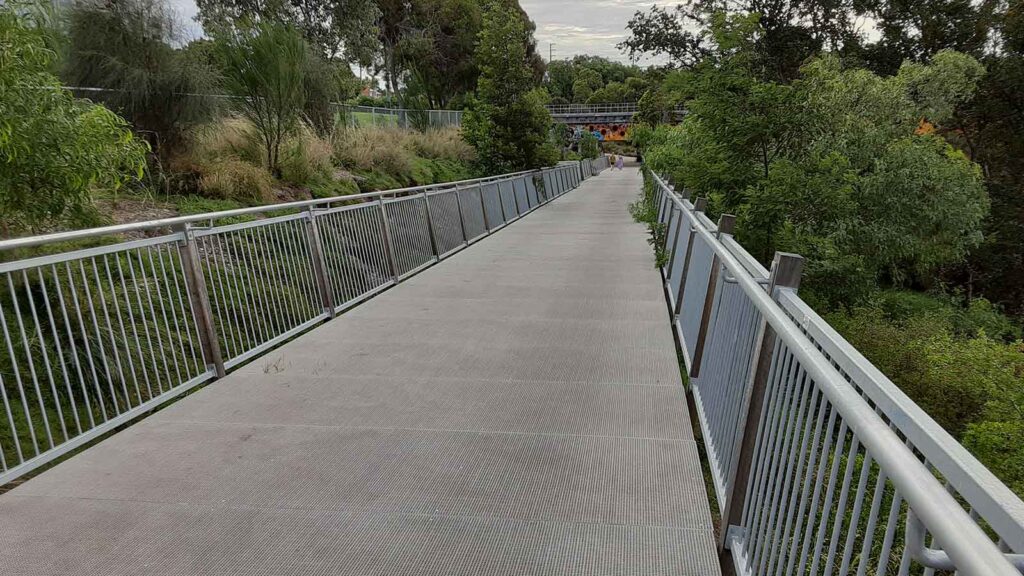
Fiberglass grating panels for marina and walkway applications are produced with a gritted surface finish to increase friction underfoot. Coupled with the open mesh construction, fiberglass grating panels have exceptional anti-slip properties for pedestrians, runners and cyclists making fiberglass grating an excellent material for use along trails, bridge decks and other applications where water or ice may be present. And the large, flat panels won’t twist or warp that can cause users to trip or lose their footing.
Fiberglass decking designed for exterior conditions can also achieve a Class A Fire rating when tested in accordance with ASTM E84-2018.
Integrates With Other Materials
Fiberglass can be used in conjunction with many other materials in outdoor projects. For example, fiberglass panels can be installed over wood, metal or concrete substructures to provide a durable slip-resistant surface.
Archatrak’s SpanTrak Fiberglass Reinforced Plastic (FRP) grating panels are supplied in a number of styles and sizes. One key consideration is the size of the mesh, which can vary depending on the project’s requirements — for example where the open spaces must be small enough so that small wheels, high heel shoes or small objects cannot get stuck or fall through the grating.
Long Term Cost Effectiveness
Although fiberglass decking may initially cost more than some other decking materials such as wood or concrete, choosing fiberglass decking can save money in the long term due to the significantly lower maintenance requirements after the project is completed. It’s unlikely to need repair or replacement, as it is highly resistant to impact and weather conditions.
Fiberglass’ comparative ease of installation can also reduce labor costs.
Eco-Friendly
Fiberglass production only uses half the energy required to produce many other materials like steel or cement. This makes fiberglass a sustainable choice and can help construction industry professionals reduce the carbon footprint of their projects.
Longevity and Environmental Benefits
Because fiberglass cannot rot or warp and doesn’t require sealing or staining, decking made from fiberglass has an inherent longevity that other materials lack. Fiberglass deck grating can also have environmental benefits — the open spaces can let light and moisture through to the vegetation underneath, enabling plants to grow and ecosystems to flourish.
Installation
Substrate and Preparation
While many fiberglass grating systems are used for projects involving raised walkways or decks supported by joists or pedestals, other projects may involve placing fiberglass panels directly over an existing surface, for example in resurfacing bridges along pathways.
If this is the case, ensure the substrate is properly prepared for the installation. Inspect it for any signs of damage (e.g., rot in wood, rust on metal or cracks in concrete), and repair or replace any areas that would impact on the structural integrity, if needed.
Make sure the substrate is level with no depressions or high points that could affect the installation of the fiberglass grating.
Cutting and Connecting Panels
When installing fiberglass decking, make sure that you observe safety precautions such as wearing protective gloves, masks and eyewear.
Fiberglass decking is usually installed in full panels, typically 8” x 4’. If you need to cut fiberglass grating products, use tools such as circular saws or angle grinders — as long as they have masonry or diamond-embedded blades.
Cut with a steady pressure, then sand any cut edges down smoothly before coating them with UV-stable two-part resin or urethane spray coating.
To attach panels to bearers, use clip fasteners placed at a maximum span of 48″ and at least four clips per panel. Make sure not to install clips less than 1 ½” from the edges. Install C clips every 2 feet to 3 feet to connect adjacent panels and reduce the risk of tripping where the panels join.
Make sure you use fasteners compatible with the thickness of fiberglass decking panels you choose and the material to which you will be attaching the panels. Archatrak’can supply a variety of clips and fasteners — your sales rep can advise which options best suit your project and application.
Long-Term Maintenance
Fiberglass is known for its low maintenance requirements. Simple sweeping of debris is generally all that might be needed. No regular sealing or frequent inspection to check decay or corrosion is needed.
Removing debris stuck in gaps is one possible maintenance requirement with some fiberglass grating systems — particularly those with smaller gaps.
SpanTrak Fiberglass Decking from Archatrak
Archatrak supplies fiberglass grating panels in varying thicknesses and mesh sizes. The resins, fillers and additives used in our fiberglass products are chosen for their quality, durability and fire resistance. All our SpanTrak grating panels for walkway or marine applications are supplied with an anti-slip grit surface for safety as standard.
For more information, take a look at our product range or contact our team to learn more.